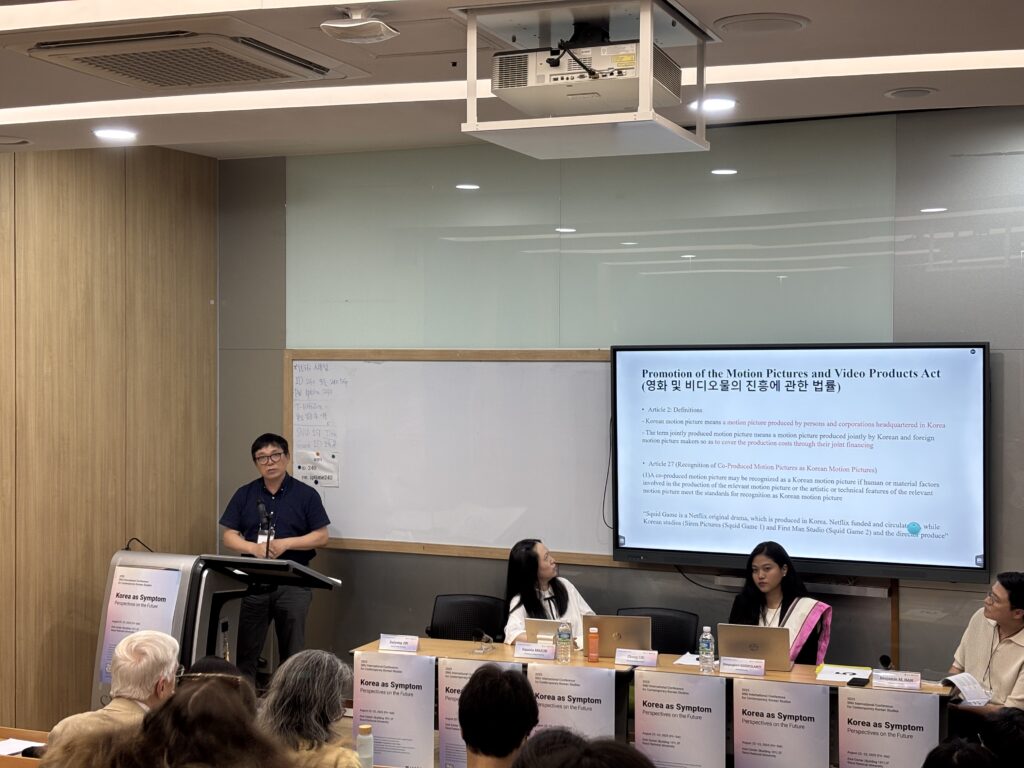
The SNU Center for Contemporary Korean Studies held an international conference titled “Korea as Symptom” over two days, August 22 and 23. As the first session on the second day of the conference, the Global Hallyu Team organized a panel titled “Hallyu in Global Context” in Room 240 of Building 101 at Seoul National University. Chaired by Professor Benjamin Han (University of Georgia), the session featured four presentations.
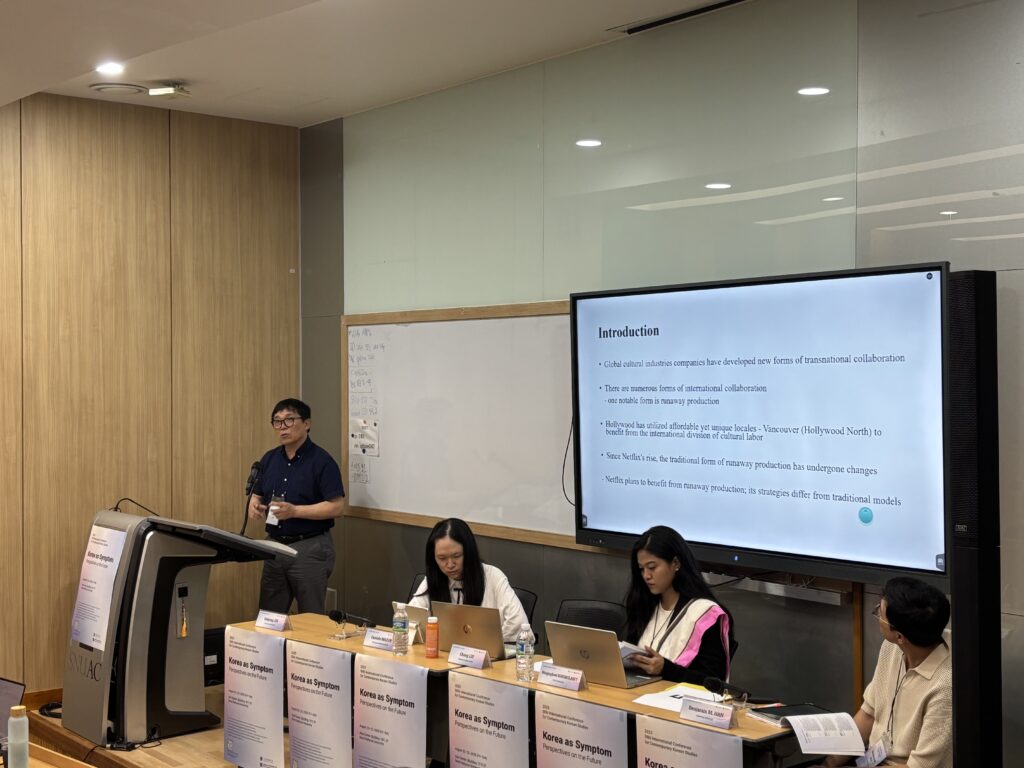
In the first presentation, Professor Dal Yong Jin (Simon Fraser University) spoke on “A Full-Package Production Model: The Development of New Runaway Production in the Netflix Era.” Jin examined how forms of international collaboration in the Korean cultural industry have changed with the rise of Netflix, highlighting the platform’s significant role in reshaping the production and circulation of Korean cultural content.
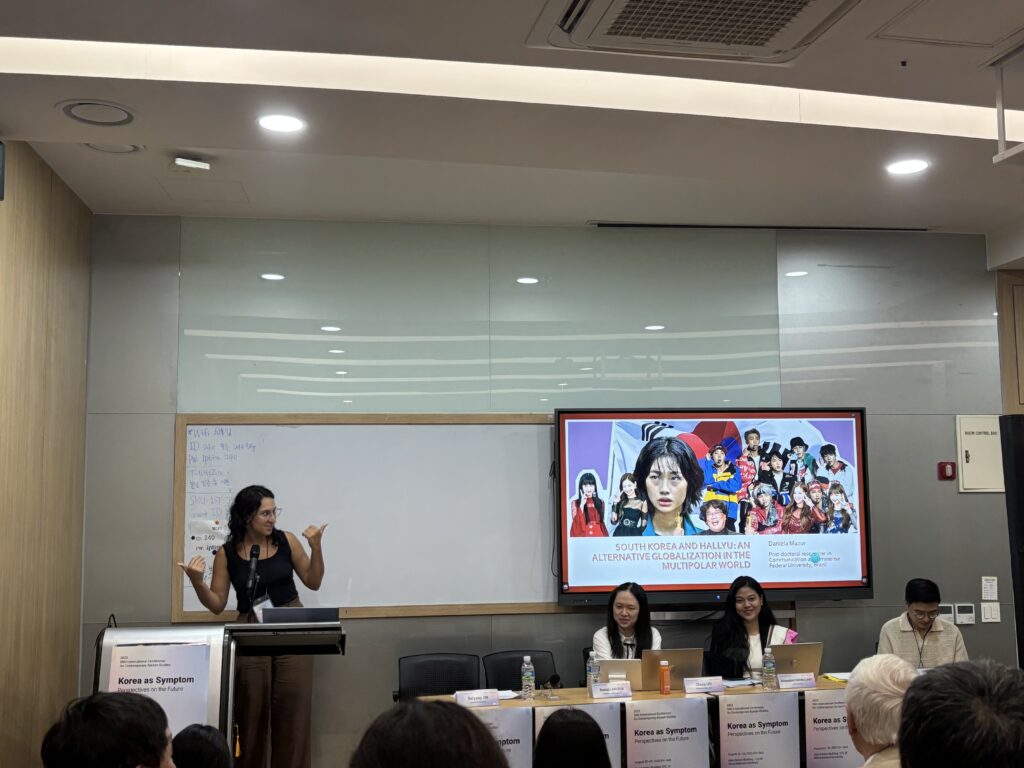
The second presentation was delivered by Dr. Daniela Mazur (Fluminense Federal University) under the title “South Korea and Hallyu: An Alternative Globalization in the Multipolar World.” Mazur presented Hallyu as an example of alternative globalization, through which the culture of a country traditionally situated at the global periphery has contributed to reshaping the global cultural order. She further emphasized that South Korean popular culture may serve as a model for other countries and cultures located outside the traditional centers of global cultural production.
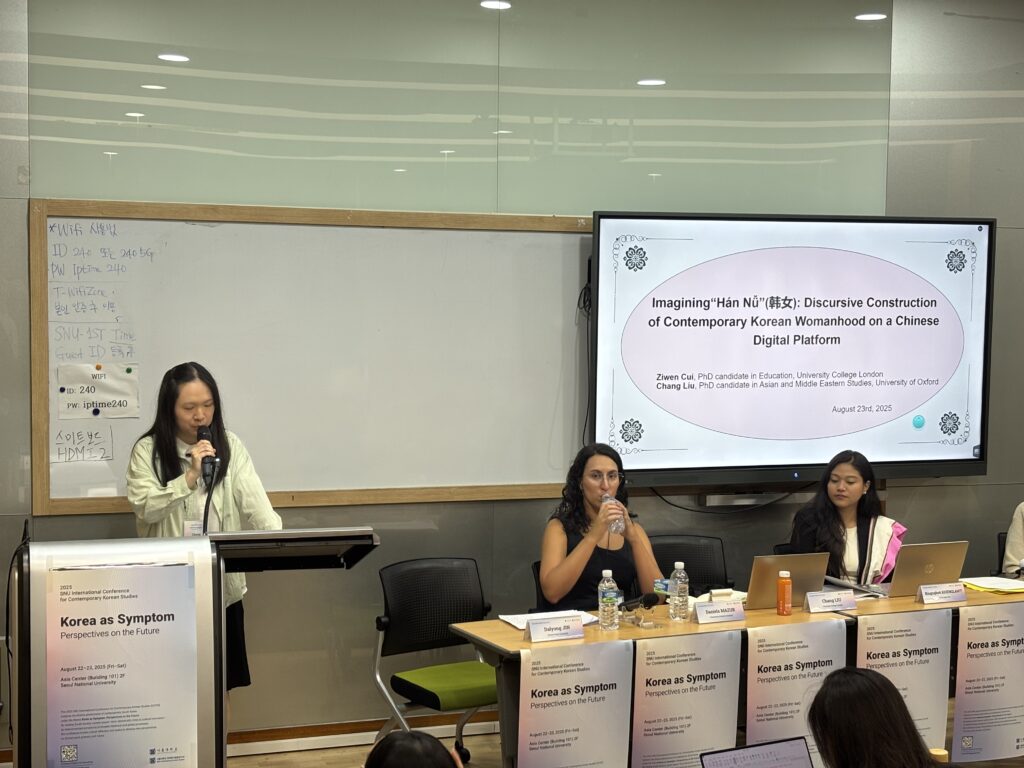
Next, Ziwen Cui (University College London) and Chang Liu, a doctoral student at the University of Oxford, presented “Imagining ‘Han Nü’: Discursive Construction of Contemporary Korean Womanhood on a Chinese Digital Platform.” They analyzed the discourse surrounding “Han Nü” (Korean women), who have emerged as postfeminist role models among young Chinese women. In particular, they argued that the “Han Nü” discourse reinforces existing expectations surrounding women’s bodily self-management and professional achievement in Chinese society, while simultaneously promoting an image of the modern woman as independent, disciplined, and highly committed to self-care through consumerist practices.
Finally, Ringngheti Khenglawt, a doctoral student at Christ University, presented “Glocalising Masculinities: When Traditional Mizo Pasaltha (War Heroes) Meets South Korea’s Soft Masculinity.” Khenglawt examined how traditional ideals of male heroism in Mizoram, India, have interacted with the “soft masculinity” associated with Hallyu to produce new forms of masculinity. The presentation further demonstrated how representations of masculinity in Korean popular culture are adapted to local values, contributing to the formation of new gender norms.
The session examined Hallyu within a global context, showing how Korean popular culture generates diverse cultural discourses as it is received in different societies and is subsequently reinterpreted through interaction with local cultures. In doing so, the session provided an opportunity to reconsider the global influence of Hallyu and to draw attention to new cultural forms emerging at the intersections and boundaries of different cultural traditions.