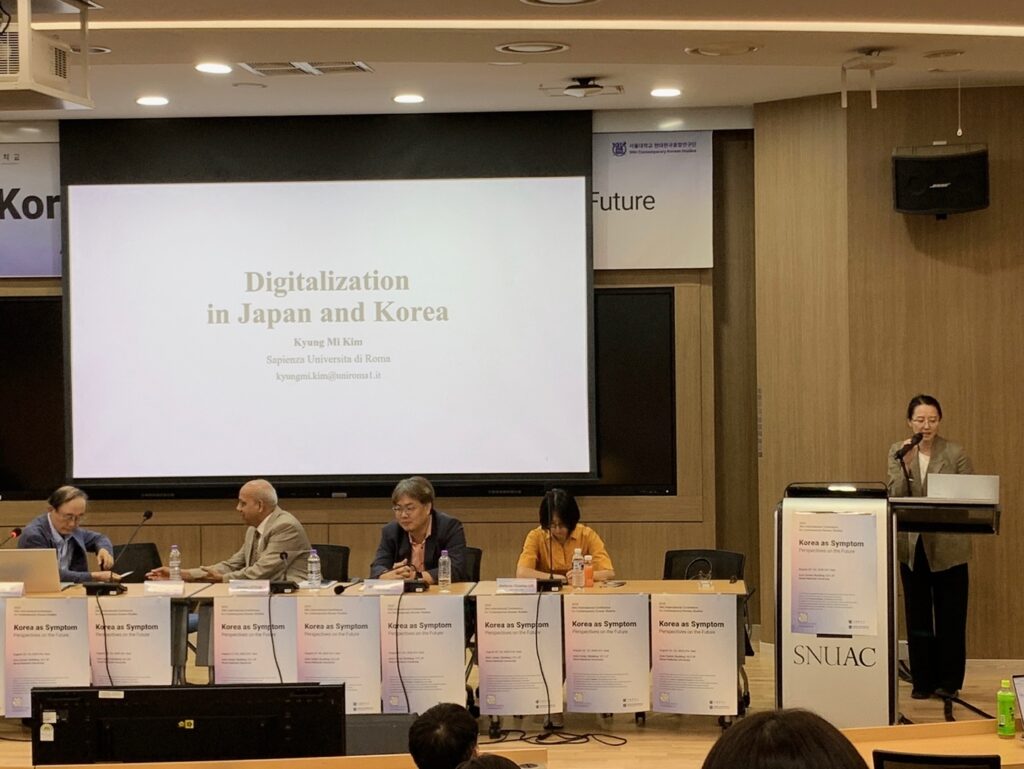
The SNU Center for Contemporary Korean Studies held an international conference titled “Korea as Symptom” over two days, August 22 and 23. As the opening session of the conference, the Political Economy Team organized a panel on the political economy of Korea at Youngone Hall, SNU Asia Center. Chaired by Professor Yong-Chool Ha (University of Washington), the session featured the following four presentations.
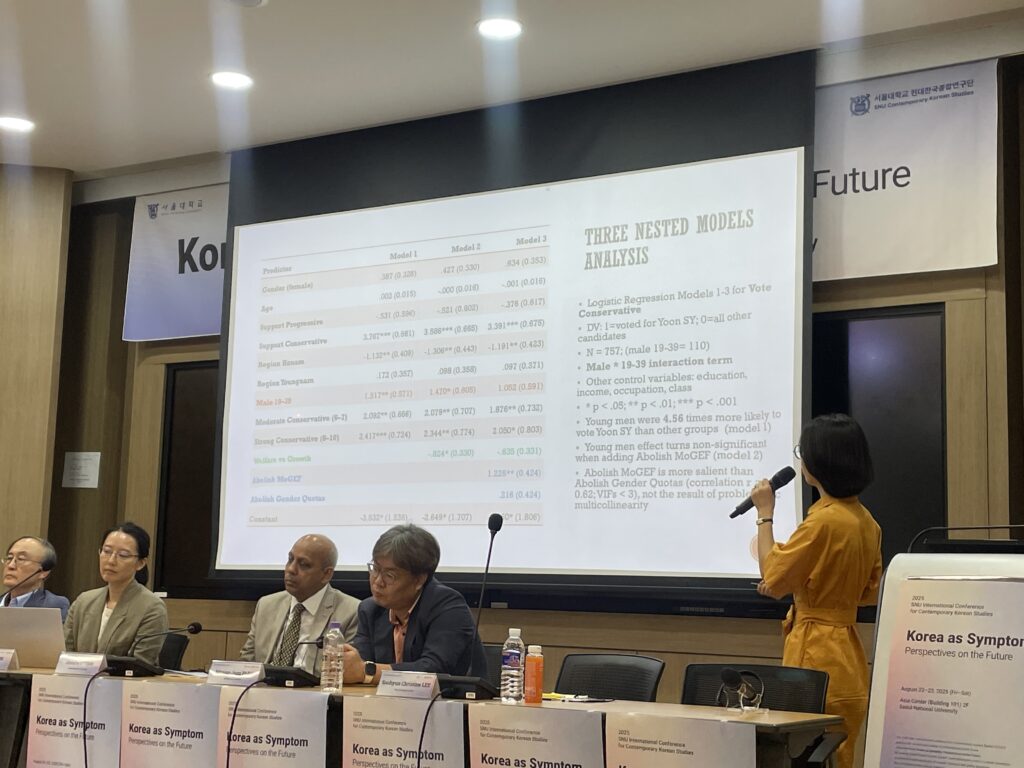
In the first presentation, Dr. Soo-hyun Lee (King’s College London) presented “Gendered Polarization among Young Koreans,” examining how political attitudes and voting behavior among younger generations became increasingly divided along gender lines in South Korea’s 2022 presidential election. In particular, she highlighted the close relationship between young men’s support for Yoon Suk Yeol and their attitudes toward the welfare state and gender equality.
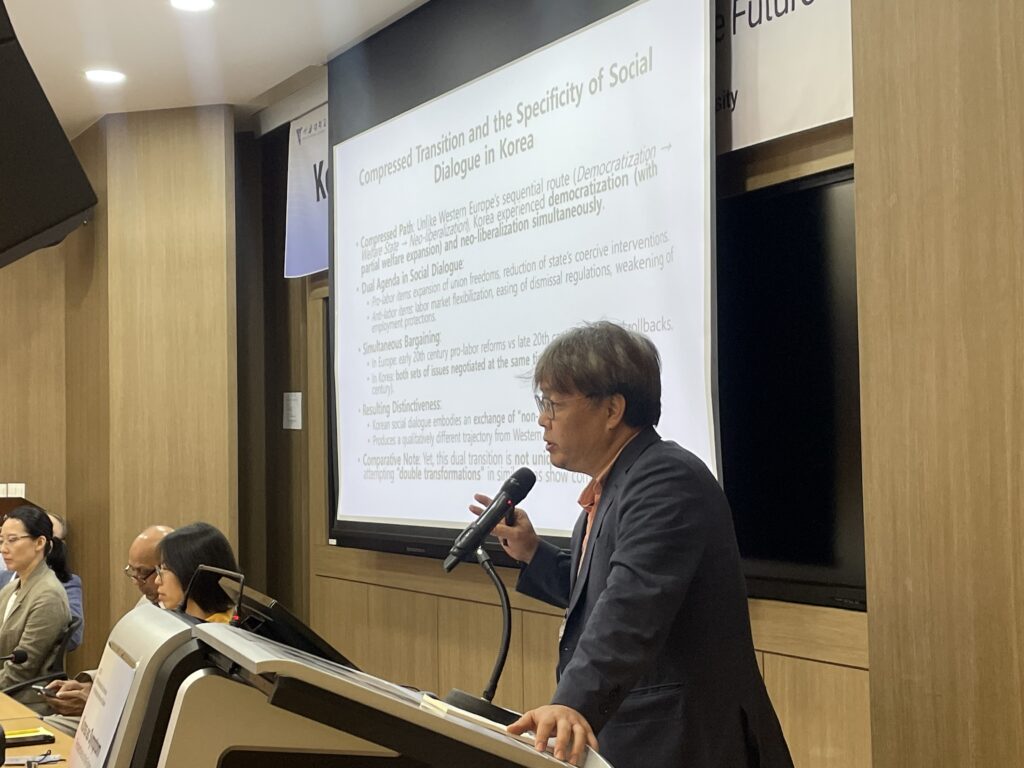
In the second presentation, Myung-Joon Park (Korea Labor Institute) spoke on “Tripartism and the Politics of Social Pacts in South Korea.” Park examined the institutional evolution and strategic dilemmas of tripartism and social pacts in South Korea. He argued that, amid the dynamics among domestic actors and pressures from outside the system, Korean tripartism has developed an ambivalent character marked by formal incorporation on the one hand and limited substantive influence on the other.
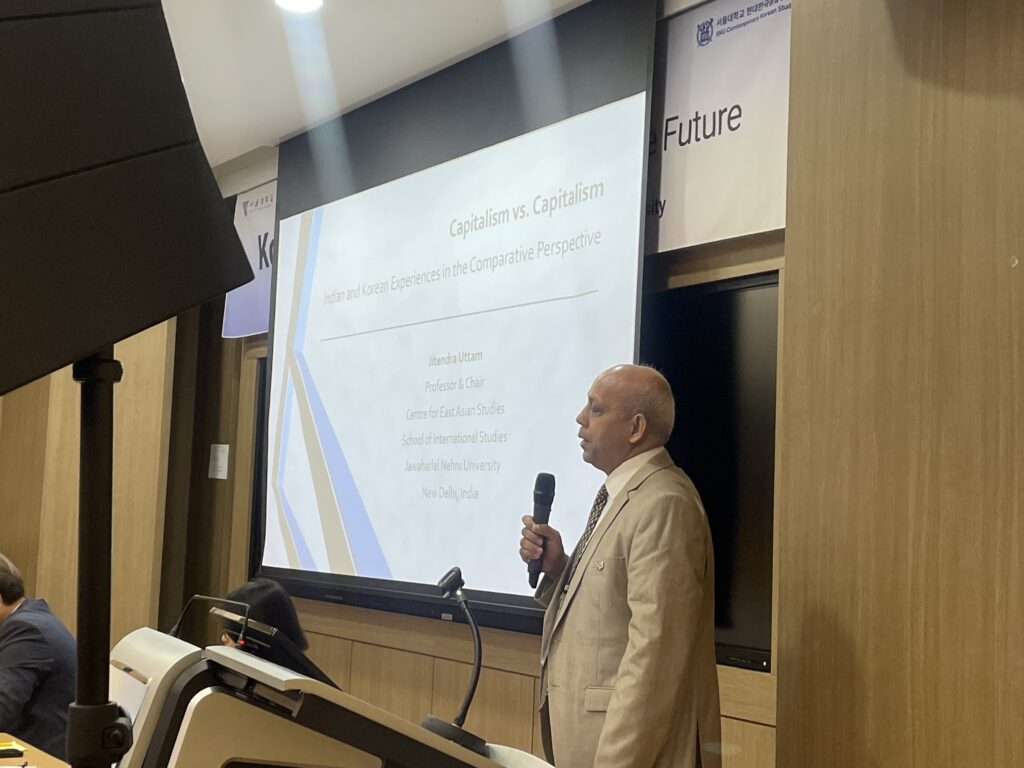
The third presentation, “Capitalism vs. Capitalism – India and Korean Experiences in the Comparative Perspective,” was delivered by Professor Jitendra Uttam (Jawaharlal Nehru University), who offered a comparative analysis of capitalism in India and South Korea. Although both countries share the broad feature of state-led capitalism, he showed how differences in socioeconomic conditions, state capacity, corporate structures, industrial policy, and bureaucracy have produced divergent outcomes. He further emphasized the role of civil society, which has received comparatively limited attention in the existing literature, and offered policy recommendations for the Indian case.
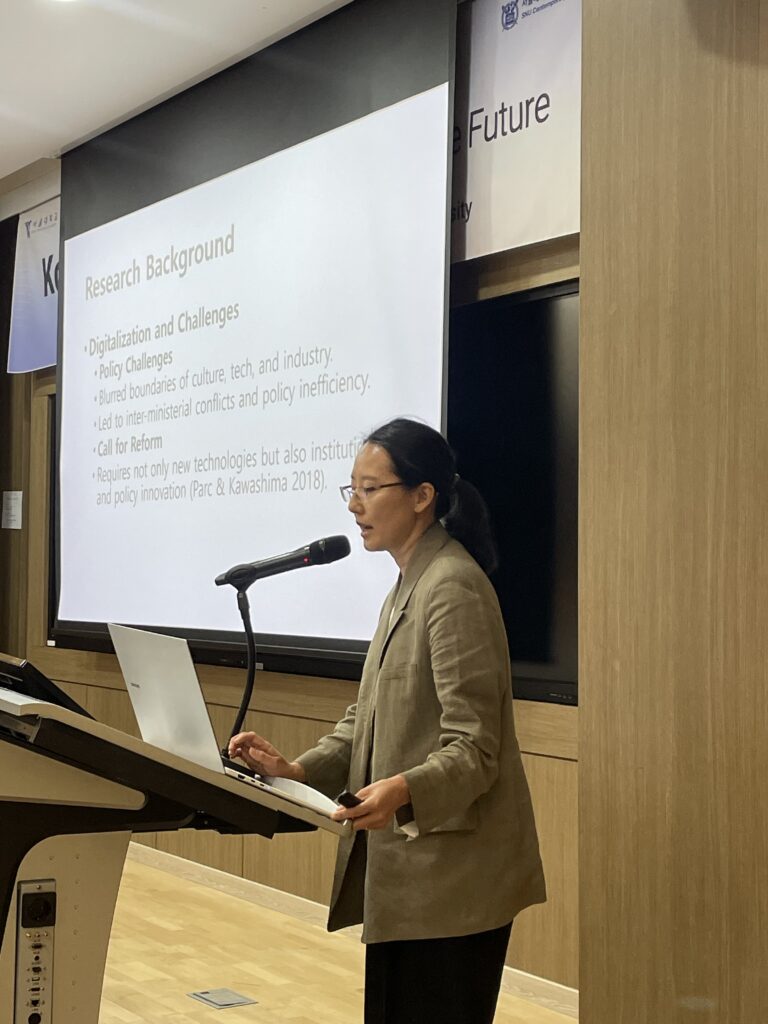
Finally, Professor Kyung-Mi Kim (Sapienza University of Rome) presented “Digitalization in Japan and Korea,” analyzing differences in the levels of government digitalization in South Korea and Japan. According to the presentation, despite similarities in their institutional frameworks, South Korea has achieved a relatively high level of digitalization, while Japan continues to lag behind. To account for this divergence, Kim focused on the policymaking process, examining the factors that have contributed to the digitalization gap between the two countries.
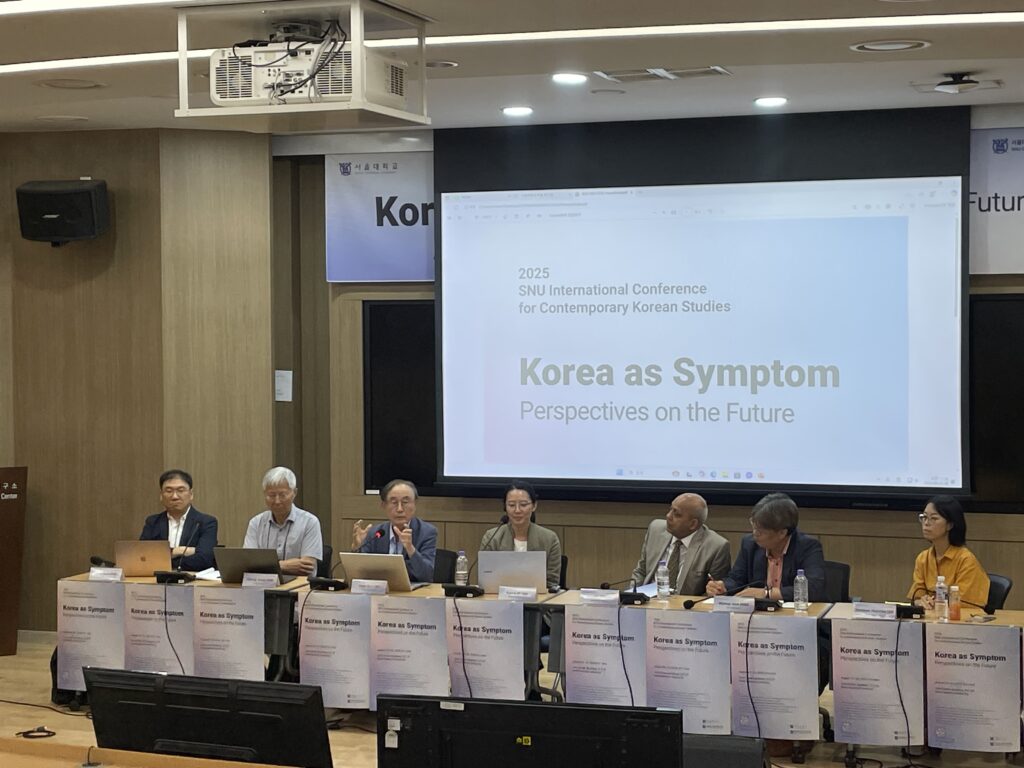
The session provided an opportunity to examine a wide range of issues in the political economy of South Korea from an international perspective. In addition to addressing several of the country’s most pressing contemporary issues, the comparative discussions with cases from abroad helped illuminate both the general features and distinctive characteristics of the Korean experience.