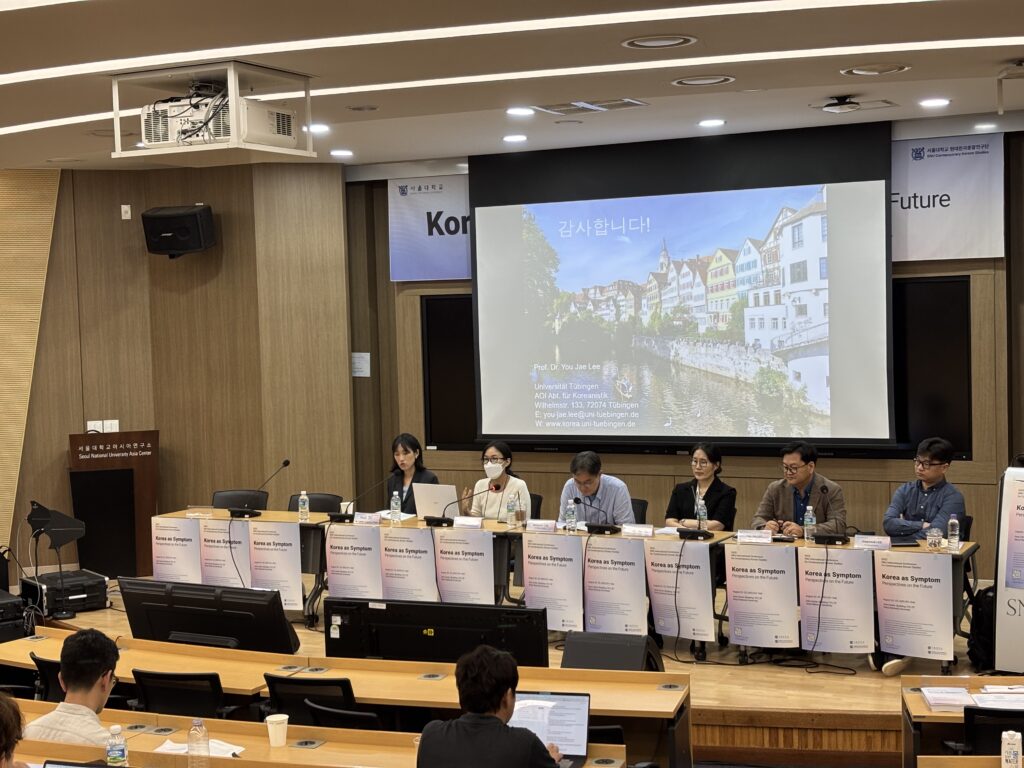
Seoul National University’s Center for Contemporary Korean Studies held an international conference titled “Korea as Symptom” over two days, on August 22 and 23. On the second day of the conference, the Modernity and Development History Team organized the third session, titled “Migration Issues and Gender Inequality in Korea,” at Youngwon Hall in the Asia Center at Seoul National University. Chaired by Professor Lee Dong-won of Seoul National University, the session featured the following three presentations.
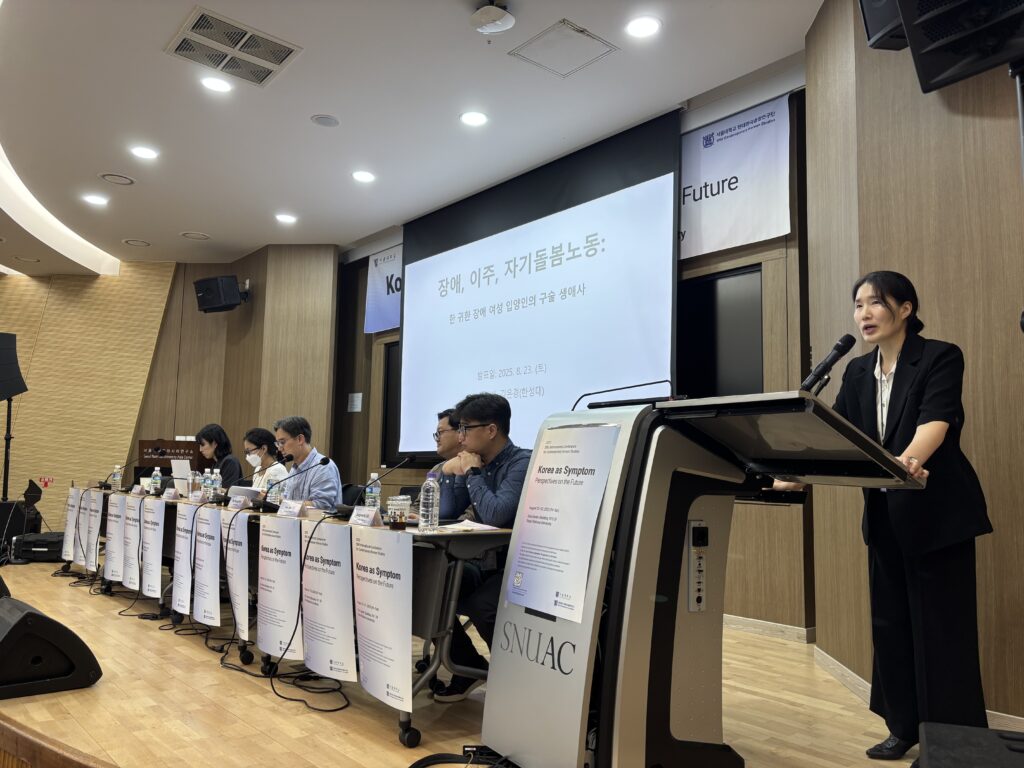
The first presentation was delivered by Professor Kim Eun-kyung of Hansung University, titled “Disability, Migration, and (Non) Labor.” Professor Kim analyzed the oral histories of Korean disabled women adoptees who had been adopted to the United States, highlighting the intersections of disability, gender, and migration from the perspective of disability feminism. In particular, she interpreted self-care for survival, which has remained invisible within existing labor structures, as histories of “a round peg in the square hole.” By bringing into view the struggles Korean disabled women adoptees undertook for belonging and survival, the presentation gave voice to experiences that have long been marginalized.
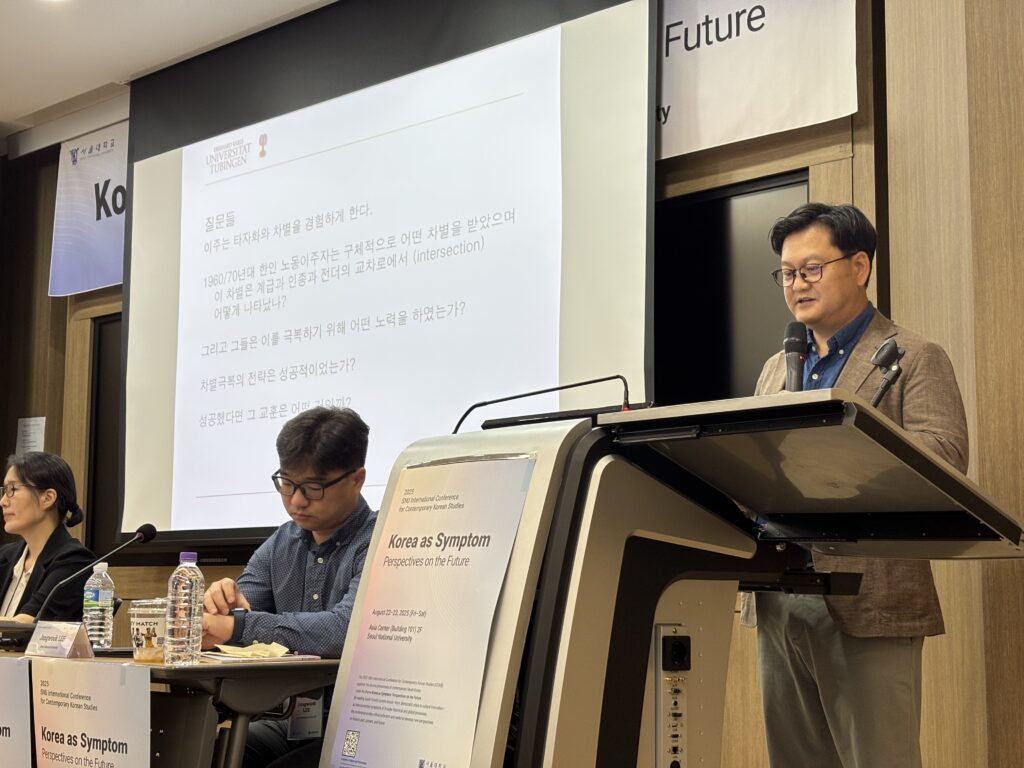
The second presentation was delivered by Professor Lee You-jae of the University of Tübingen, titled “You Have to Be Better Than the Germans: Discrimination Experiences of Korean Labor Migrants in Germany.” Professor Lee analyzed the experiences of Asian immigrants in Germany, who have been labeled a “model minority” while nevertheless facing structural discrimination. First-generation Korean workers experienced discrimination from the time they were dispatched to West Germany and engaged in collective struggles to secure their legal status. The second generation, by contrast, entered the middle class through educational achievement, but gradually rejected the identity of the model minority and formed new social movements in solidarity with Asian Germans. The presentation showed that the history of Korean migration is closely connected to Asian German movements within German society.
Finally, Professor Lee Jong-wook of Seoul National University presented on “Global Labor Mobility: The Lives of Migrant Workers in South Korea and Their Families in Origin Countries.” He statistically analyzed the current situation and working conditions of migrant workers in Korea, while also exploring the factors shaping remittances and their social and economic effects. In doing so, the presentation shed light on the realities of migrant workers who contribute to Korean society but continue to occupy precarious positions.
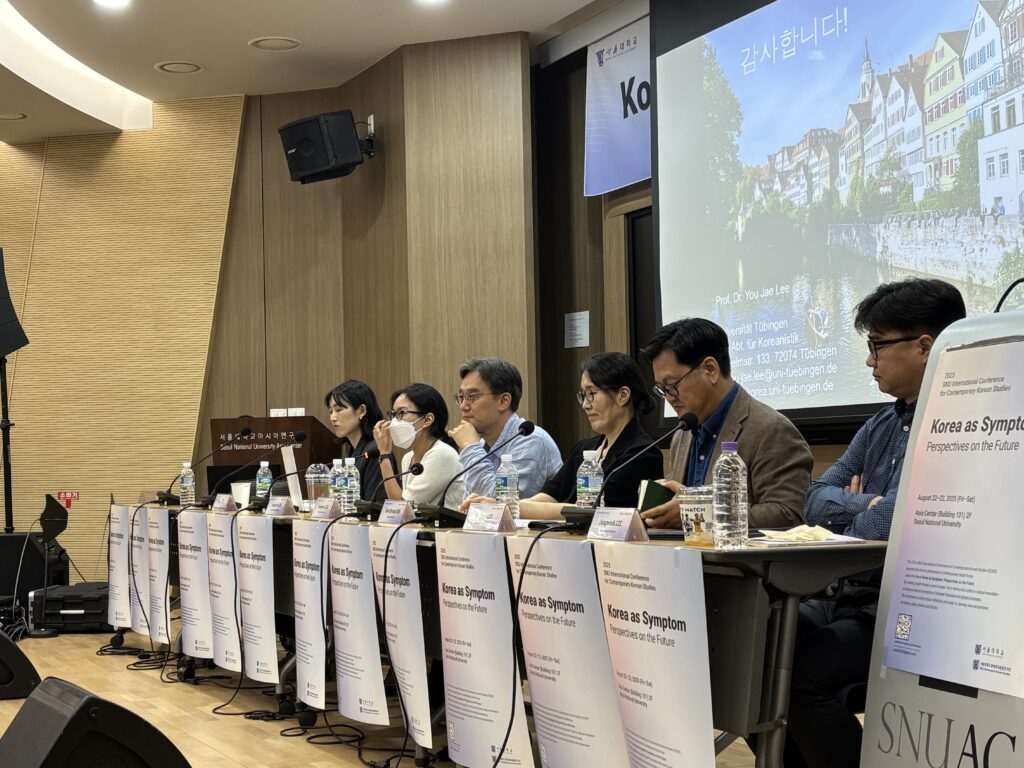
This session explored issues of migration, labor, gender, and discrimination through an intersectional lens and a range of diverse cases. By examining the oral histories of disabled adoptees, the generational experiences of Korean migrants in Germany, and the realities of migrant workers in Korean society, the presenters showed how migration intersects with gender, disability, generation, and race.