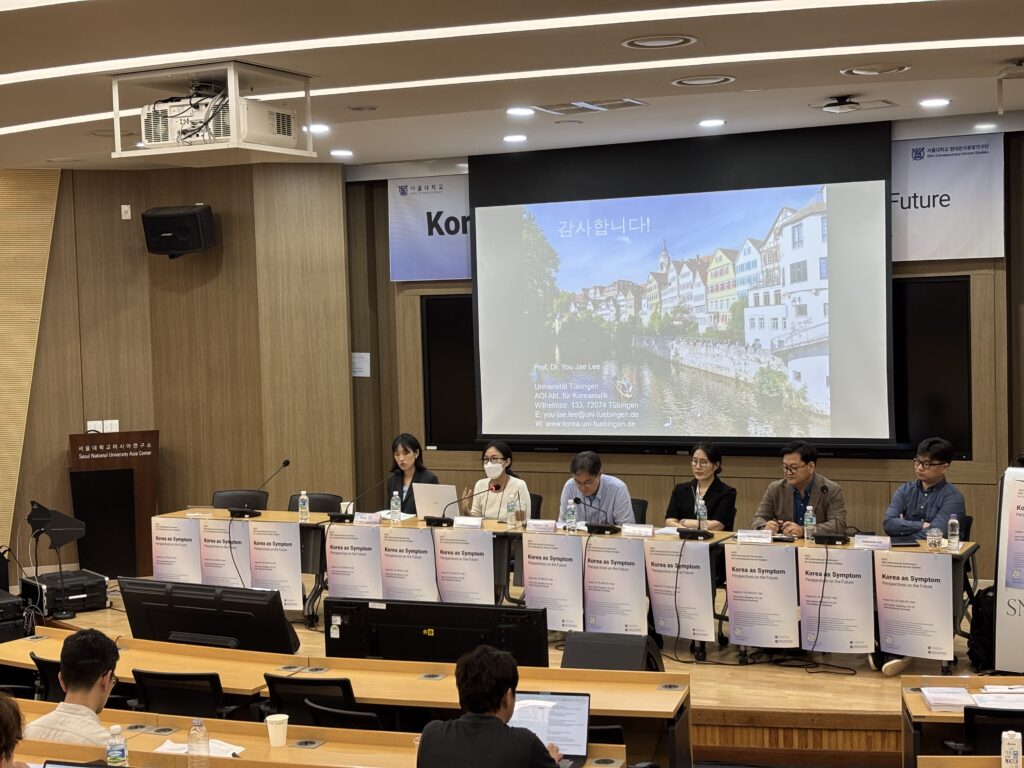
The SNU Center for Contemporary Korean Studies held an international conference titled “Korea as Symptom” over two days, August 22 and 23. As the third session on the second day of the conference, the Modernity and Development History Team organized a panel titled “Migration Issues and Gender Inequality in Korea” at Youngone Hall, SNU Asia Center. Chaired by Professor Dongwon Lee (Seoul National University), the session featured three presentations.
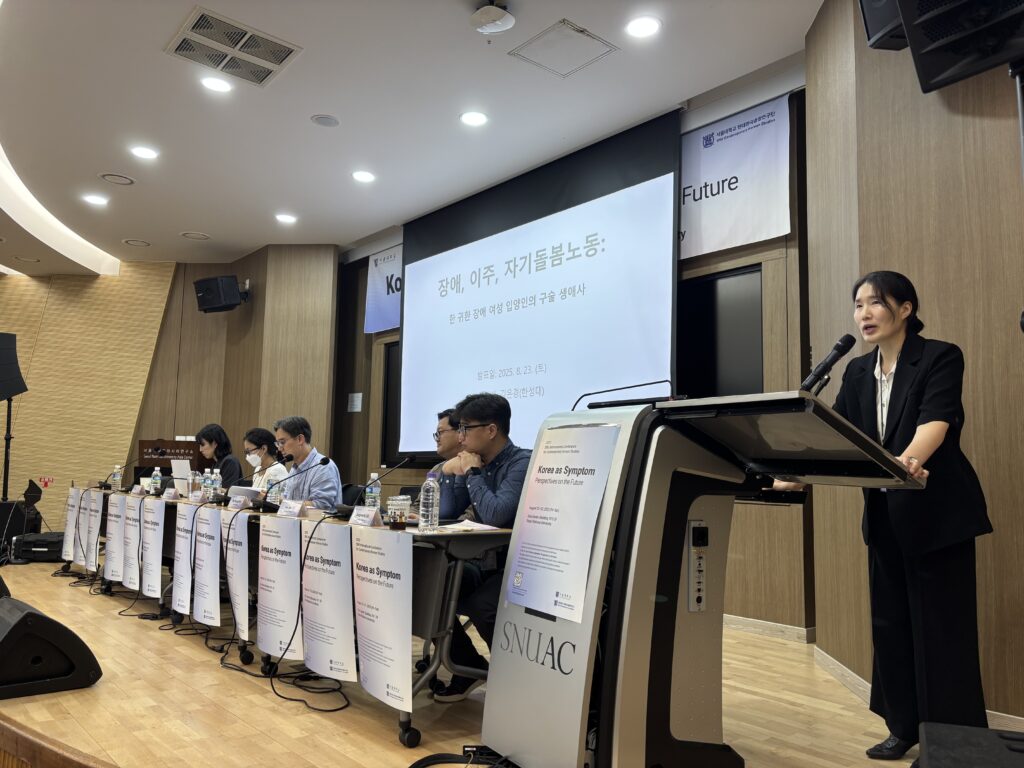
The first presentation, “Disability, Migration, and (Non) Labor,” was delivered by Professor Eun-Kyung Kim (Hansung University). Drawing on the oral histories of disabled Korean women who had been adopted to the United States, Kim examined the intersections of disability, gender, and migration from the perspective of disability feminism. In particular, she brought attention to forms of self-care necessary for survival that have remained largely invisible within conventional structures of labor, framing them as histories of “a round peg in the square hole.” By making visible the struggles of disabled Korean adoptee women for belonging and survival, the presentation brought previously marginalized voices to the forefront.
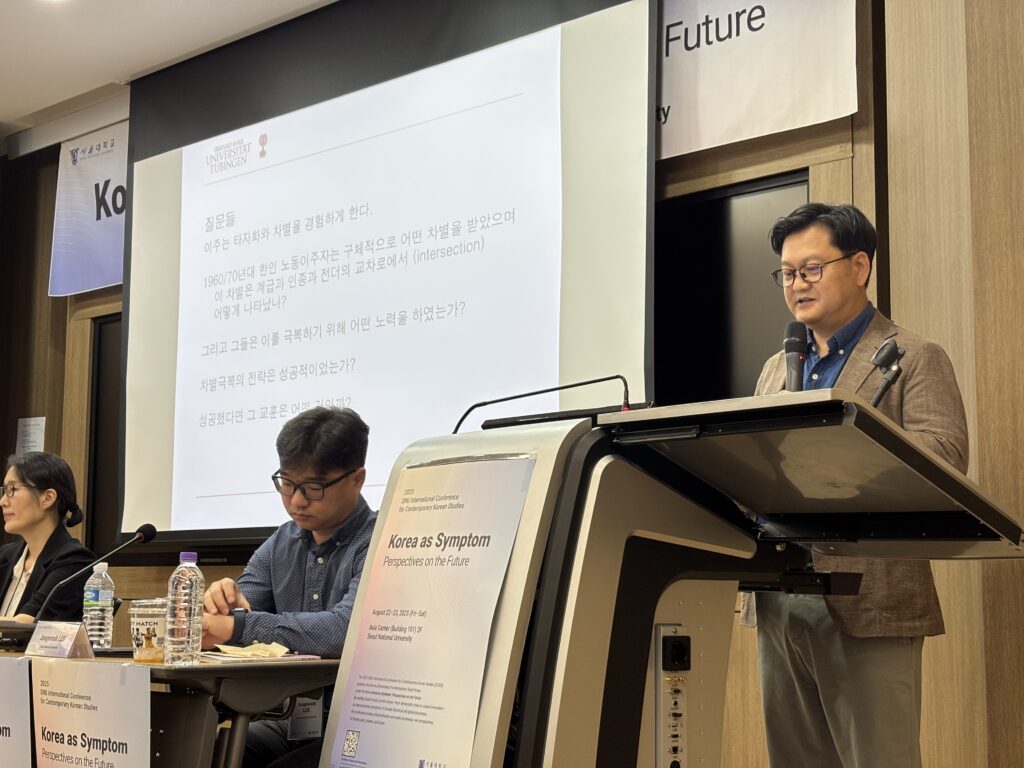
The second presentation was given by Professor You Jae Lee (University of Tübingen) under the title “You Have to Be Better Than the Germans: Discrimination Experiences of Korean Labor Migrants in Germany.” Lee examined the experiences of Asian migrants in Germany who, despite being characterized as a “model minority,” have continued to face structural discrimination. First-generation Korean labor migrants encountered discrimination from the time of their recruitment to West Germany and engaged in collective struggles to secure their legal status. The second generation, by contrast, entered the middle class through educational achievement, but increasingly rejected the model-minority identity and formed new social movements in solidarity with other Asian Germans. The presentation demonstrated how the history of Korean migration is closely intertwined with the broader development of Asian German activism in German society.
The final presentation, “Global Labor Mobility: The Lives of Migrant Workers in South Korea and Their Families in Origin Countries,” was delivered by Professor Jong-Wook Lee (Seoul National University). Lee provided a statistical analysis of the current conditions and working environments of migrant workers in South Korea and explored the factors shaping remittances as well as their social and economic effects. In doing so, he shed light on the realities of migrant workers who contribute to Korean society while continuing to occupy precarious social and economic positions.
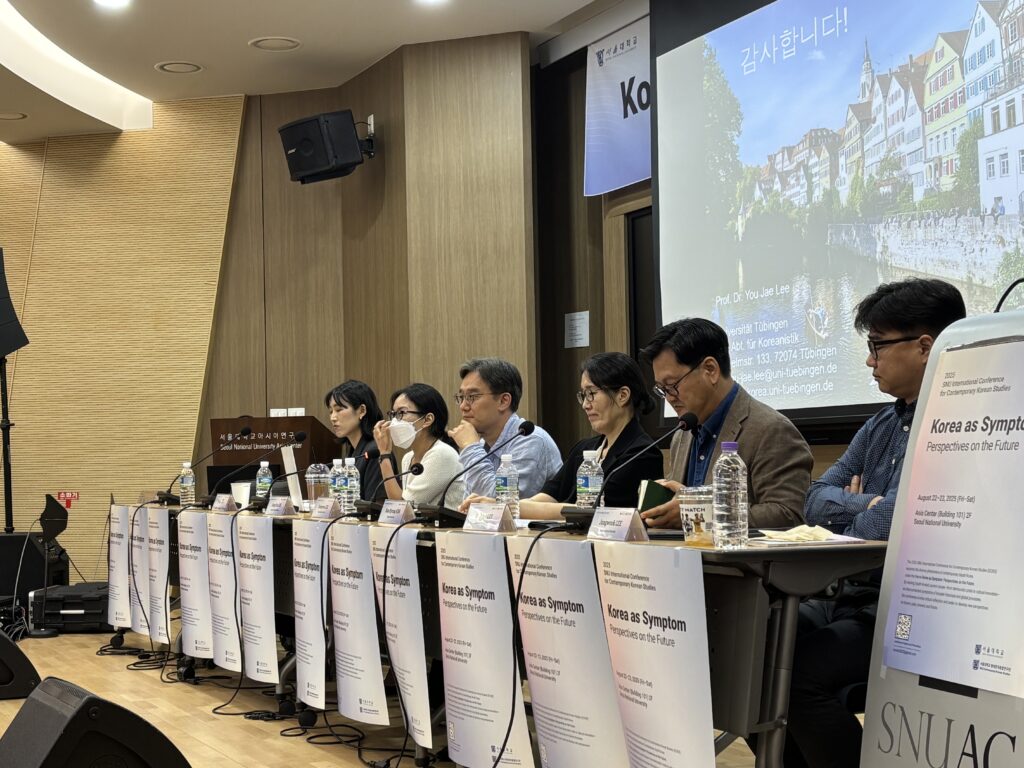
The session explored the intersecting issues of migration, labor, gender, and discrimination through a range of different cases. By examining the oral histories of disabled adoptees, the generational experiences of Korean migrants in Germany, and the realities of migrant workers in South Korea, the presenters demonstrated how migration is deeply intertwined with gender, disability, generation, and race.