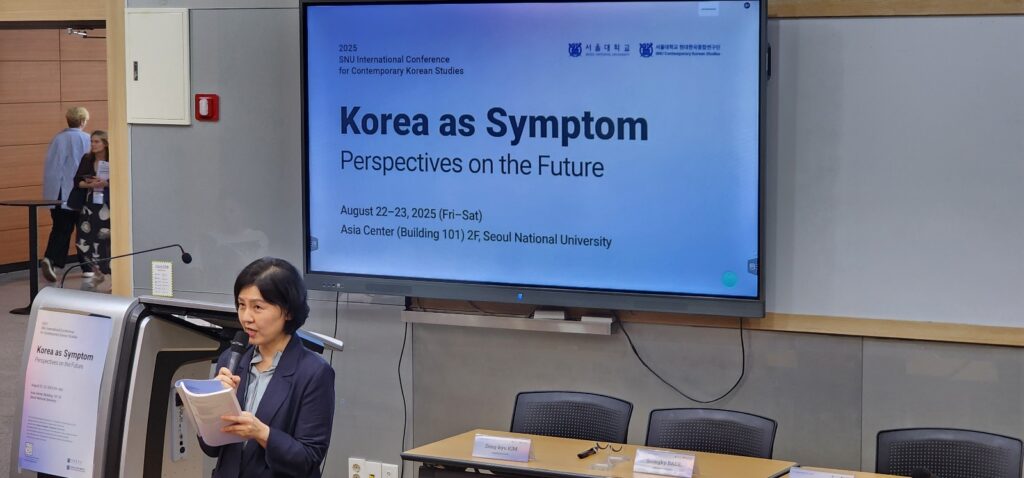
The SNU Center for Contemporary Korean Studies held an international conference titled “Korea as Symptom” over two days, August 22 and 23. As the third session of the conference, the Values and Identity Team organized a panel titled “Religion, Culture, and Political Identity in Korea II” in Room 230 of Building 101 at Seoul National University. Chaired by Professor Hyun-Joo Jung (Seoul National University), the session featured three presentations.
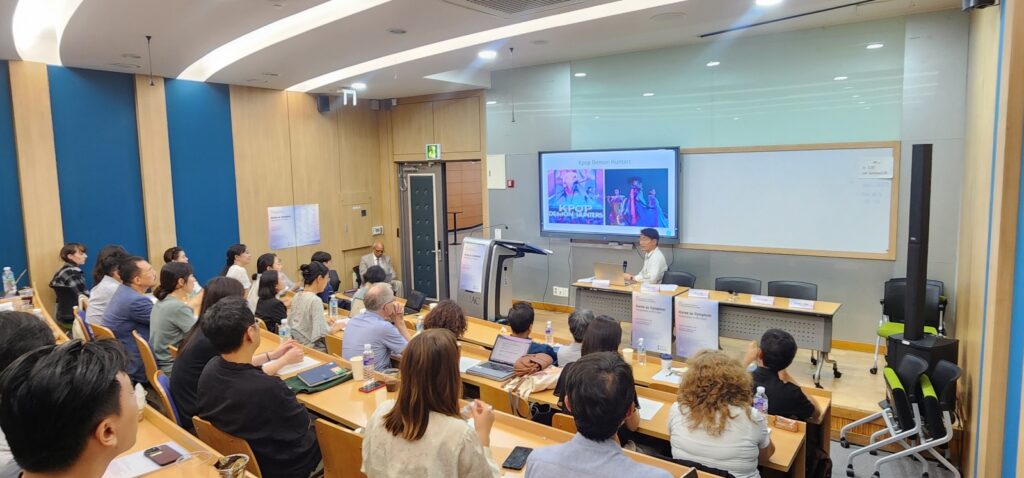
The first speaker was Research Professor Dong-Kyu Kim (Sogang University), who presented “Korean Political Scandals and Shamanism Rhetoric.” Kim pointed out that the rhetoric of shamanism has repeatedly been invoked in discussions of political scandals in South Korea. In particular, he noted that although South Korea’s two presidential impeachments in the twenty-first century arose from different circumstances, narratives suggesting that political decisions had been influenced by shamanism emerged repeatedly in both cases. Through an examination of such discourse, he reinterpreted twenty-first-century shamanism as a construct shaped by the twentieth century and analyzed the meanings that shamanism continues to hold in both the public and private spheres of contemporary Korean society.
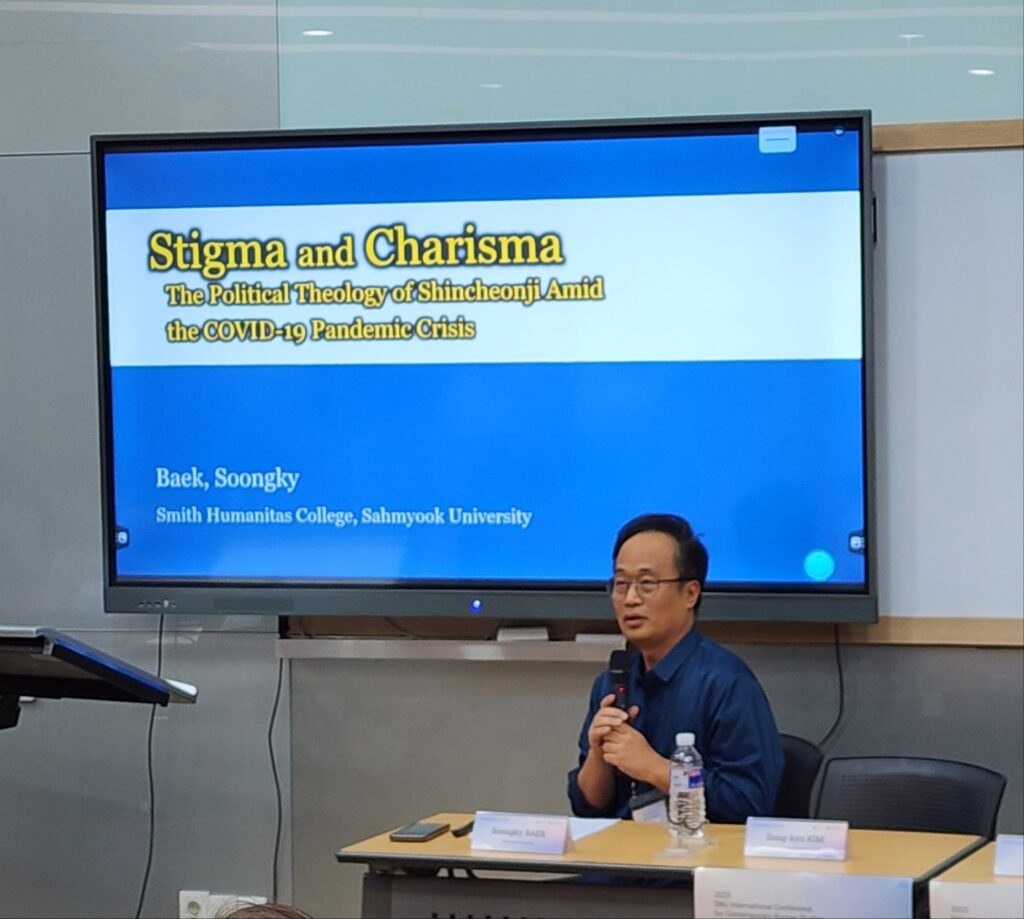
The second presentation was delivered by Professor Soong-Ki Baek (Sahmyook University) under the title “Stigma and Charisma: The Political Theology of Shincheonji Amid the COVID-19 Pandemic Crisis.” Baek explained how Shincheonji became the target of intense public criticism during the pandemic, stigmatized as a “social virus.” He then analyzed the strategies through which Shincheonji responded to this stigma: portraying itself as the victim of irrational persecution, interpreting the growth of its membership in eschatological terms, and at the same time seeking social legitimacy through accommodative measures such as cooperation with public health authorities. The case was presented as a revealing example of the strategies employed by new religious movements to preserve legitimacy and internal cohesion in a hostile environment.
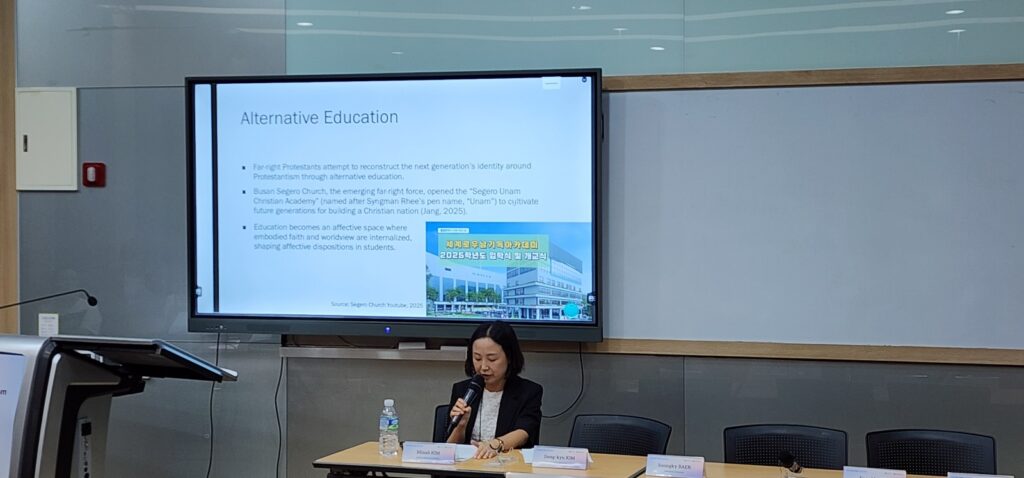
The final presentation, “Fear, Hatred, and Anger: The Affective Politics of Far-Right Protestantism in South Korea,” was given by Dr. Min-A Kim (Incheon National University). Kim argued that far-right Protestant groups have emerged as important political actors in South Korea and examined the process through which they have become politically mobilized against the backdrop of President Yoon Suk Yeol’s declaration of martial law and subsequent impeachment crisis. In particular, she highlighted how far-right Protestantism has mobilized emotions such as fear, hatred, and anger to strengthen internal solidarity while, at the same time, undermining democratic values and institutional legitimacy in the broader public sphere.
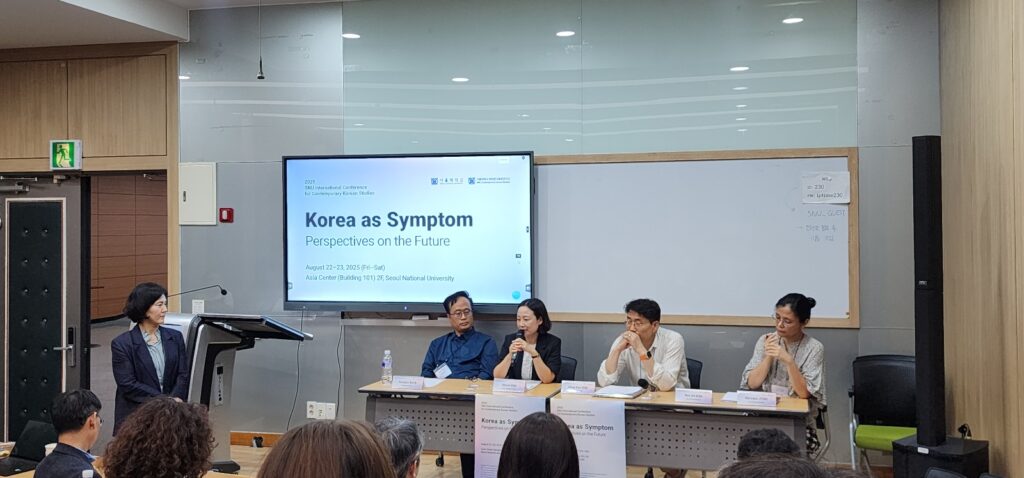
The session explored the intersections between religion and politics in contemporary South Korea and offered new analytical perspectives for understanding Korean politics. Its broader significance lay in demonstrating the value of an interdisciplinary approach that examines political and religious phenomena together, thereby opening up new ways of interpreting the dynamics of contemporary Korean society.