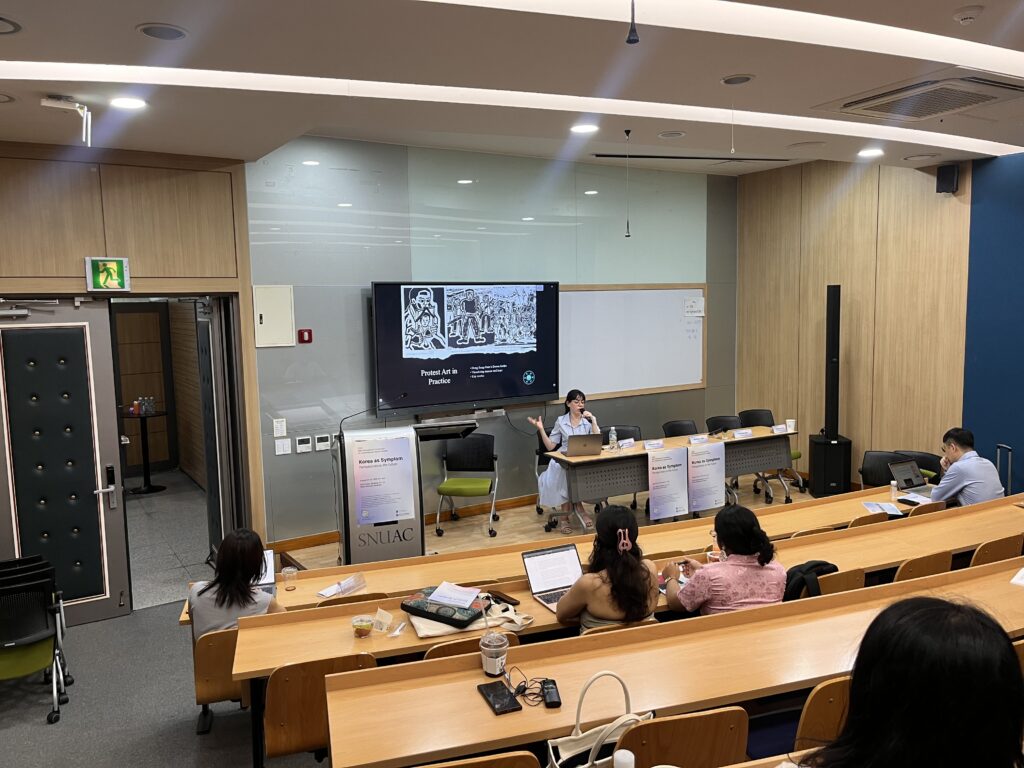
The SNU Center for Contemporary Korean Studies held an international conference titled “Korea as Symptom” over two days, August 22 and 23. As the first session on the second day of the conference, the Modernity and Development History Team organized a panel titled “The Political and Social Landscape of Korea” in Room 230 of Building 101 at Seoul National University. Chaired by Professor Changkeun Lee (KDI School of Public Policy and Management), the session featured two presentations.
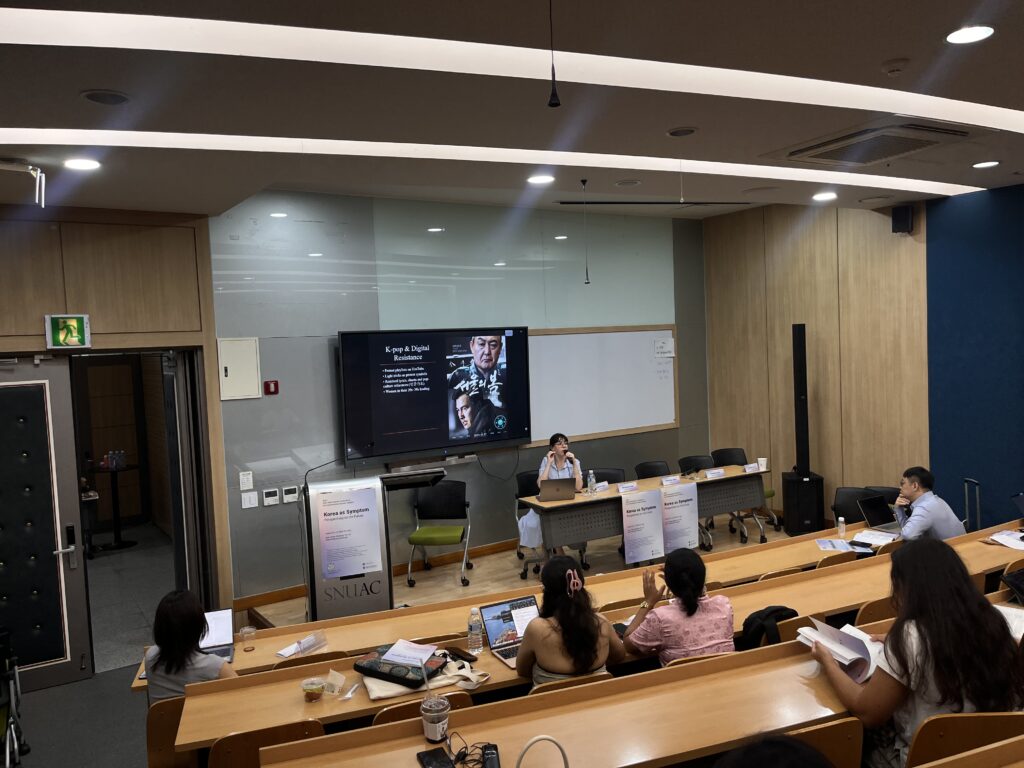
In the first presentation, Mutaha Abed, a doctoral student at Birzeit University, presented “Cultural Productions of Resistance: The Gwangju Uprising and Its Legacy in South Korean Protest Culture.” Abed explored the role played by the 1980 Gwangju Uprising and its subsequent legacy in South Korean protest culture and social movements. In particular, the presentation examined how literature, film, and visual art became intertwined with cultures of resistance and contributed to the formation and transmission of collective memories of protest.
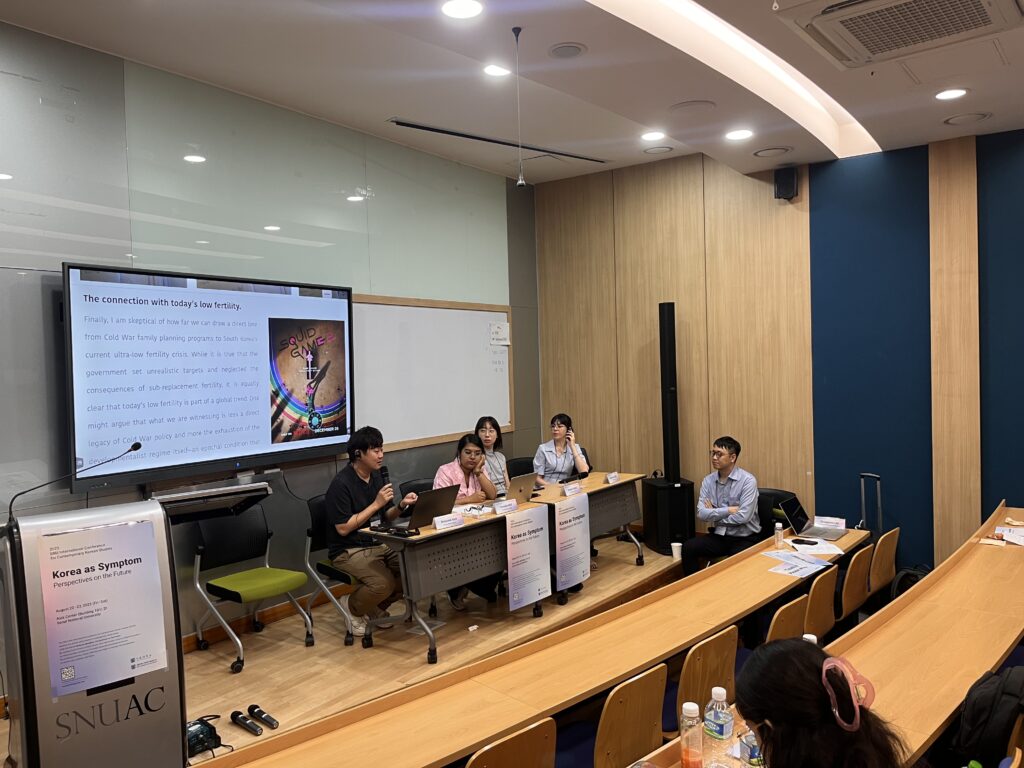
The second presentation was delivered by Torunika Roy, a doctoral student at Jawaharlal Nehru University, under the title “The Legacy of Population Control: How Cold War Politics Shaped South Korea’s Fertility Crisis.” Whereas previous studies have largely explained South Korea’s extremely low fertility rate in terms of economic insecurity, gender inequality, and changing social values, Roy approached the issue through the legacy of population-control policies during the Cold War. Drawing particularly on Foucault’s concept of biopower, she examined how U.S.-developed contraceptive technologies became involved in the formation and implementation of South Korea’s population policies.
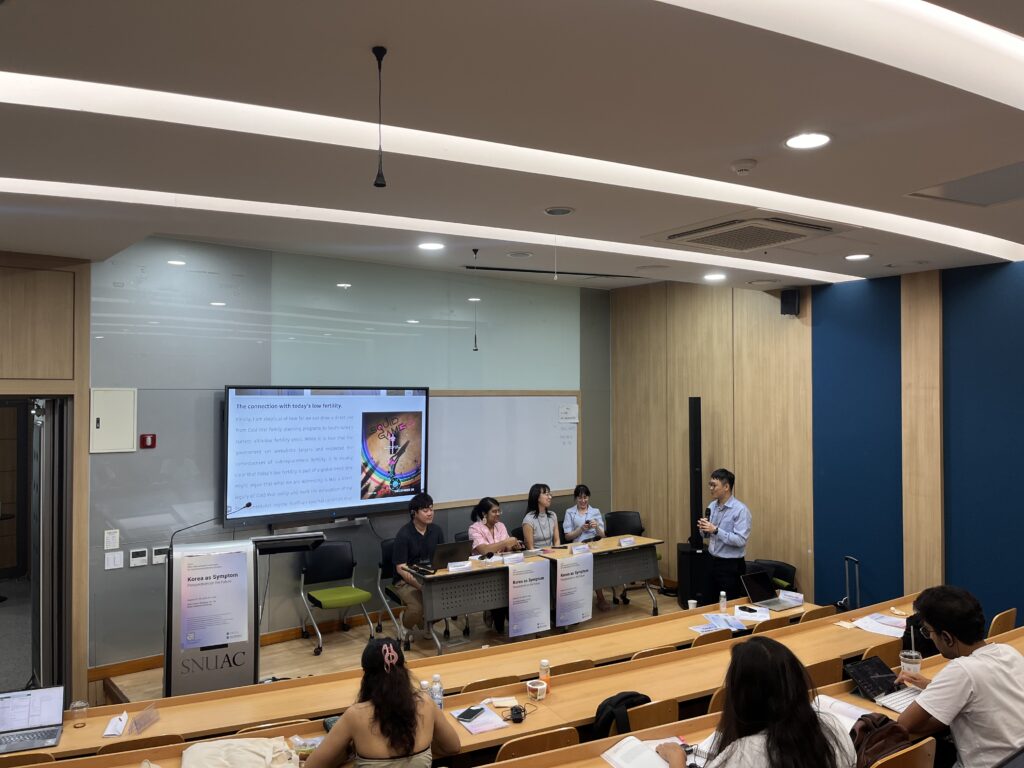
The session explored changes in South Korea’s political and social landscape across both past and present. By addressing diverse themes ranging from protest culture and the legacy of the Gwangju Uprising to the country’s extremely low fertility rate, the presentations offered an opportunity to consider a broad range of debates and historical forces shaping contemporary Korean society.