

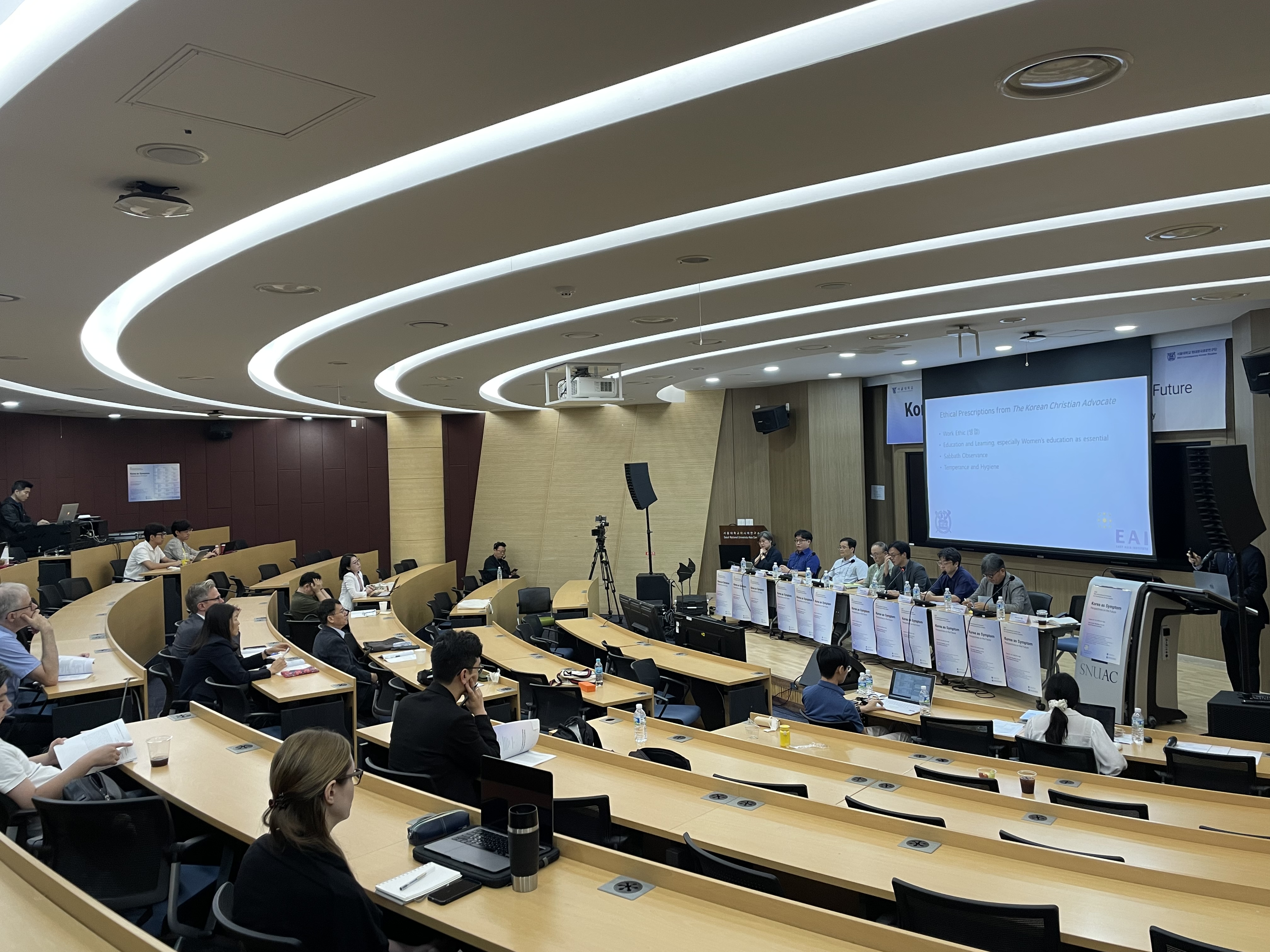
The Seoul National University Contemporary Korea Studies Group held an international conference on August 22–23 under the theme “Korea as Symptom.” On the second day, the Statehood Cluster conducted the session “Perspectives on the Statehood of Modern and Contemporary Korea” at Yeongwon Hall, Asia Research Institute, Seoul National University. The session was chaired by Professor Jong-hak Kim (Seoul National University) and featured four presentations.
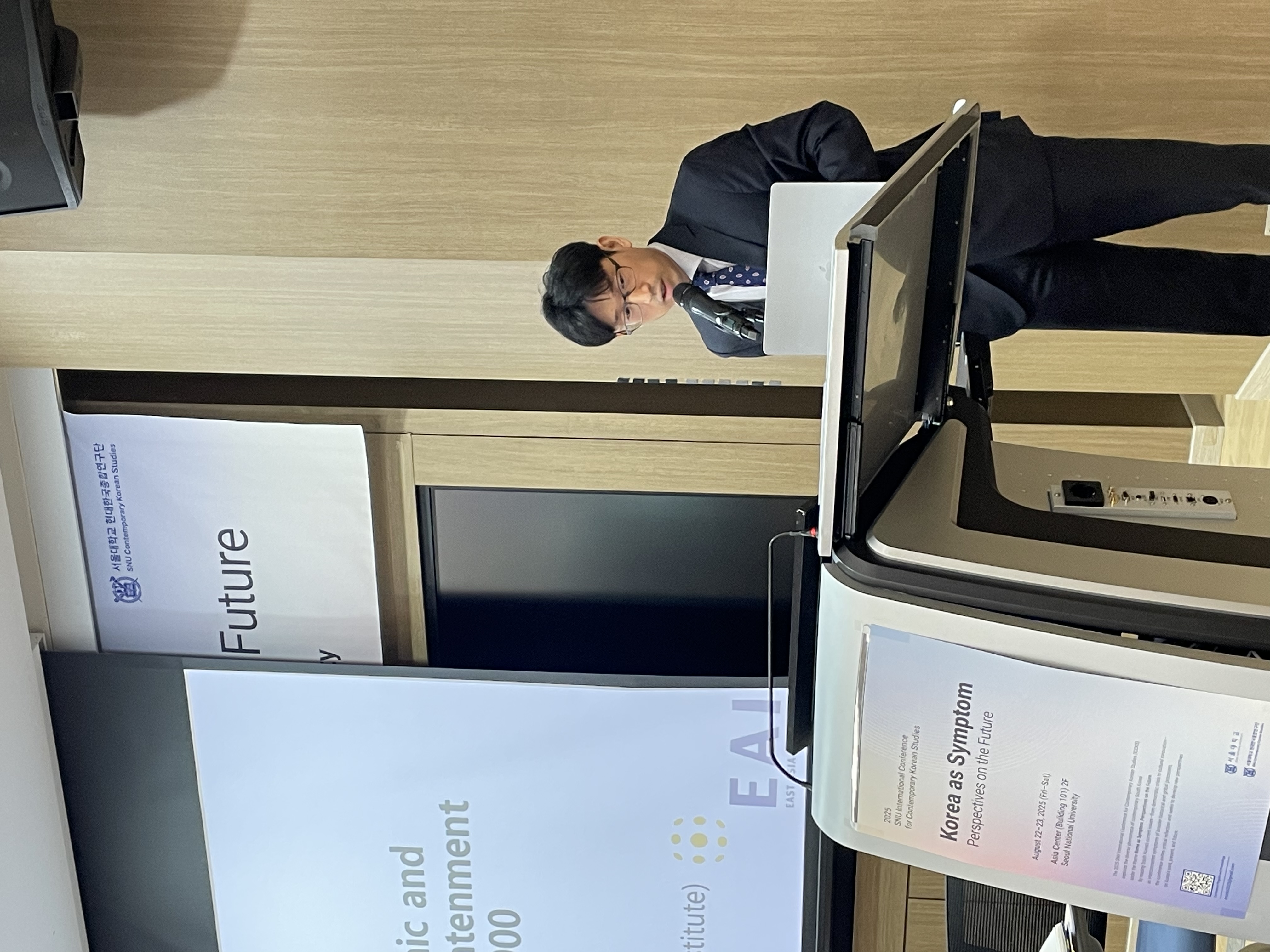
The first presentation was “The Protestant Work Ethic and the Origin of Korean Enlightenment Nationalism, 1896–1900” by Researcher Inhwan Oh (East Asia Institute). He explained that the Protestant work ethic provided a core foundation for the formation of Korean enlightenment nationalism between 1896 and 1900. In particular, he closely analyzed the term “Joseonbyeong (Joseon sickness)” to show how the Protestant work ethic was proposed as an alternative framework.
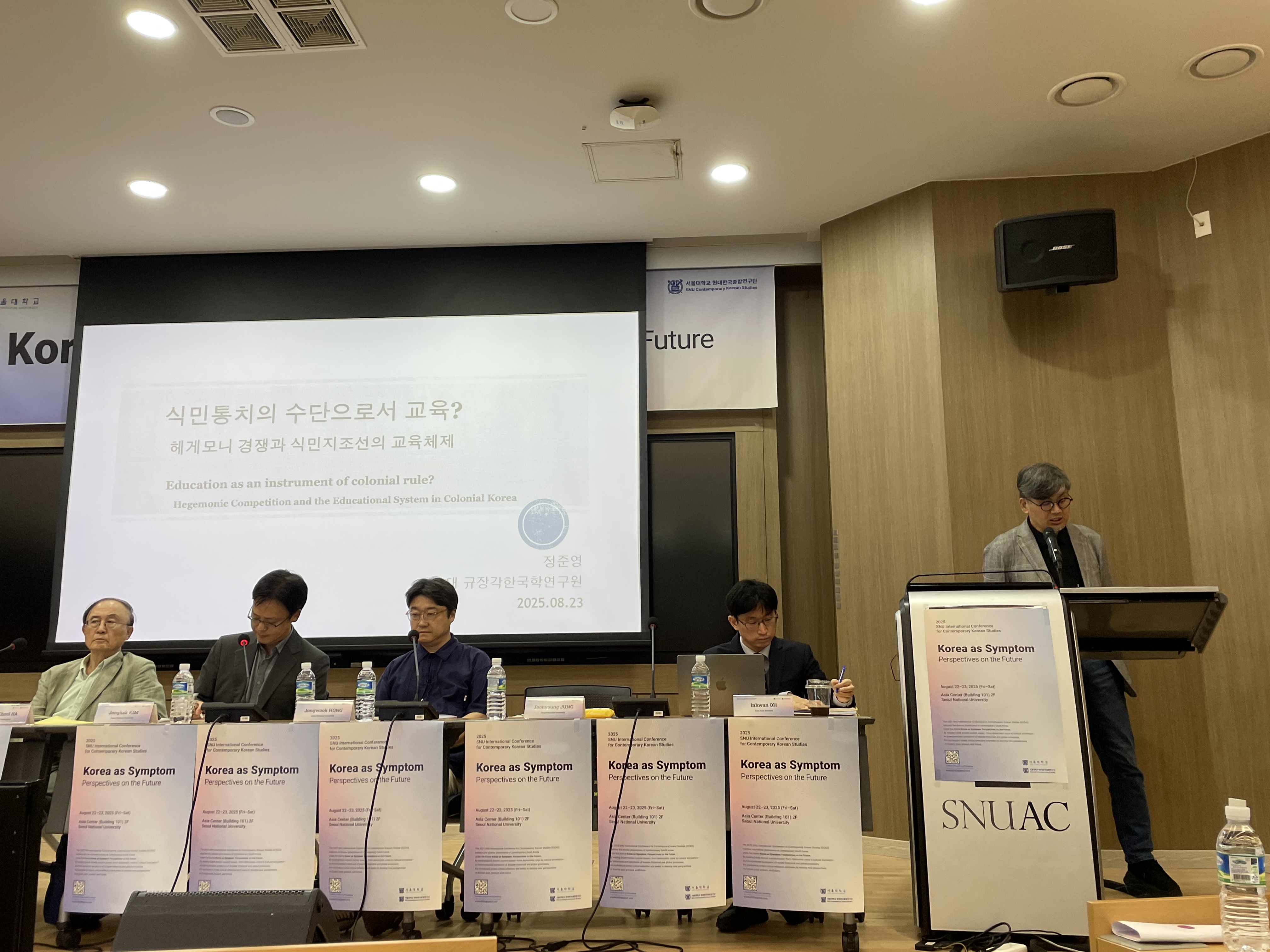
The second presentation was “Education as an Instrument of Colonial Rule?: Hegemonic Competition and the Educational System in Colonial Korea” by Professor Junyoung Jeong (Seoul National University). Jeong examined colonial-era educational policies that denied Koreans’ language, history, and culture while emphasizing loyalty to the emperor. Using a Bourdieuian perspective, he reinterpreted state governance by highlighting concrete patterns of coercion, resistance, and compromise.
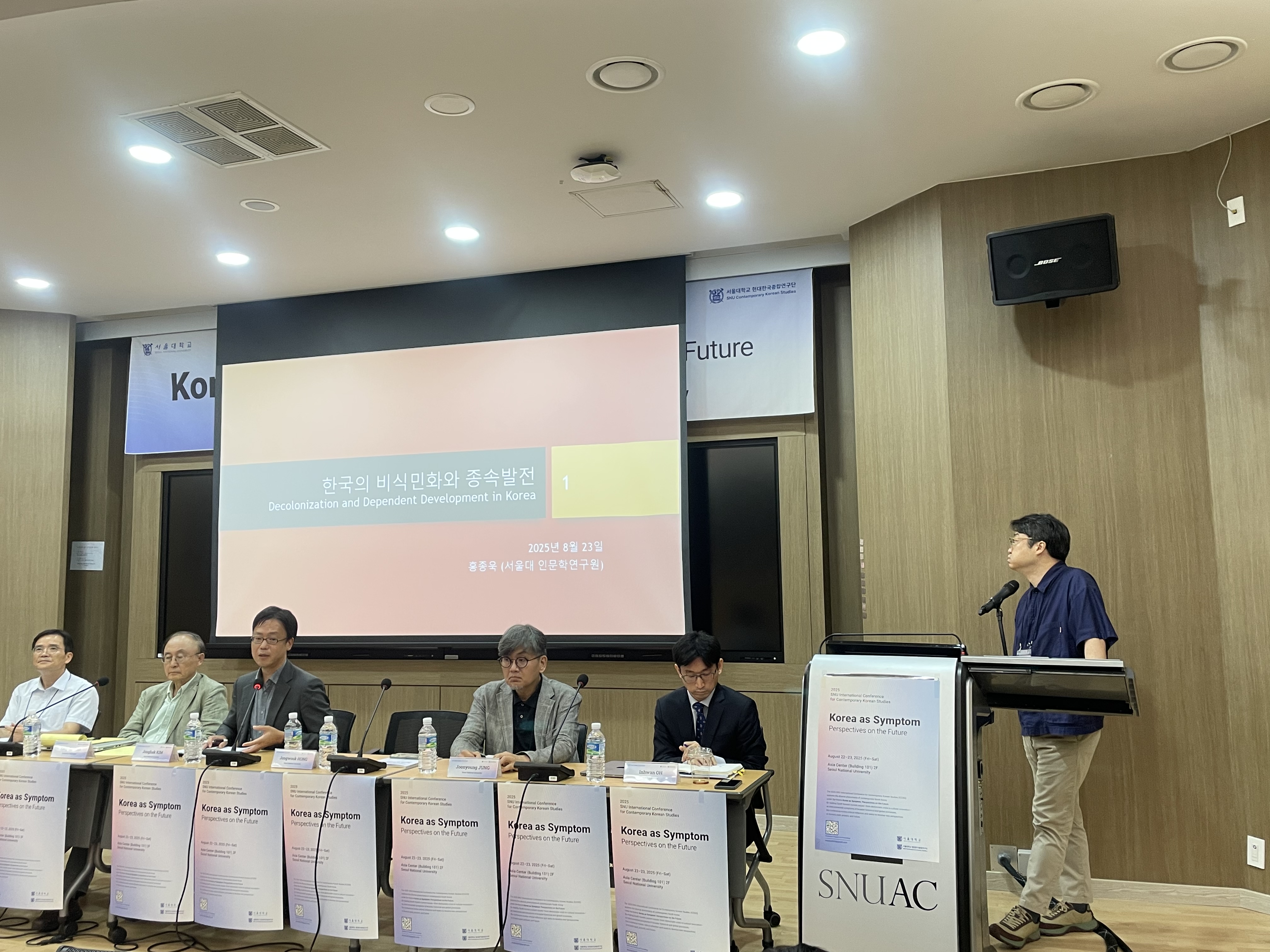
The third presentation was “Decolonization and Dependent Development in Korea” by Professor Jong-uk Hong (Seoul National University). Hong reviewed Korea’s colonial and postcolonial processes, examining the emergence and development of theories surrounding colonies, including modernization theory and dependency theory. By addressing various discourses on postcolonial Korea, he critically reflected on the “dependent development” model.
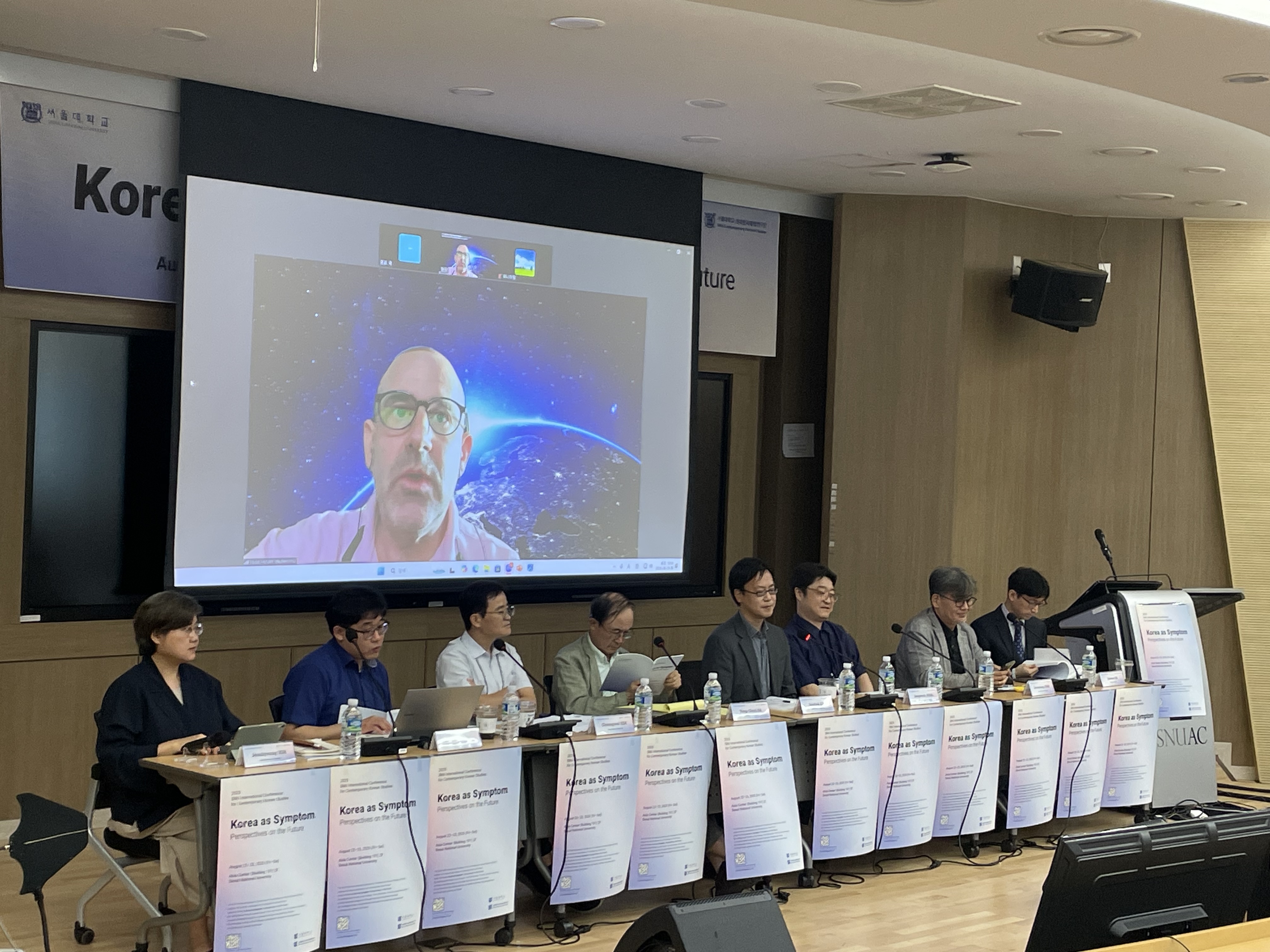
The final presentation was “Hetero-Authoritarianism: Toward Embodied Histories of State and Society in ‘Hot War’ South Korea” by Professor Todd A. Henry (University of California, San Diego). He analyzed how “hetero-authoritarianism” functioned during Korea’s militarization, showing that gender norms were reconstructed within industrialization and state-led illiberalism. He also emphasized that hetero-authoritarianism operated not only through top-down coercion but also through everyday negotiation and resistance by stigmatized actors.
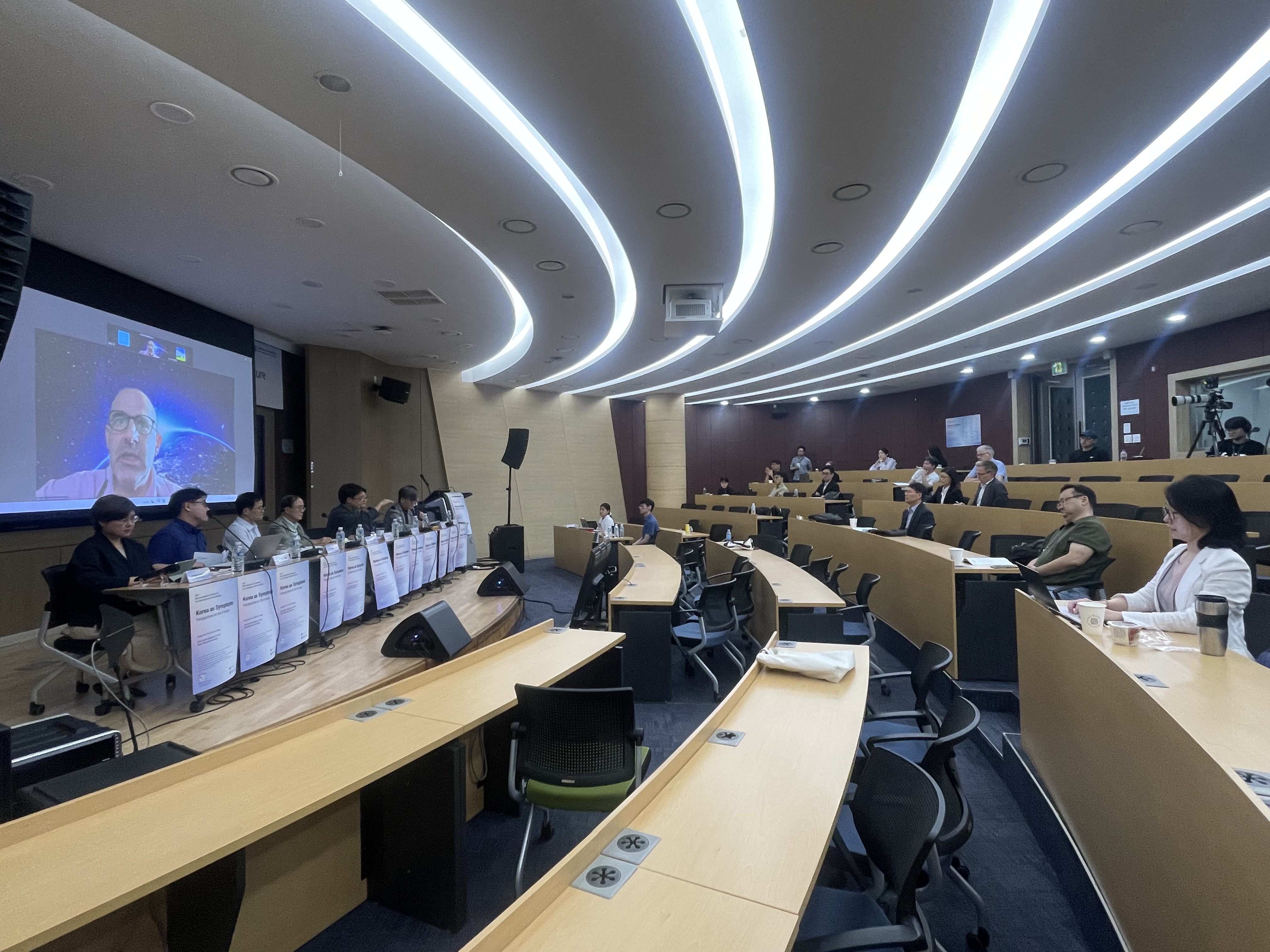
This session explored the formation of the modern and contemporary Korean state from multiple perspectives. In particular, it illuminated the complexity of Korean statehood and offered a comprehensive framework for understanding its historical development.