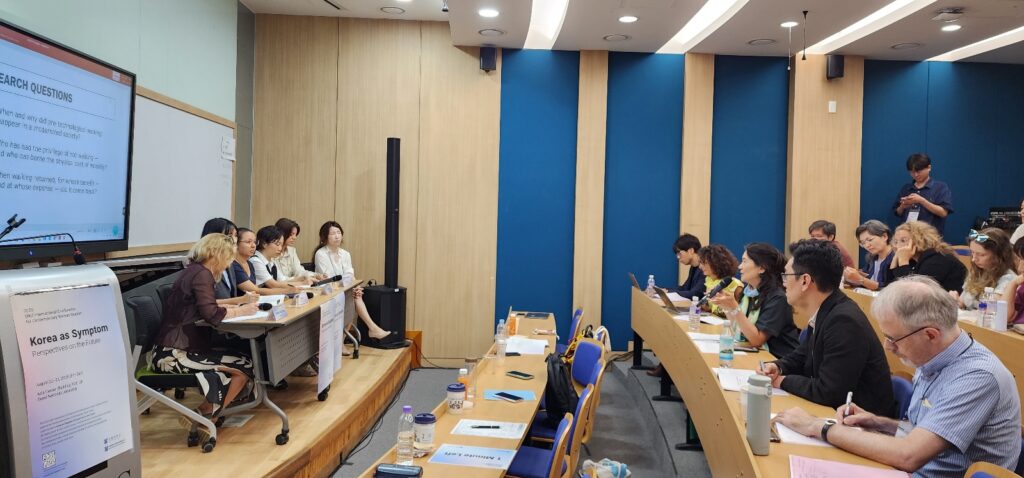
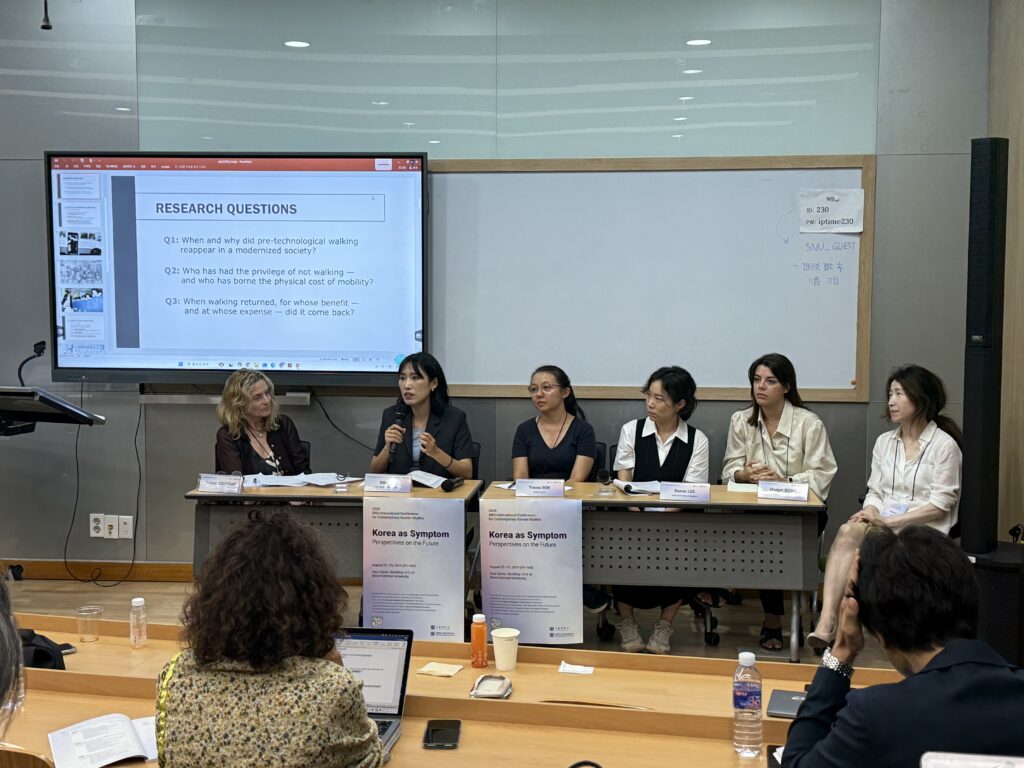
At the international conference “Korea as Symptom” (August 22–23, 2025), the opening panel, “Walking as Object-Method in Korean Studies,” organized by Professor Valérie Gelézeau (EHESS, Paris), explored walking as both a research object and a research method.
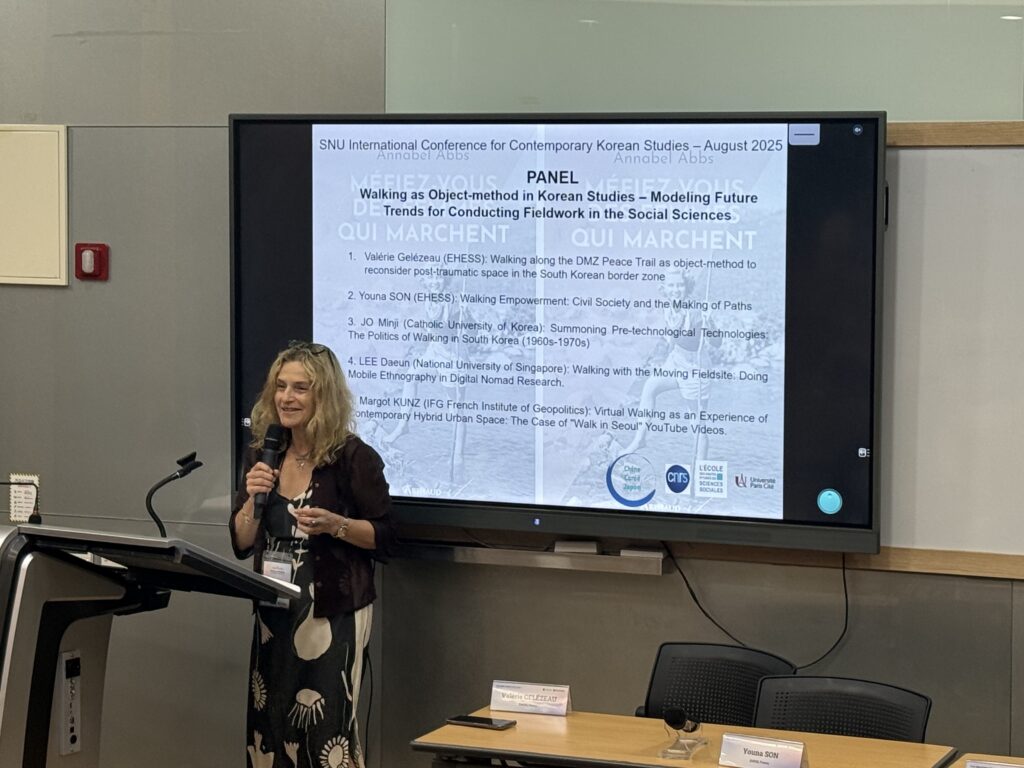
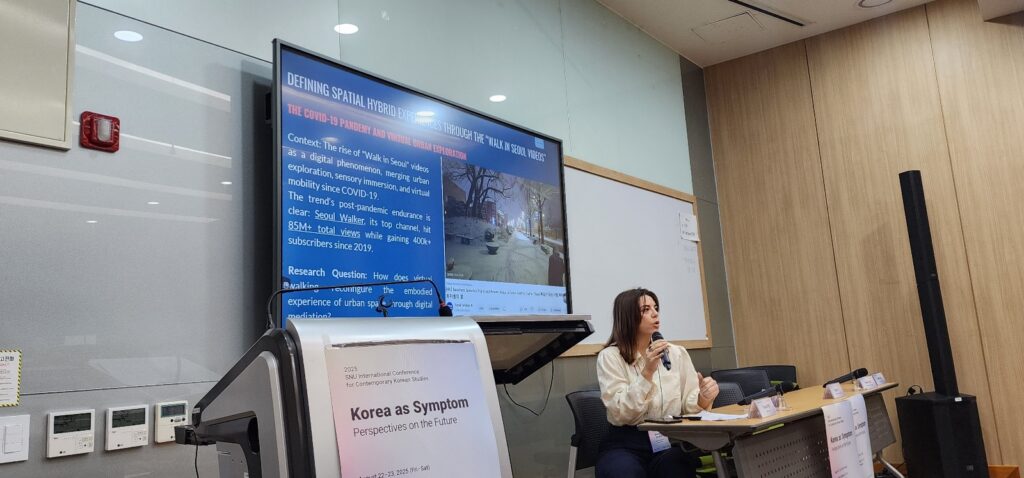
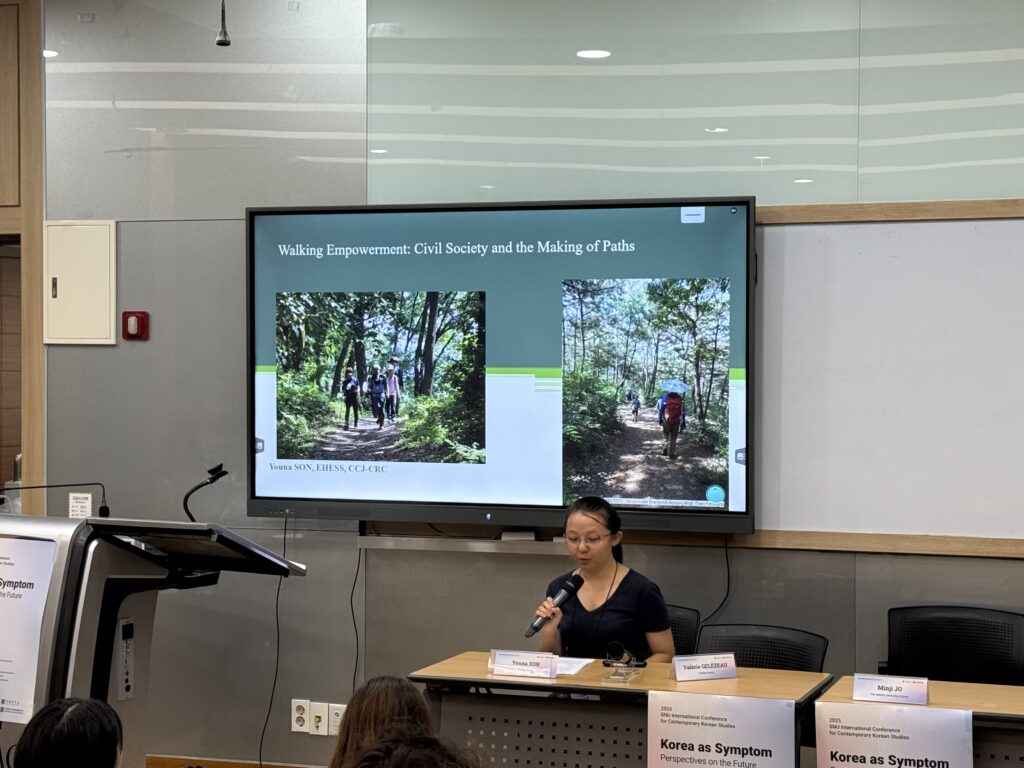
Held at Seoul National University’s Asia Center, the session brought together five scholars who examined how walking can generate new modes of knowledge and perception in Korean Studies. Professor Gelézeau reflected on walking the DMZ Peace Trail to rethink the post-traumatic landscape of Korea’s border zone. Yuna Sohn (EHESS) analyzed civic trail-making in Daejeon and Gyeryongsan, interpreting walking as a haptic regime of knowledge. Minji Cho (Catholic University of Korea) discussed the ambivalent politics of walking in the 1960s–70s, both as state mobilization and as resistance. Da-eun Lee (National University of Singapore) proposed mobile ethnography through her research on digital nomads, while Margot Kunz (French Institute of Geopolitics) examined “virtual walking” on YouTube as a new urban experience producing cyber-flâneurs.
The panel collectively redefined walking as an object-method—a critical, sensory, and experimental practice that blurs the boundary between doing and knowing. By doing so, it opened new methodological pathways for reimagining space, technology, community, and affect in contemporary Korean Studies.
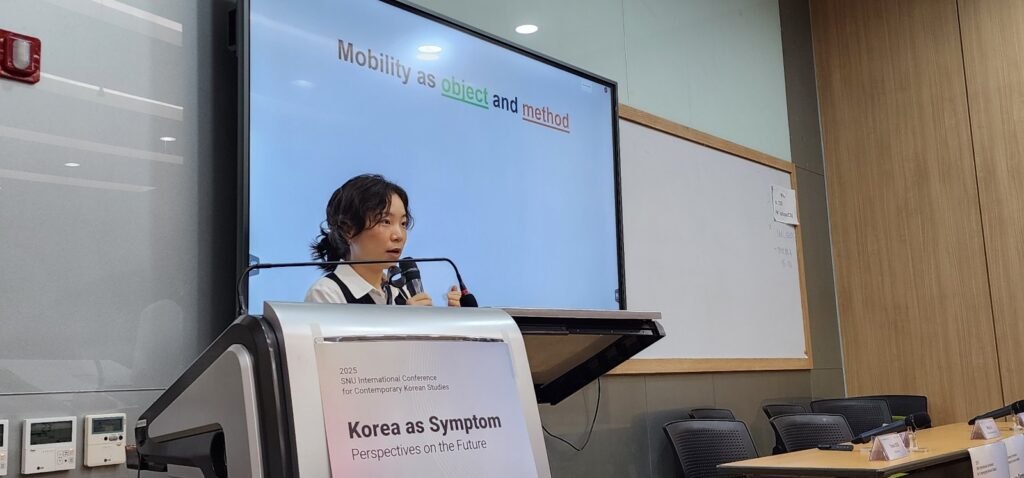
네 번째 발표에서 싱가포르국립대학교(National University of Singapore)의 이다은 박사과정생은 “Walking with the Moving Fieldsite: Doing Mobile Ethnography in Digital Nomad Research”를 주제로 모바일 민족지학(mobile ethnography)의 가능성을 탐색하였다. 그녀는 디지털 노마드와 같은 유동적인 연구 대상을 추적하면서, 연구자의 신체 자체가 이동하는 현장노트가 되어가는 과정—즉, 움직이는 연구자이자 움직이는 필드의 역동성을 성찰했다.