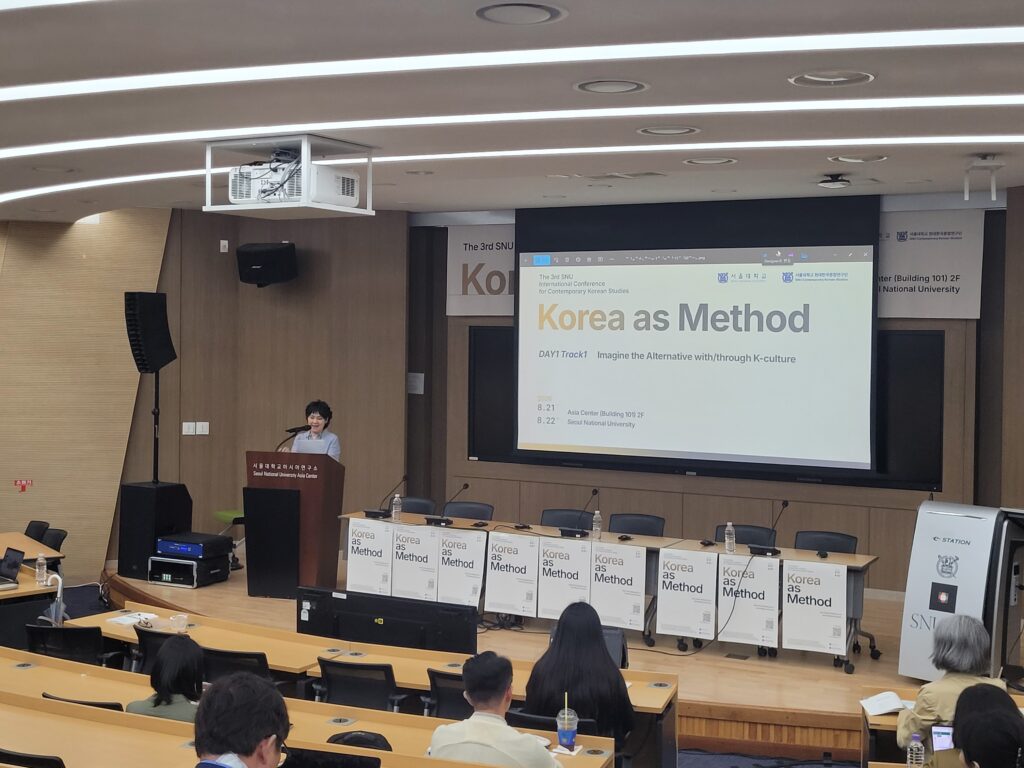
Chair: Jiyoung Suh (Seoul National University)
Presenters: Jungmin Kwon (Seoul National University of Education), Haekyung Um (University of Liverpool), Mia Xinrui Liu (University of Sheffield), Sebastián Urioste (La Rochelle Université)
Discussants: Gyu Tag Lee (George Mason University), Huikyong Pang (Sungkonghoe University)
The session “Imagine the Alternative with/through K-culture” brought together four perspectives on the global circulation of Korean popular culture, focusing on questions of fairness, digital platforms, fandom, cultural identity, and transnational exchange. Moving between Korea, China, Europe, and Latin America, the presentations demonstrated how K-culture can generate new forms of participation and identification while also raising broader questions about cultural power, authenticity, technology, and globalization.
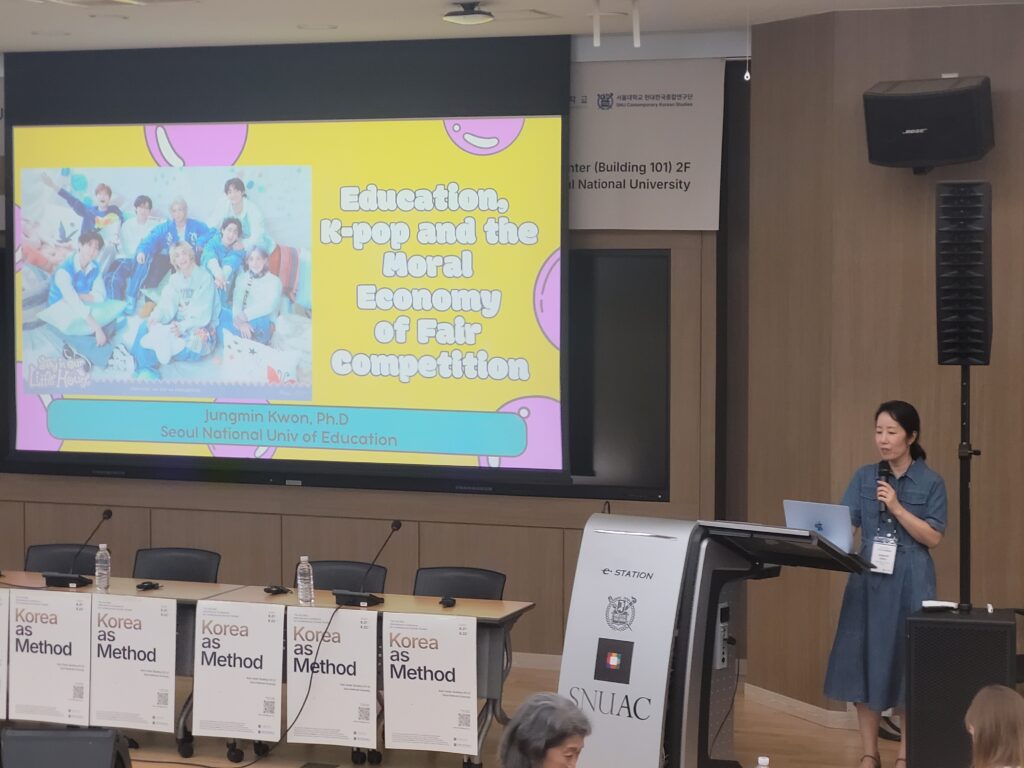
Jungmin Kwon, in “K-pop and the Global Diffusion of Korea’s Moral Economy for Fairness,” examined how expectations of fairness and procedural equality within Korean society are reflected in K-pop fandom. Focusing on technological infrastructures such as ticketing systems, fan-club memberships, identity verification, and anti-scalping measures, the presentation showed how fans actively monitor these systems and evaluate participation according to shared ideas of fairness. As K-pop expands internationally, these expectations increasingly circulate beyond Korea as part of global fandom practices.
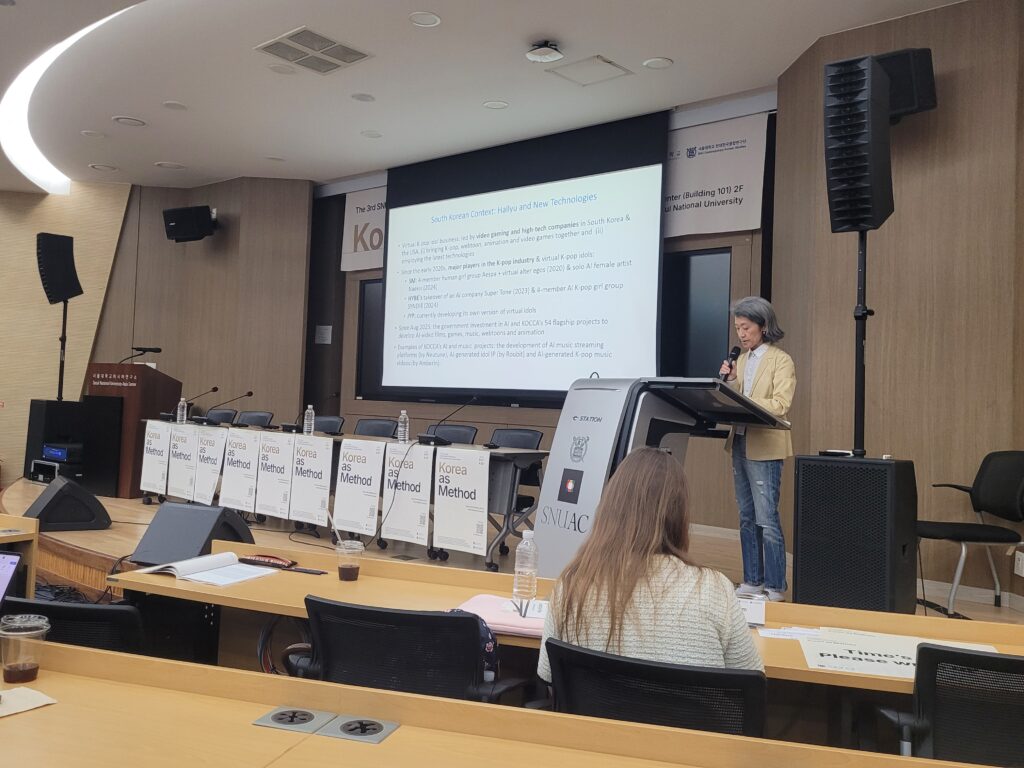
Haekyung Um presented “Platformitization and Re-intermediation in the Rise of the Virtual Idol Industry in South Korea”. Focusing on virtual idol groups such as PLAVE and MAVE, the paper explored how digital technologies, social media platforms, motion capture, CGI, and AI-driven systems are reshaping the production and management of K-pop idols. Particular attention was given to the emergence of new technological intermediaries, changing forms of fan interaction, and the ethical and copyright questions surrounding the growing virtual idol industry.
Following these two presentations, Gyu Tag Lee offered a discussion that raised a number of stimulating questions and opened the topics further to critical reflection.
Mia Xinrui Liu, in “‘Foreign Chicks’ Don’t Know K-Pop: Anti-Colonial Discourse and Imagined East Asianness in Chinese K-pop Fandom”, examined tensions between Chinese, Korean, and international K-pop fandoms. Through the case of an ENHYPEN fandom controversy, the presentation explored how Chinese fans construct ideas of authentic East Asian fandom while criticizing what they perceive as Western-dominated values and forms of participation. At the same time, the study showed how anti-colonial language can itself produce new exclusions and reinforce divisions within global fandom.
Sebastián Urioste concluded the presentations with “‘Asian Imaginary’ in the Andes: Bolivian Youth and the Transnational Appeal of K-Pop.” Based on research with K-pop fans in Bolivia, the paper examined how South Korean popular culture can function as an alternative cultural point of orientation beyond both U.S.-centered modernity and local cultural expectations. The presentation considered whether this engagement with Asia may provide new ways of imagining identity and Indigeneity in Latin America, while also questioning whether such processes may reproduce new forms of Orientalism.
The second discussion, led by Huikyong Pang, further connected these themes and was followed by a final question-and-answer session involving all presenters and members of the audience.
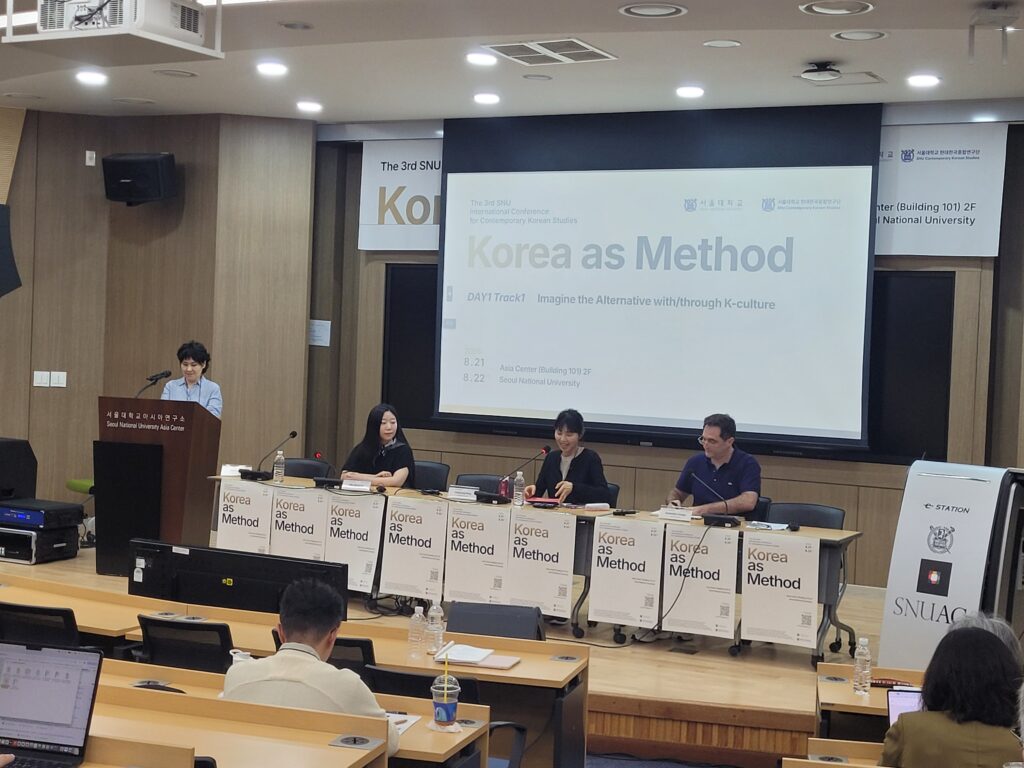
The lively exchange highlighted just how many different perspectives can emerge from the study of K-culture across regions and disciplines.
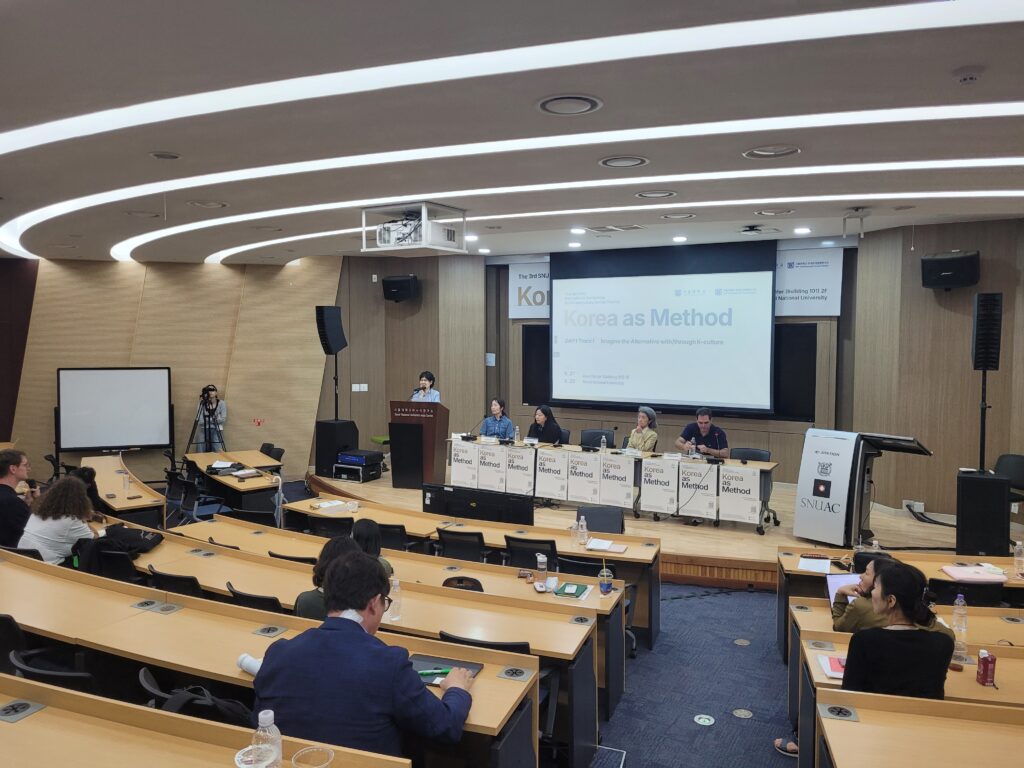
Rather than presenting K-culture as a single, homogeneous phenomenon, the session demonstrated its complex and changing meanings in relation to technology, fandom, fairness, identity, cultural hierarchy, and transnational imagination. The extensive discussion also showed that these topics opened many further questions, making the session a particularly stimulating contribution to the broader theme of “Korea as Method.”