Activities

Contemporary Korean Music

SNU Contemporary Korean Studies conducts interdisciplinary collaboration and international research exchange in the politics, economics, technology, and culture of contemporary Korea.

Research Teams

2026 SNU ICCK Session – Korea in Motion: Rethinking Music, History, and Tradition

2026-08-28

Chair: Anna Yates-Lu (Seoul National University)
Presenters: Hee-sun Kim (Kookmin University), Yuseon Won (Seoul National University), Cellik Adams (Sogang University), Madlen Poguntke (Seoul National University), Junghyun Kim (Seoul National University)

The session “Korea in Motion: Rethinking Music, History, and Tradition” brought together five different perspectives on Korean music, ranging from Cold War historiography and conceptual composition to cultural transplantation, women’s music history, and the globalization of gugak through K-pop. Despite the diversity of topics and methodologies, all presentations showed how Korea can function not simply as an object of study, but as a productive point of departure for reconsidering broader concepts of music, history, tradition, and cultural circulation.

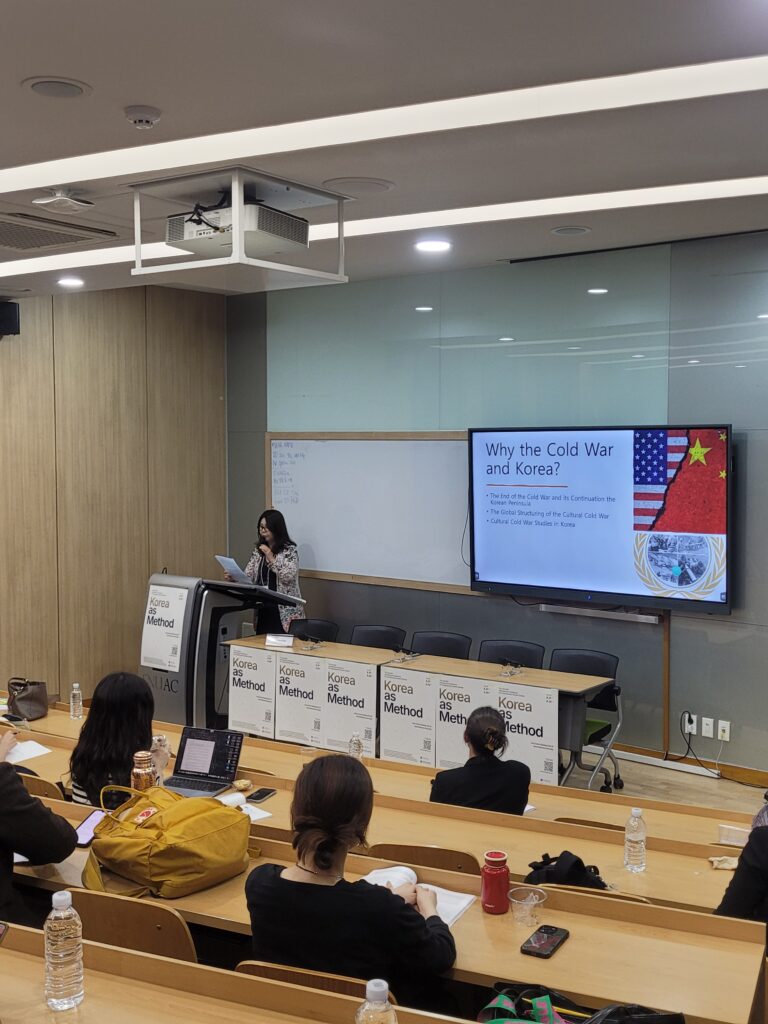
Hee-sun Kim opened the session with “Korea as Method: Reading Cold War Music History through Korean Musical Experiences from a Postcolonial Perspective”. Her presentation examined Korean music history through the intertwined structures of the Cold War, colonialism, division, and postcoloniality. Focusing particularly on the different development of traditional music in South and North Korea, she proposed “Korea as Method” as a framework for rethinking established Western-centered narratives of modern and global music history.
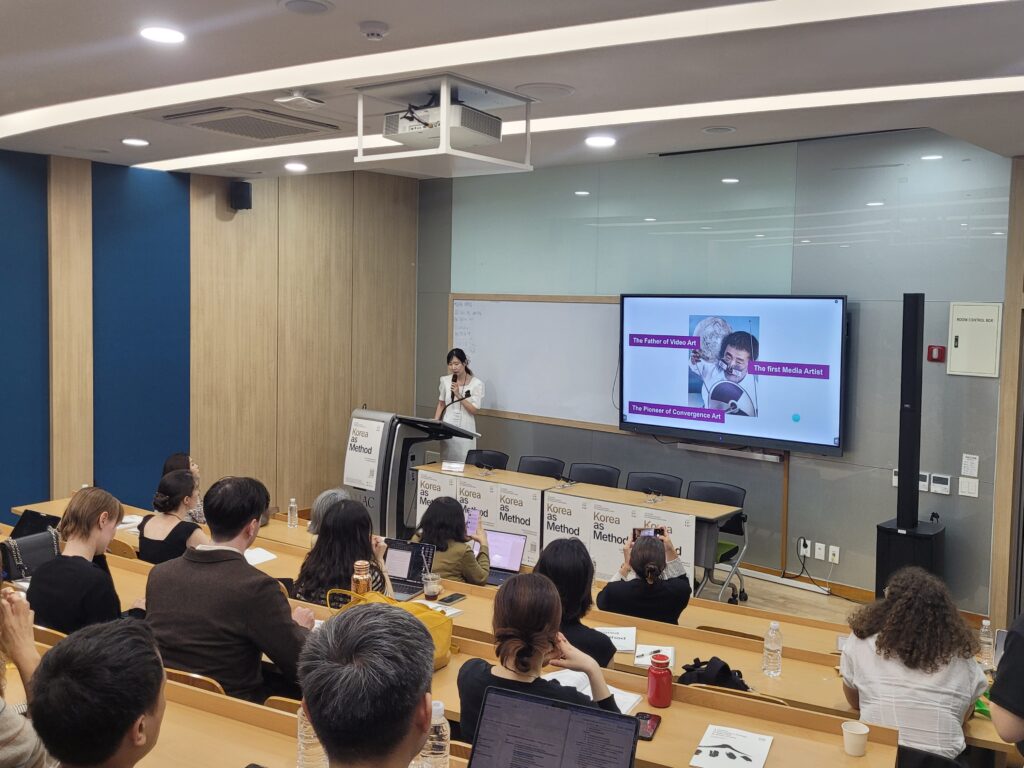
Yuseon Won, in “Composer Nam June Paik and Conceptual Music: With a Focus on His Symphonies”,reconsidered Nam June Paik not only as a pioneer of video art but also as a composer whose work continuously challenged conventional definitions of music. By tracing Paik’s ideas from music to “anti-music” and “a-music”, and by examining his unconventional symphonies, the presentation highlighted how Paik expanded the concepts of composition, performance, and the musical work itself.
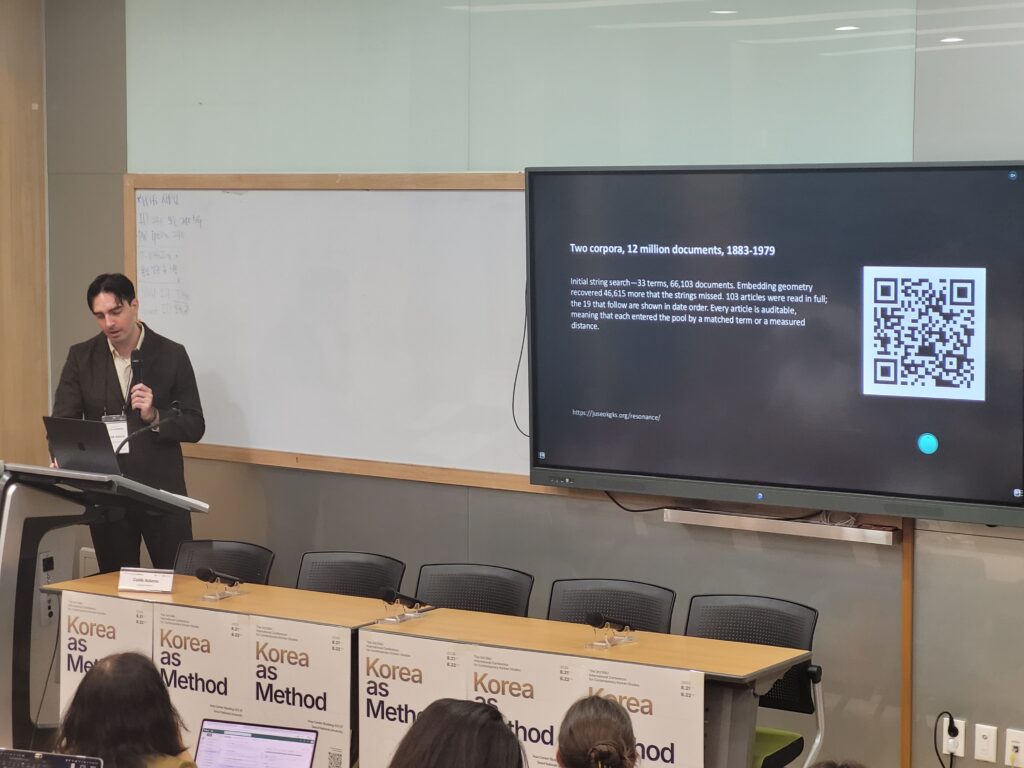
Cellik Adams presented “Traces of Resonance: Classical Music and Cultural Transplantation in 20th-Century Korea”. His paper investigated the historical integration of Western classical music into Korean society and asked why this process generated comparatively little cultural controversy when compared with the introduction and institutionalization of Western fine art. Combining computational analysis of periodical literature with close reading, the study explored the mechanisms of cultural transplantation under Korea’s rapid modernization.
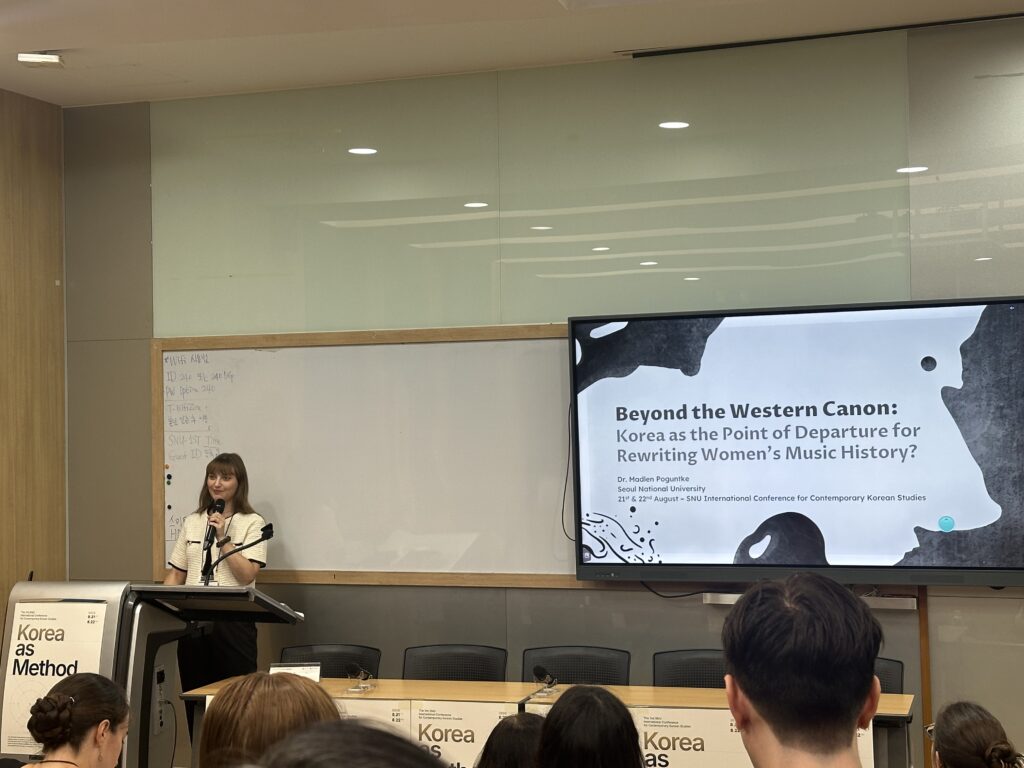
Madlen Poguntke, in “Beyond the Western Canon: Korea as the Point of Departure for Rewriting Women’s Music History?”, examined the limitations of Western historiographical categories such as composer, work, and canon when applied globally. Using figures such as gisaeng and mudang, the presentation argued for a broader understanding of musical creativity, authorship, transmission, and cultural authority, and proposed Korea as a productive starting point for rethinking women’s music history beyond conventional canon-based models.
Junghyun Kim concluded the presentations with “The Globalization of Gugak through K-pop Fusion: ATEEZ’s ‘The Real (Heung Ver.)’ in Live Performance”. The paper explored how gugak-related elements are integrated into K-pop live performance through rhythm, musical content, production, visual presentation, choreography, and audience participation. The case of ATEEZ demonstrated how traditional elements can become structurally embedded within contemporary global popular music rather than functioning merely as decorative symbols of Koreanness.
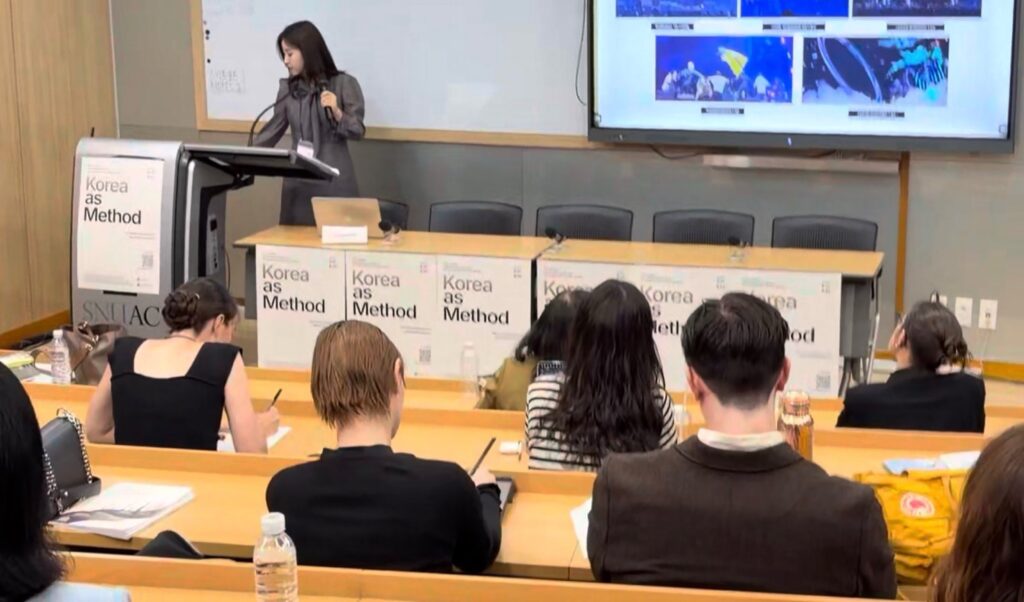
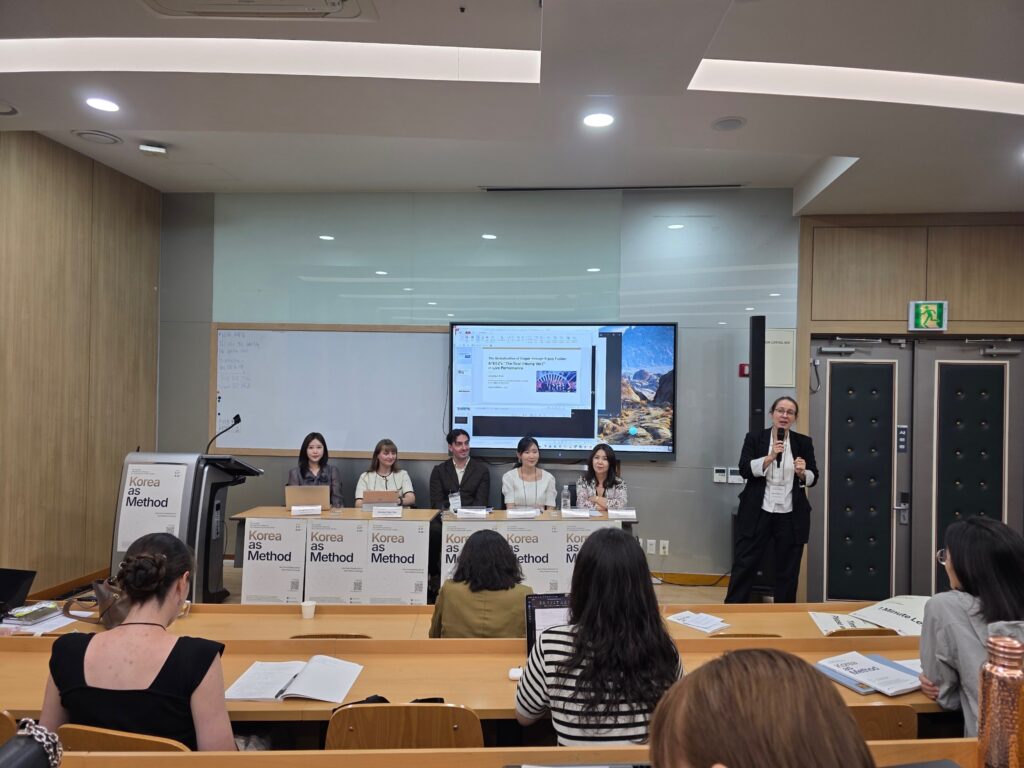
The presentations were followed by an active discussion with questions from the audience. The session was well received and generated lively exchange across the different research areas. One of its particular strengths was precisely the diversity of the five papers: rather than presenting music as a unified or fixed category, the session demonstrated how differently music can function as history, cultural practice, social memory, artistic concept, identity, and global media. In this respect, the theme “Korea as Method” proved especially productive, revealing the many different ways in which Korean musical experiences can open new perspectives for broader questions in music studies.
2026 SNU ICCK Session – Korea in Motion: Rethinking Music, History, and Tradition

2026-08-28

Chair: Anna Yates-Lu (Seoul National University)
Presenters: Hee-sun Kim (Kookmin University), Yuseon Won (Seoul National University), Cellik Adams (Sogang University), Madlen Poguntke (Seoul National University), Junghyun Kim (Seoul National University)

The session “Korea in Motion: Rethinking Music, History, and Tradition” brought together five different perspectives on Korean music, ranging from Cold War historiography and conceptual composition to cultural transplantation, women’s music history, and the globalization of gugak through K-pop. Despite the diversity of topics and methodologies, all presentations showed how Korea can function not simply as an object of study, but as a productive point of departure for reconsidering broader concepts of music, history, tradition, and cultural circulation.

Hee-sun Kim opened the session with “Korea as Method: Reading Cold War Music History through Korean Musical Experiences from a Postcolonial Perspective”. Her presentation examined Korean music history through the intertwined structures of the Cold War, colonialism, division, and postcoloniality. Focusing particularly on the different development of traditional music in South and North Korea, she proposed “Korea as Method” as a framework for rethinking established Western-centered narratives of modern and global music history.

Yuseon Won, in “Composer Nam June Paik and Conceptual Music: With a Focus on His Symphonies”,reconsidered Nam June Paik not only as a pioneer of video art but also as a composer whose work continuously challenged conventional definitions of music. By tracing Paik’s ideas from music to “anti-music” and “a-music”, and by examining his unconventional symphonies, the presentation highlighted how Paik expanded the concepts of composition, performance, and the musical work itself.

Cellik Adams presented “Traces of Resonance: Classical Music and Cultural Transplantation in 20th-Century Korea”. His paper investigated the historical integration of Western classical music into Korean society and asked why this process generated comparatively little cultural controversy when compared with the introduction and institutionalization of Western fine art. Combining computational analysis of periodical literature with close reading, the study explored the mechanisms of cultural transplantation under Korea’s rapid modernization.

Madlen Poguntke, in “Beyond the Western Canon: Korea as the Point of Departure for Rewriting Women’s Music History?”, examined the limitations of Western historiographical categories such as composer, work, and canon when applied globally. Using figures such as gisaeng and mudang, the presentation argued for a broader understanding of musical creativity, authorship, transmission, and cultural authority, and proposed Korea as a productive starting point for rethinking women’s music history beyond conventional canon-based models.

Junghyun Kim concluded the presentations with “The Globalization of Gugak through K-pop Fusion: ATEEZ’s ‘The Real (Heung Ver.)’ in Live Performance”. The paper explored how gugak-related elements are integrated into K-pop live performance through rhythm, musical content, production, visual presentation, choreography, and audience participation. The case of ATEEZ demonstrated how traditional elements can become structurally embedded within contemporary global popular music rather than functioning merely as decorative symbols of Koreanness.

The presentations were followed by an active discussion with questions from the audience. The session was well received and generated lively exchange across the different research areas. One of its particular strengths was precisely the diversity of the five papers: rather than presenting music as a unified or fixed category, the session demonstrated how differently music can function as history, cultural practice, social memory, artistic concept, identity, and global media. In this respect, the theme “Korea as Method” proved especially productive, revealing the many different ways in which Korean musical experiences can open new perspectives for broader questions in music studies.