The 1st International Conference for Contemporary Korean Studies concluded with a roundtable discussion that brought together the themes of the two-day conference and explored future directions for the field. Although listed in the official program simply as a “Roundtable Discussion,” the session centered on the agenda of “Contemporary Korean Studies 2.0.” Eun-Jeung Lee (Freie Universität Berlin), Yong Chool Ha (University of Washington), and Hyeong-ki Kwon (Seoul National University) first presented their perspectives on the changing landscape of Korean Studies in Europe, the challenges of studying Korea’s modernization, and the future direction of Contemporary Korean Studies at Seoul National University, followed by an open discussion with participants.
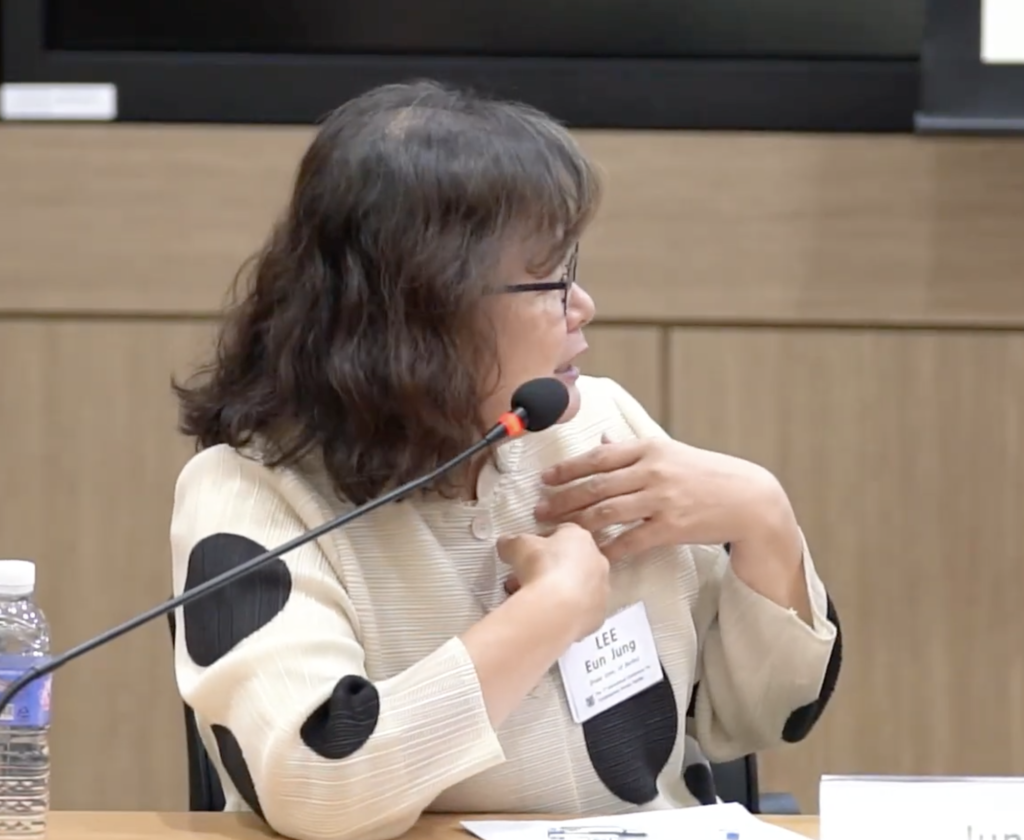
Eun Jung Lee began by describing Korean Studies in Europe as undergoing both quantitative and qualitative transformation. The global spread of Hallyu has led to a substantial increase in the number of students interested in Korea, while social-scientific approaches to contemporary Korean politics and society are gradually expanding alongside the traditional emphasis on language, literature, and history. Yet compared with Chinese and Japanese Studies, relatively few European universities have established Korean Studies as an independent academic field, and expertise on Korea remains limited in European governments, public institutions, and think tanks.
Lee nevertheless identified an important new opportunity. For the first time, a generation of young Europeans is encountering Korea directly through Hallyu rather than primarily through the mediation of China or Japan. She therefore argued for a long-term strategy that would enable these students to develop into scholars and professionals with substantive expertise on Korea. Rather than focusing on short-term and highly visible outcomes, sustained educational exchanges, institutional support, and research networks will be necessary to cultivate the next generation of Korea specialists in Europe.
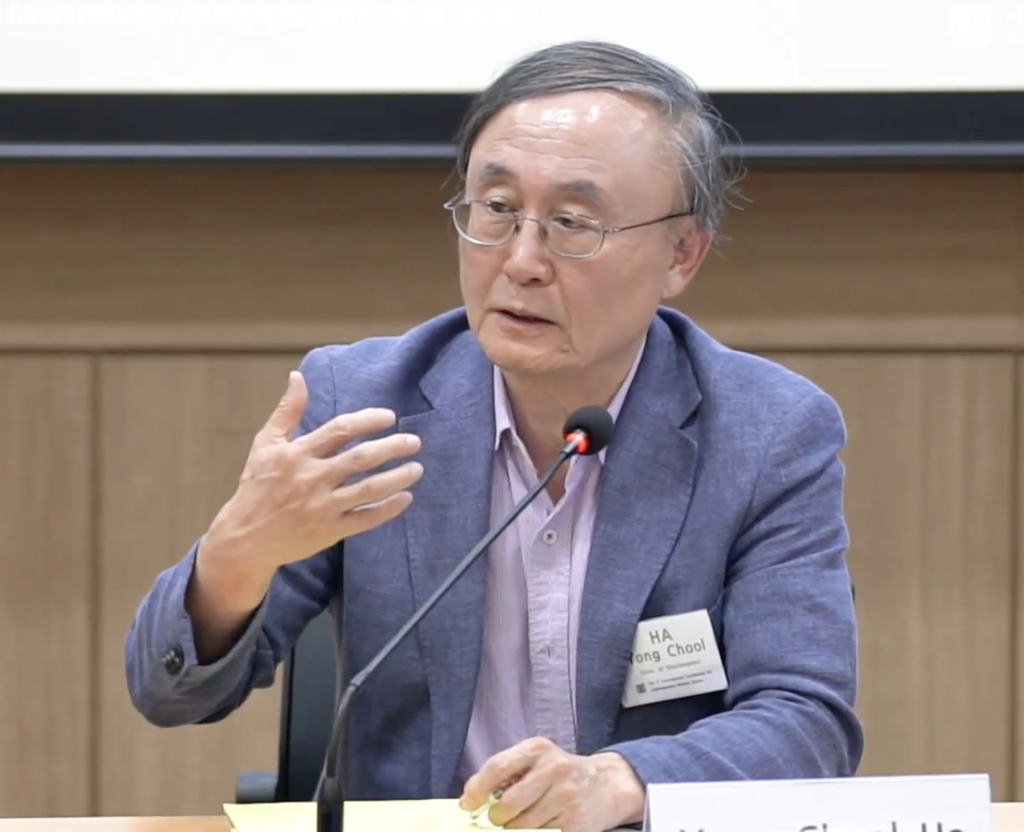
Yong Chool Ha sought to synthesize the wide range of topics discussed during the conference through the idea of Korea’s continuing modernization. Hallyu, literature, religion, political economy, and survivalism may appear to represent very different subjects, yet they all reveal complex interactions between Korea and the wider world. Ha described these as multiple “arrows of interaction”: processes moving from Korea to the global sphere, from the global sphere back to Korea, and through regional and transnational circuits that continuously reshape Korean society and notions of Koreanness.
He argued that the conference demonstrated an ongoing “deprovincialization” of Korean Studies. Korea is no longer simply an unfamiliar or peripheral case that must be introduced to the outside world. It has increasingly become an object of inquiry in its own right and a site through which scholars can ask broader questions about other societies and the world.
Ha placed particular emphasis on the distinctive trajectory of Korean modernization. South Korea combined rapid state-led industrialization with the subsequent adoption and consolidation of Western-style democratic institutions, producing tensions among institutions, values, and social legacies that have not disappeared with economic development and democratization. Contemporary Korean Studies, he therefore argued, should begin from the question, “Where does Korean society stand now, and where is it going?” rather than merely applying supposedly universal theories to Korea and testing whether the Korean case conforms to them.
This requires closer collaboration across disciplinary and intellectual boundaries. Ha called for stronger connections between history and the social sciences, between Korean Studies and area studies, and between Korea-specific research and comparative inquiry. Contemporary Korean Studies should be “relevance-oriented,” addressing substantive problems emerging from Korea’s distinctive historical experience rather than remaining confined within conventional academic classifications. He also stressed the importance of transdisciplinary approaches and sustained collaboration with scholars outside Korea.
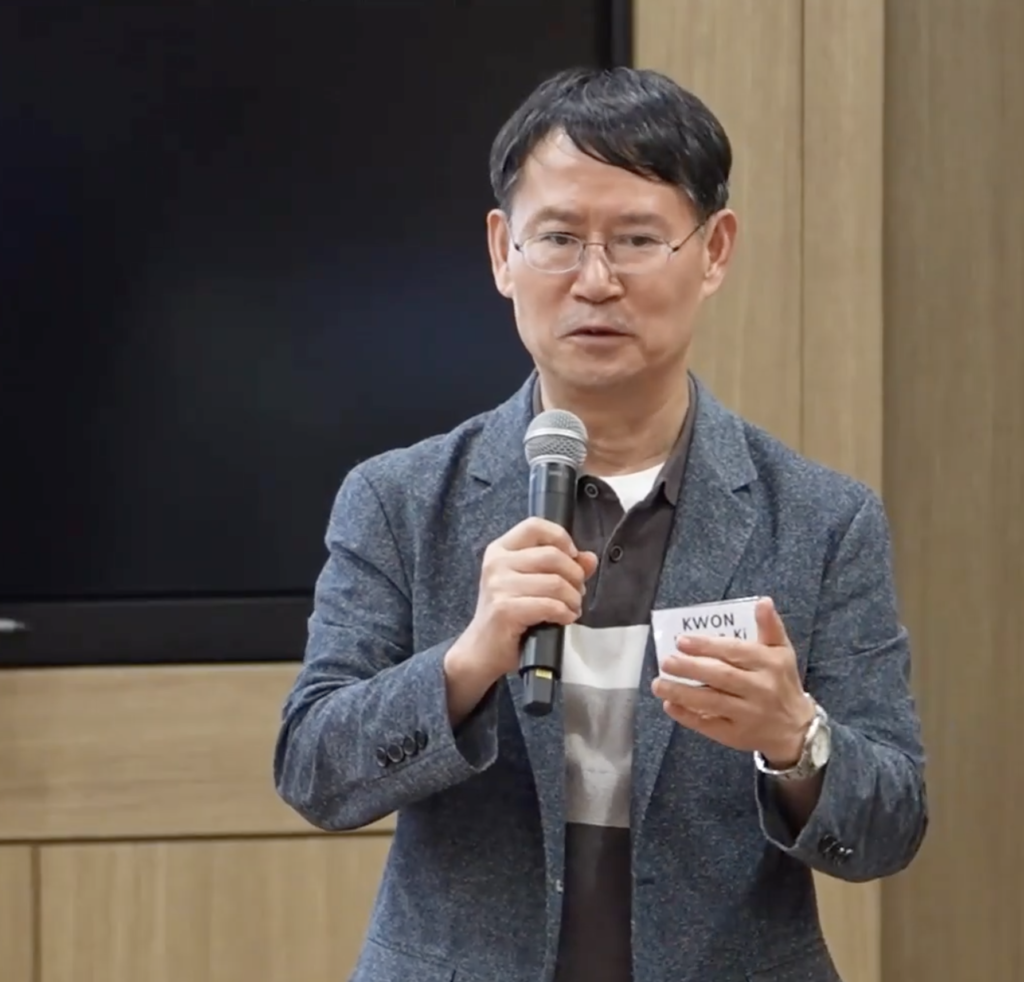
Hyeong-ki Kwon then presented the research group’s proposal for the next stage of the field under the title “Contemporary Korean Studies 2.0.” The initiative begins from the observation that global interest in Korea has expanded not only in scale but also in content. International audiences are now interested not only in K-pop and television dramas but also in Korea’s political economy, democracy, science and technology, religion, values, and changing lifestyles.
Kwon emphasized the important contributions made by established Korean Studies in language, literature, and history, while identifying three mismatches between the existing academic structure and contemporary demand. First, the field remains concentrated in a relatively limited set of areas compared with the increasingly diverse range of questions being asked about contemporary Korea. Second, scholars studying Korean politics, economics, society, culture, music, technology, and other subjects often remain institutionally and intellectually separated from one another. Third, although support for Korean Studies researchers and educators abroad has expanded rapidly, there is still insufficient infrastructure for systematically accumulating research findings, data, and institutional experience.
Contemporary Korean Studies 2.0 was proposed as a response to these three challenges. First, the field should expand to encompass politics, economics, sociology, cultural studies, religion, technology, music, and other dimensions of contemporary Korean society. Second, these different perspectives should be brought into conversation to generate innovative interdisciplinary research agendas and shared theoretical frameworks. Third, Seoul National University should establish a global research hub capable of connecting scholars and institutions, accumulating research data and findings, and taking a leading role in international debates on Contemporary Korean Studies. The ultimate aim, Kwon emphasized, is to study Korea not within an isolated framework of Korean particularism, but through comparative perspectives and within the broader context of human history.
As an initial step, the Contemporary Korea Research Group established a series of teams addressing political economy, modernity, Hallyu, contemporary Korean music, values and identity, K-Narrative, K-Future, and other emerging areas. Future plans included annual international conferences, scholarly publications, research grants and awards, digital archives and databases, educational programs, and student exchanges, all centered on the development of an international research network and a global hub for Contemporary Korean Studies.
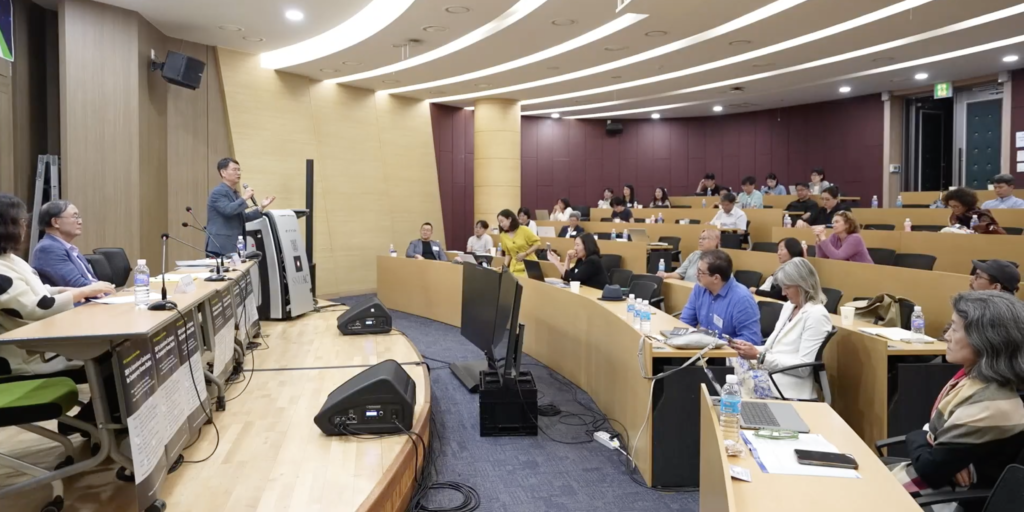
The open discussion pushed this vision a step further. Participants asked whether it was sufficient simply to use established disciplines such as political science, sociology, economics, philosophy, and history as tools for understanding Korea. Alongside this “outside-in” approach, they proposed an “inside-out” direction in which Korea’s own historical and social experiences could generate new questions, concepts, and insights for those disciplines themselves. Contemporary Korea, in other words, should not remain only the object to which existing theories are applied; it could also become a site from which broader theoretical and comparative interventions emerge.
Participants also questioned whether “Koreanness” or the intrinsic identity of Contemporary Korean Studies could ever be reduced to a single fixed definition. Kwon responded that Koreanness itself continues to change through Korea’s evolving relationship with the world. The purpose of the project is therefore not necessarily to discover one definitive essence, but to create a space in which different disciplines and perspectives can contribute partial insights and open new horizons. From this perspective, plurality is not an obstacle to knowledge but one of the conditions through which a fuller understanding of contemporary Korea can emerge.
Ha further argued that theoretical frameworks developed elsewhere may explain much of Korean reality while still leaving significant aspects unexplained. The challenge is therefore to identify the “remaining” dimensions that conventional theories fail to capture. He connected this problem to a broader crisis of identity in contemporary Korean society, suggesting that fundamental questions such as how people ought to live cannot be adequately addressed from the perspective of any single discipline. This makes genuine multidisciplinary and transdisciplinary engagement essential.
Finally, the discussion turned to the term “Korean Studies” itself. Outside Korea, Korean Studies has traditionally referred to an area-studies field in which Korea is studied from an external position, whereas within Korea, “Korean Studies” and “research on Korea” do not necessarily carry the same institutional or intellectual meanings. In an increasingly globalized academic environment, however, the distinction between insiders and outsiders has itself become difficult to sustain. Participants therefore suggested that Contemporary Korean Studies must continually reflect on these boundaries and ask not only how the world can better understand Korea, but also how Korea can contribute to comparative research and to the reformulation of established academic questions.
Taken together, the roundtable did not attempt to reduce the many subjects discussed during the conference to a single definition of Korea. Instead, it connected them through a broader question: how might the experience of contemporary Korea challenge existing academic categories, theories, and modes of comparison? Contemporary Korean Studies, the discussion suggested, should not only seek to explain Korea more fully, but also use Korea as a vantage point from which established ways of understanding the world can themselves be reconsidered.
The roundtable thus concluded the 1st International Conference by proposing that the next stage of Contemporary Korean Studies requires more than simply expanding its range of research topics. It calls for connecting previously separated disciplines, discovering new research questions within Korea’s concrete historical experiences, and placing those questions into comparative and theoretical dialogue with scholars around the world. This was presented as the central direction of “Contemporary Korean Studies 2.0.”