

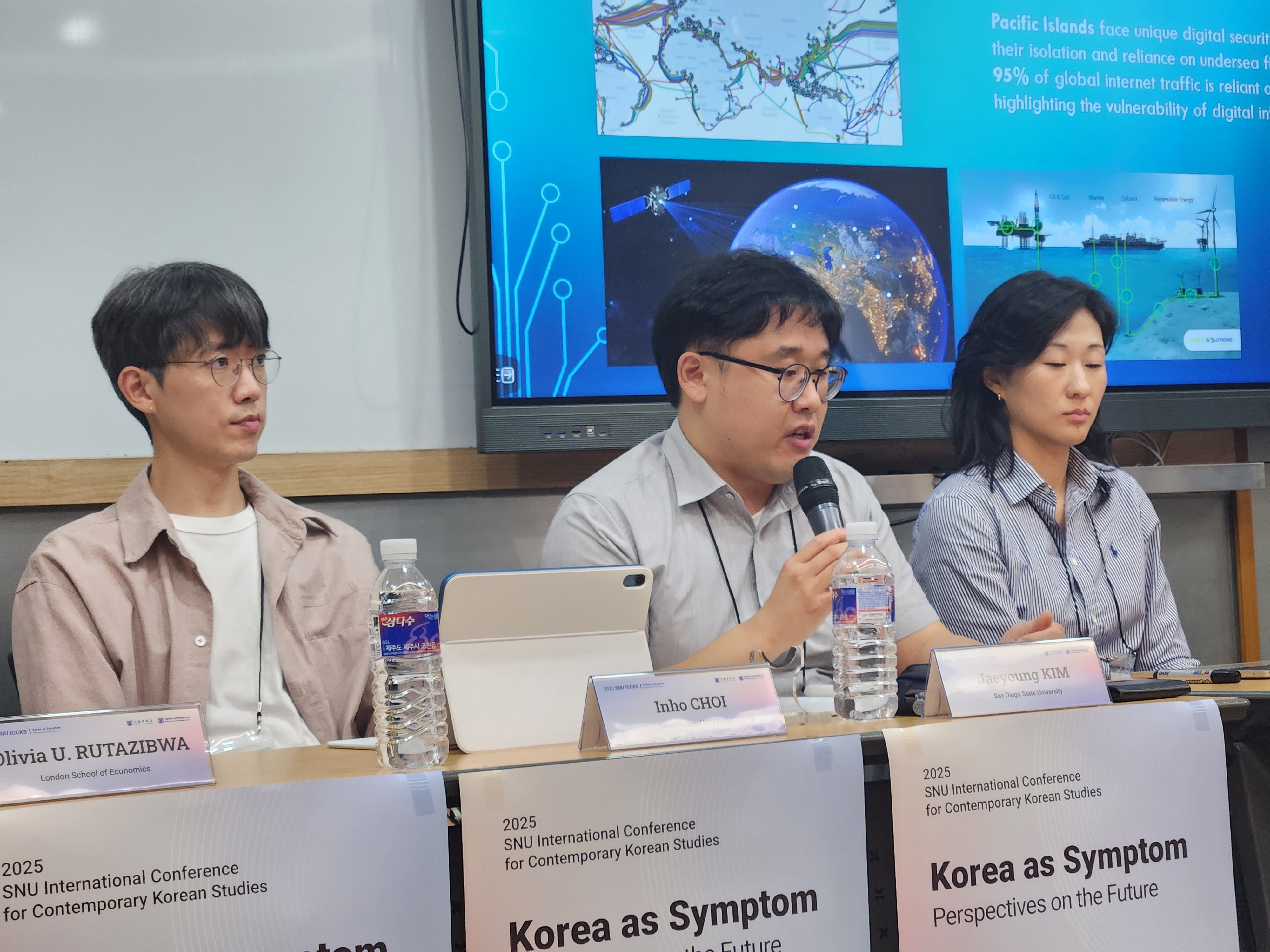
The Seoul National University Contemporary Korea Research Group held an international conference on August 22–23 under the theme “Korea as Symptom.” As the second session of the conference, the Statehood and Development Team conducted the session “Telling the Stories of Other Korea” in Room 240, Building 101, Seoul National University. The session was chaired by Professor Olivia Rutazibwa (London School of Economics) and featured the following three presentations.
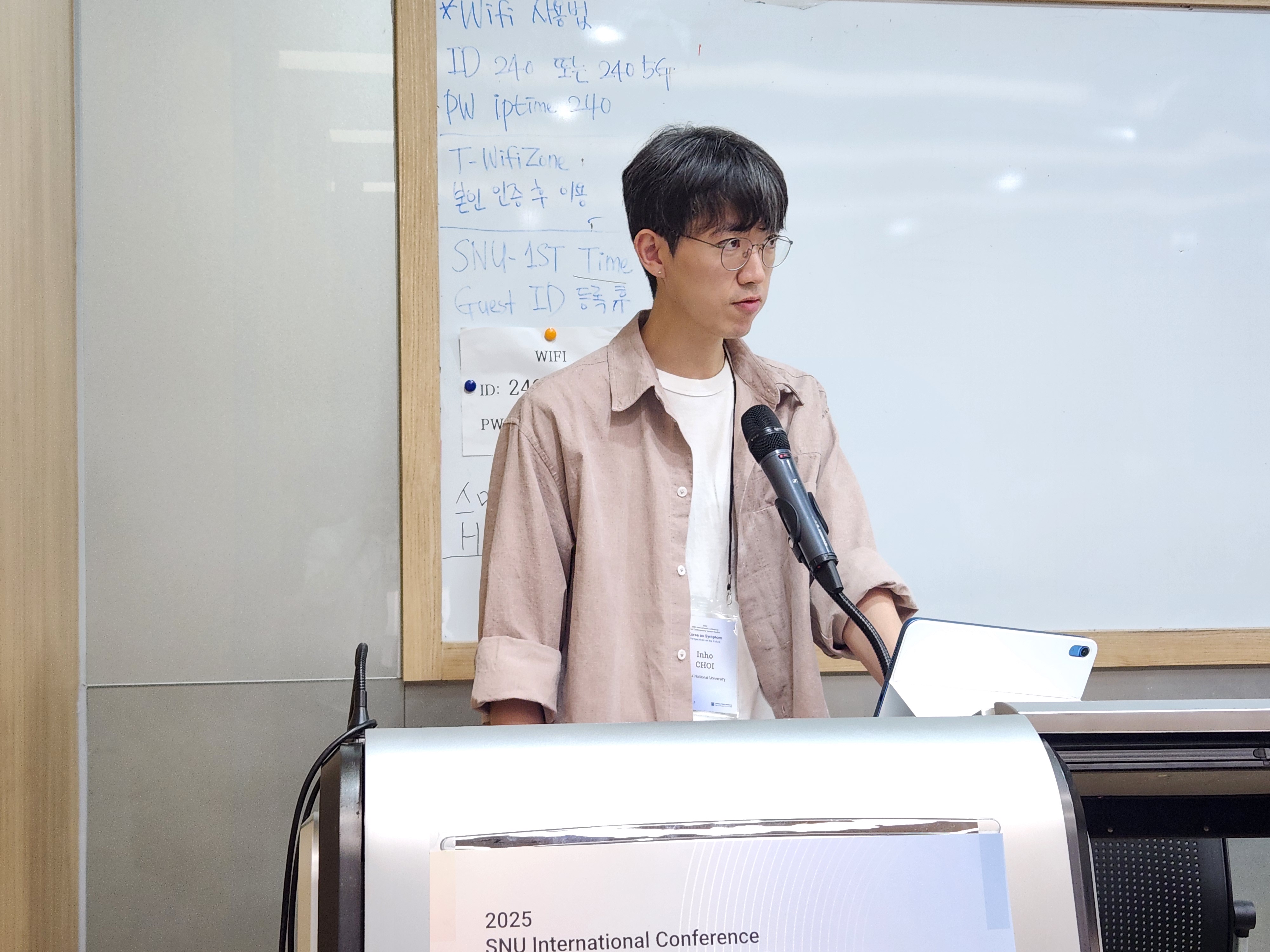
The first presentation was by Researcher Inho Choi (Seoul National University), titled “Strange Politics in Early Modern East Asia: The Objective Value of Fictionalized History.” Choi focused on the objective value of fictionalized history, explaining that it allows readers to experience “strange politics.” Drawing on Hayden White’s narrative theory and Markus Gabriel’s ontological pluralism, he analyzed early modern politics between the Ming dynasty and Chosŏn, showing that within such fictional narratives, Korea experiences the paradox of being “subjugated” while retaining moral subjectivity.
The first presentation was by Researcher Inho Choi (Seoul National University), titled “Strange Politics in Early Modern East Asia: The Objective Value of Fictionalized History.” Choi focused on the objective value of fictionalized history, explaining that it allows readers to experience “strange politics.” Drawing on Hayden White’s narrative theory and Markus Gabriel’s ontological pluralism, he analyzed early modern politics between the Ming dynasty and Chosŏn, showing that within such fictional narratives, Korea experiences the paradox of being “subjugated” while retaining moral subjectivity.
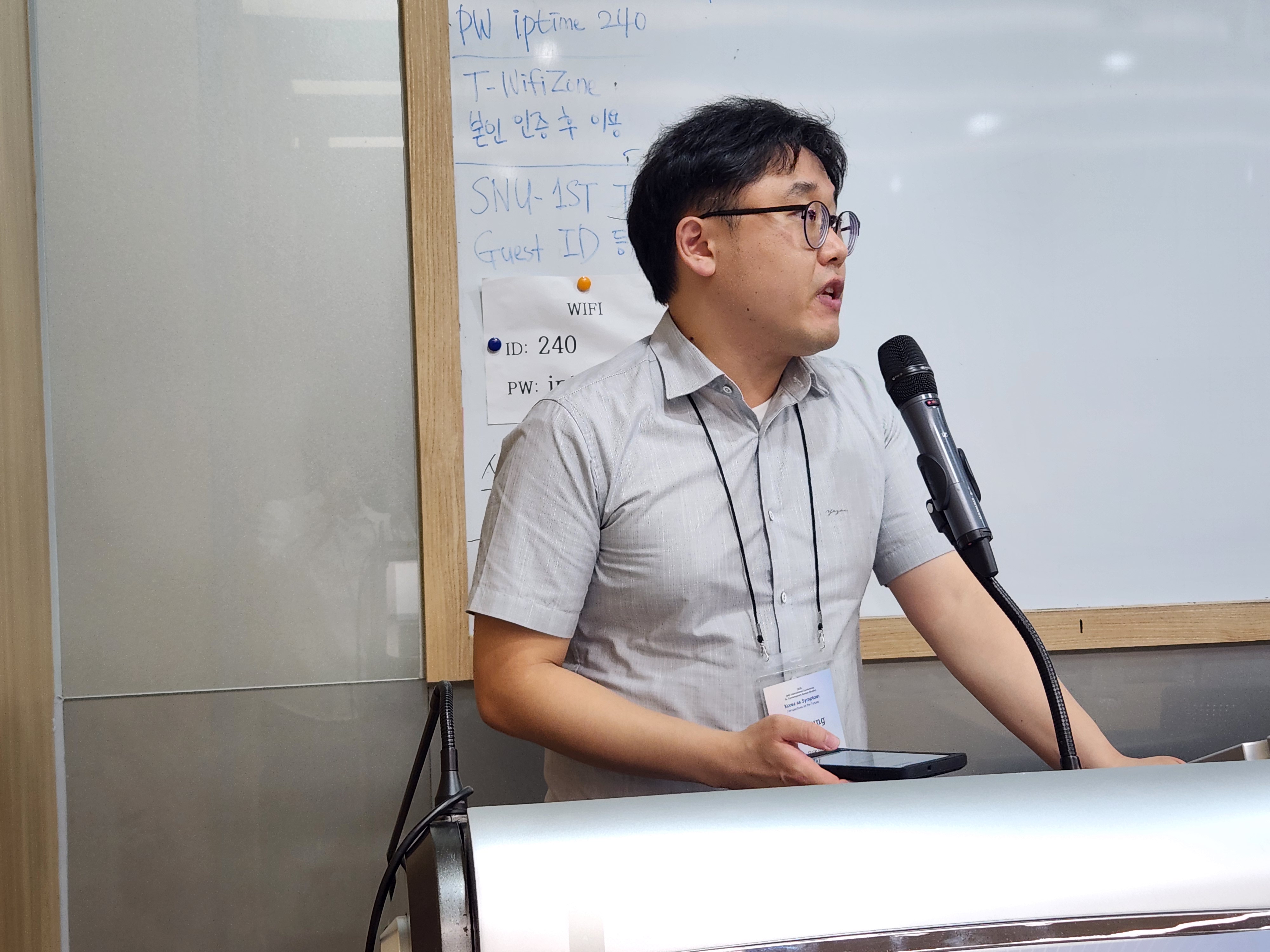
The second presentation was “Revisiting Historical East Asia: A Reflection on and from Ancient Korea” by Professor Jaeyoung Kim (San Diego State University). Kim analyzed the experiences of ancient Korea and explored the historical regional order of Asia at the time. In contrast to prior studies that considered Korea part of a China-centered order, his research on the Samguksa demonstrated that ancient Korea formed an independent zone of peace distinct from the Chinese model.
The second presentation was “Revisiting Historical East Asia: A Reflection on and from Ancient Korea” by Professor Jaeyoung Kim (San Diego State University). Kim analyzed the experiences of ancient Korea and explored the historical regional order of Asia at the time. In contrast to prior studies that considered Korea part of a China-centered order, his research on the Samguksa demonstrated that ancient Korea formed an independent zone of peace distinct from the Chinese model.
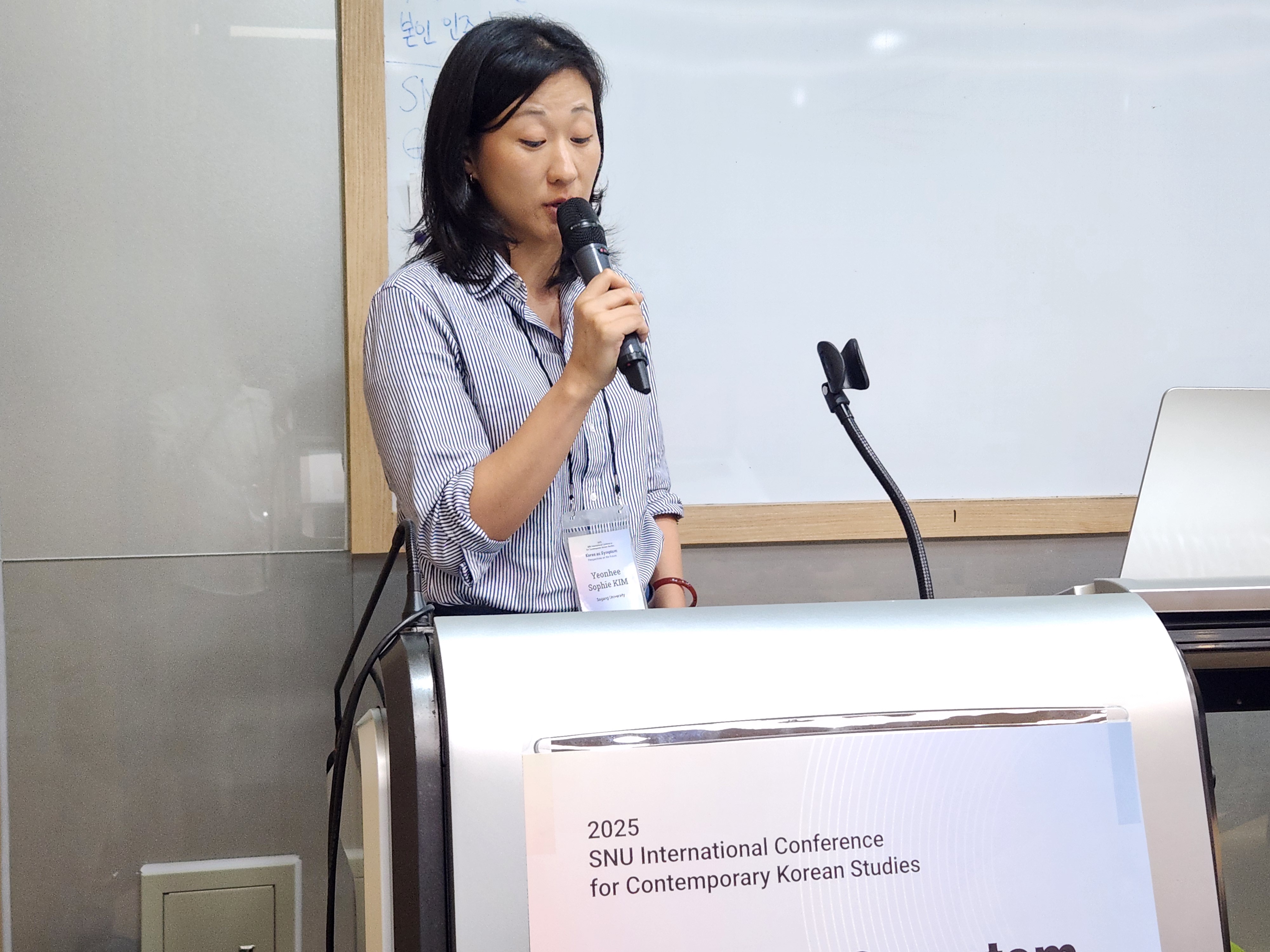
The final presentation was “Trust in the Digital Age? Digital CBMs, Track II Diplomacy, and North Korea's Cyber Challenge” by Researcher Yeonhee Sophie Kim (Sogang University). Kim argued that North Korea’s cyber activities reveal the limitations of traditional military-centered confidence-building measures (CBMs) and suggested that conflicts in cyberspace should be understood as a new security instrument. Considering North Korea’s strategic opacity, she proposed that digital CBMs should not be viewed as state-led risk mitigation tools but as processes that proactively structure the technopolitical environment.
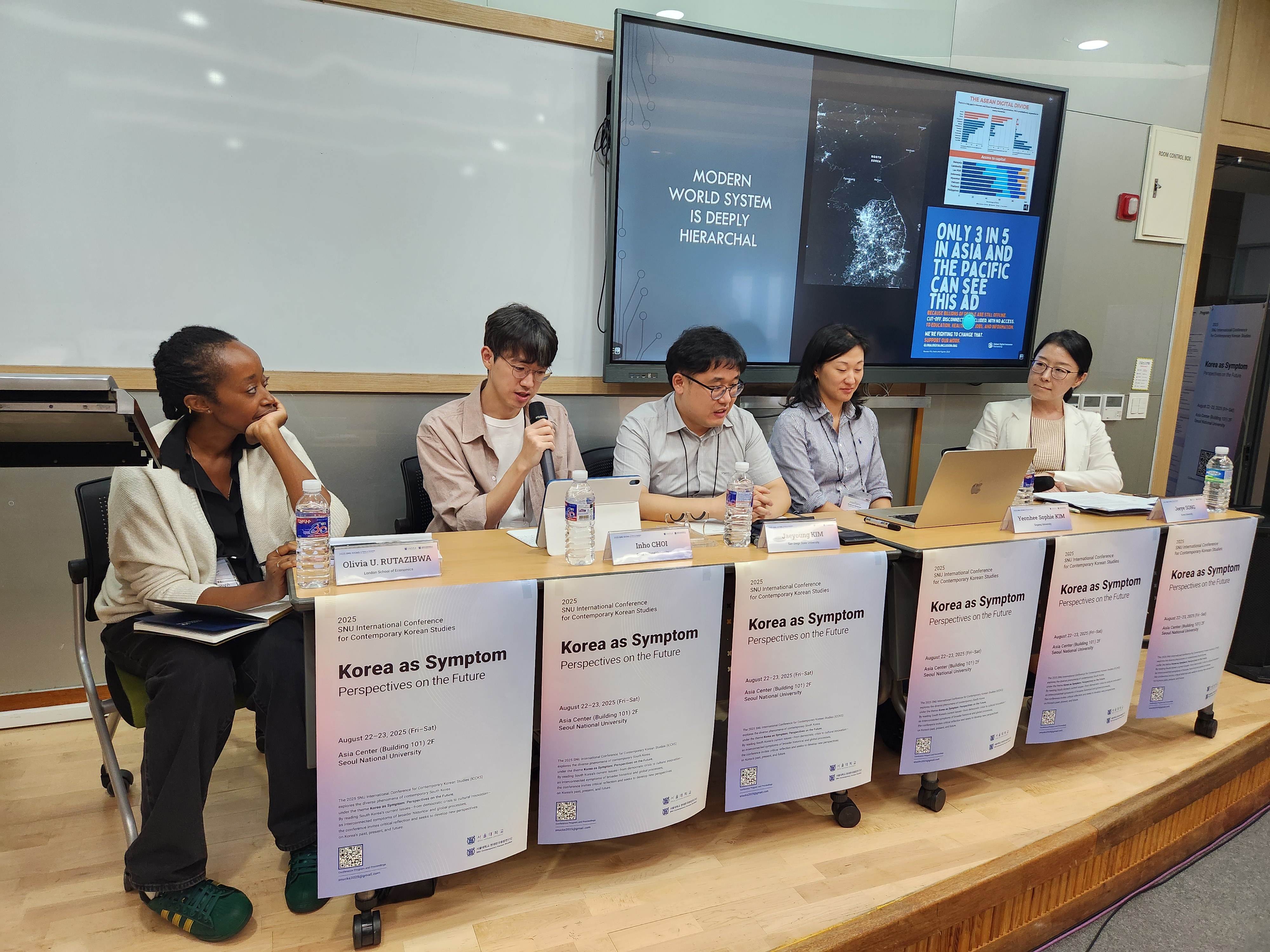
This session introduced narratives on Korea from diverse perspectives. In particular, it contributed to revealing “other Koreas” that have largely gone unnoticed, spanning multiple historical periods.
This session introduced narratives on Korea from diverse perspectives. In particular, it contributed to revealing “other Koreas” that have largely gone unnoticed, spanning multiple historical periods.