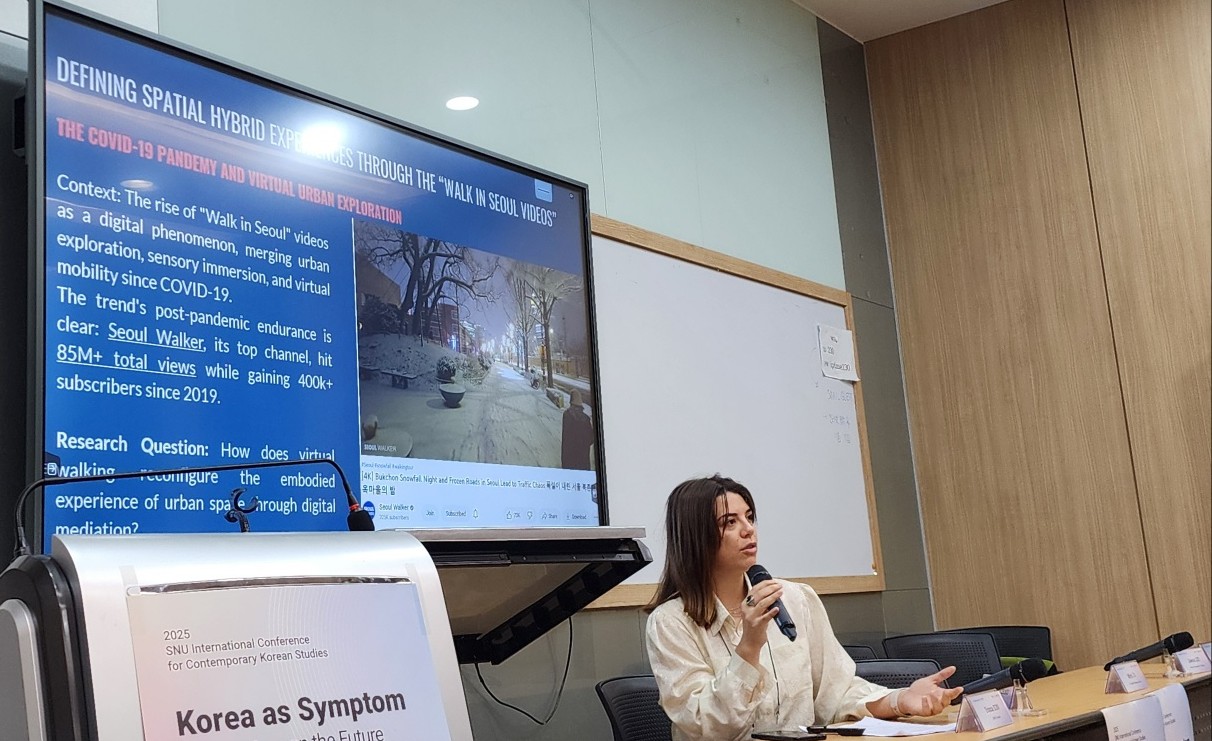
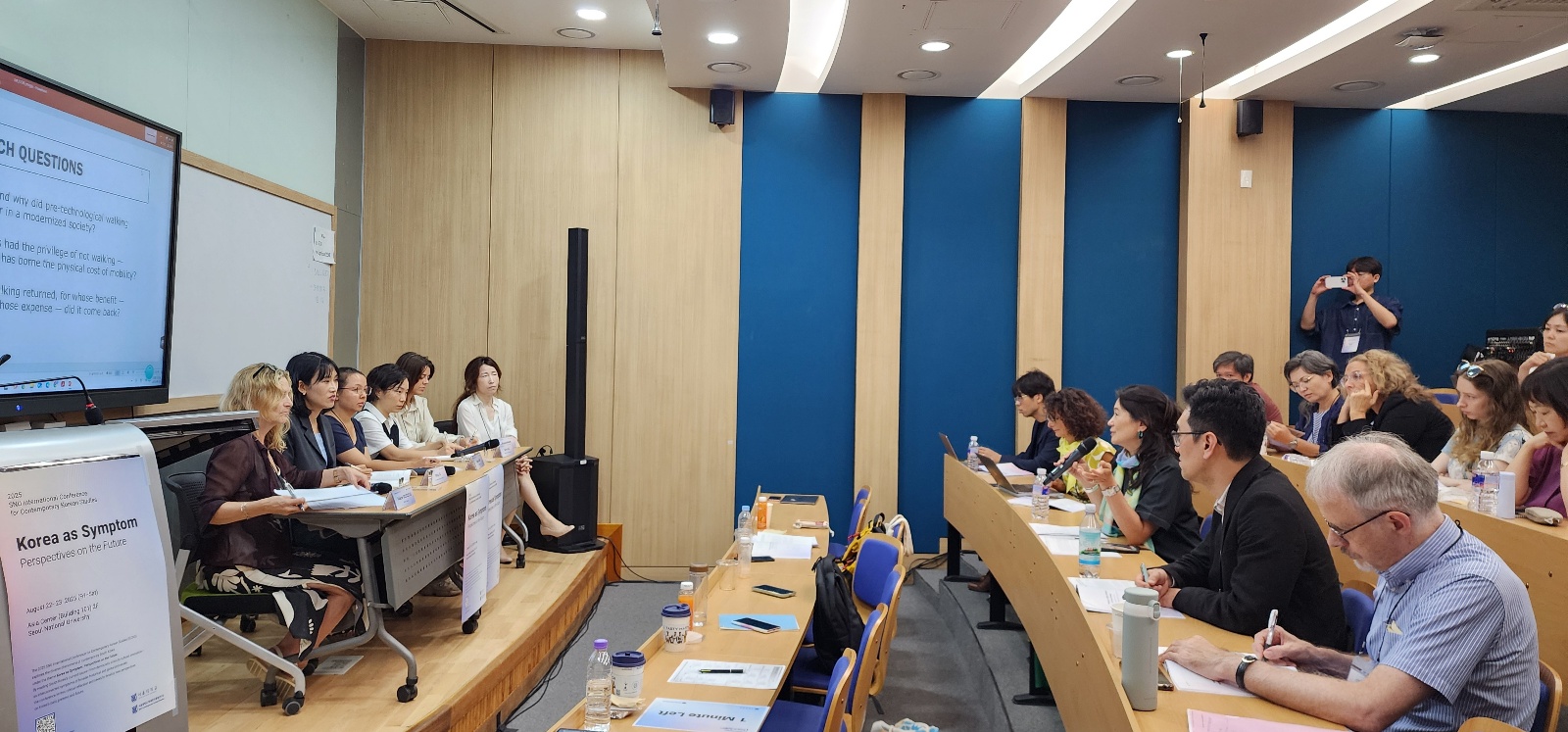
The Institute for Comprehensive Korean Studies at Seoul National University hosted its international academic conference on August 22–23 under the theme “Korea as Symptom.” The opening session featured the panel “Walking as Object-Method in Korean Studies,” proposed and organized by Professor Valérie Gelézeau of the École des Hautes Études en Sciences Sociales (EHESS). Moderated by Professor Gelézeau, the panel showcased five presentations that examined walking as both a research method and an object of inquiry.
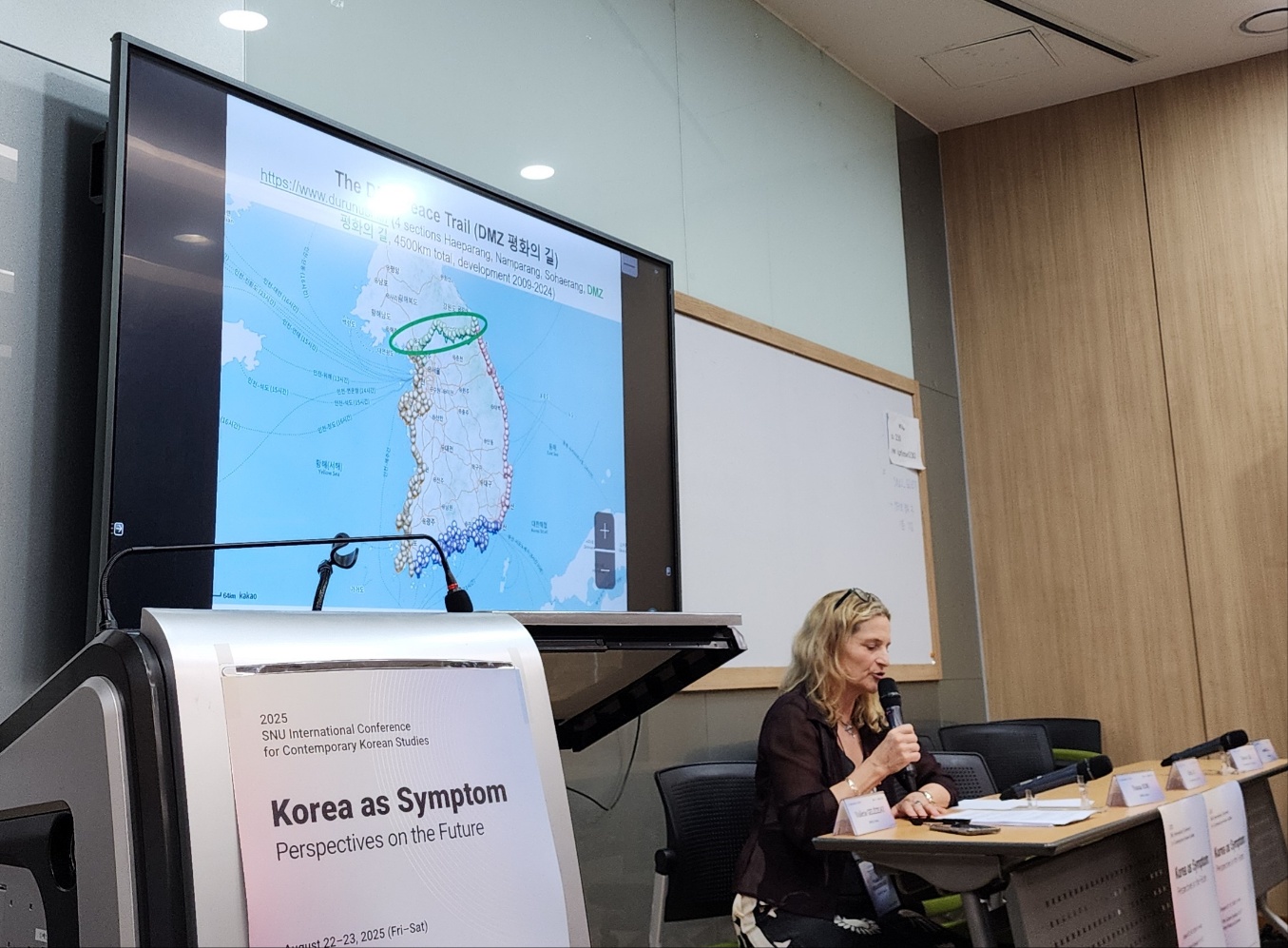
The first presentation, titled “Walking along the DMZ Peace Trail as Object-Method to Reconsider Post-Traumatic Space in the South Korean Border Zone,” was delivered by Professor Gelézeau herself. Drawing from her own experience walking the DMZ Peace Trail, she offered a nuanced depiction of the social and spatial dynamics shaping the inter-Korean border region. Emphasizing the fragmented yet interwoven presence of divided families, North Korean defectors, and diasporic communities, she proposed walking as a method to simultaneously contemplate both the discontinuities and continuities of this complex and contested space.
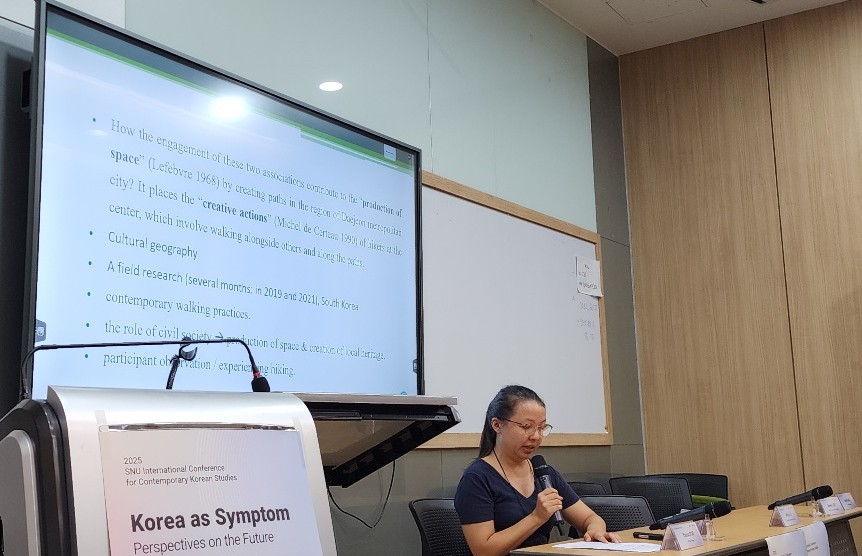
The second presentation, titled “Walking Empowerment: Civil Society and the Making of Paths,” was delivered by Youna Sohn, a PhD candidate at EHESS. Focusing on the Daejeon Dullegil and Gyeryongsan Dullegil trails, Sohn explored the cultural and political significance of path-making in Korean civil society. She conceptualized walking as a haptic regime of knowledge, arguing that walking functions not merely as a mode of physical movement, but as a communal practice that embodies and generates knowledge through tactile engagement with space.
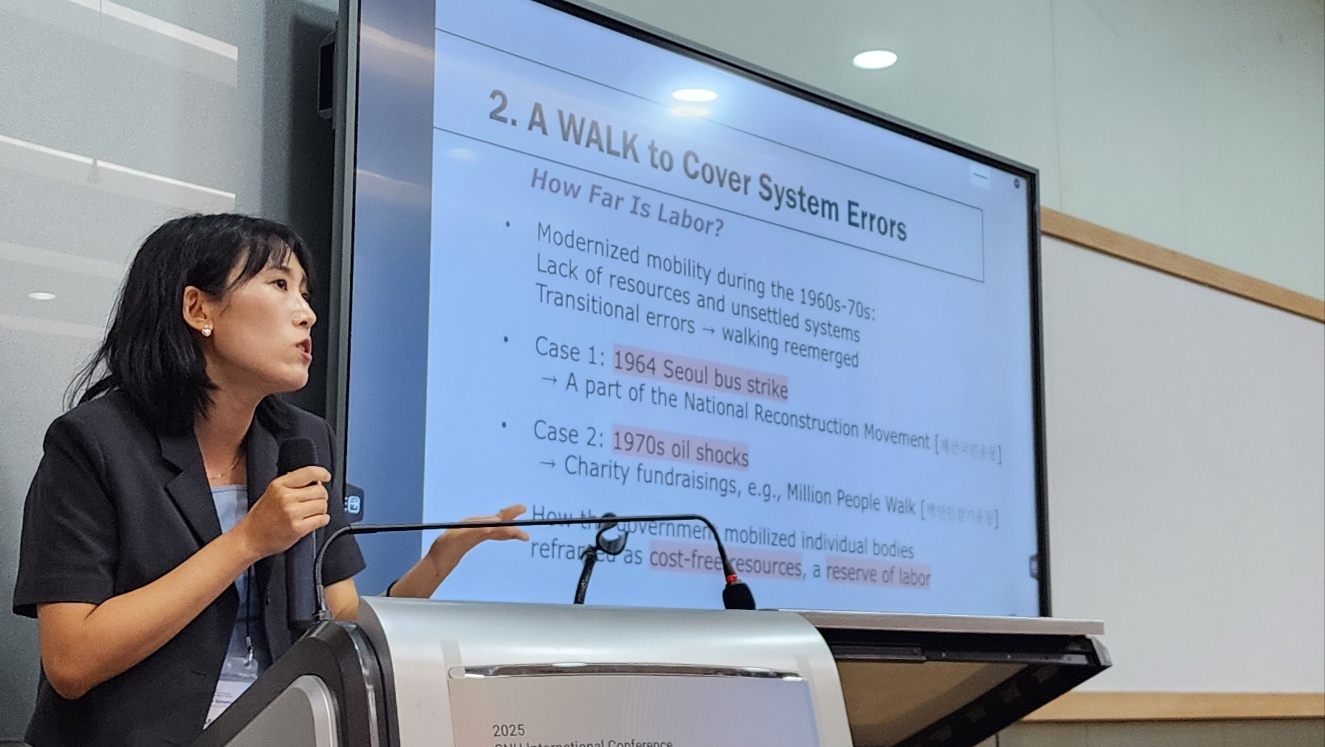
The third presentation, “Summoning Pre-Technological Technologies: The Politics of Walking in South Korea, 1960s and 1970s,” was presented by Professor Minji Cho of Catholic University of Korea. Professor Cho examined the political duality of walking in South Korea during the 1960s and 70s, demonstrating how it operated simultaneously as a state-driven tool of mobilization and a means of resistance against authoritarian control. Through a compelling historical analysis, she unpacked the ambivalent roles walking played in Korea’s modernization process, situating it at the intersection of discipline and dissent.
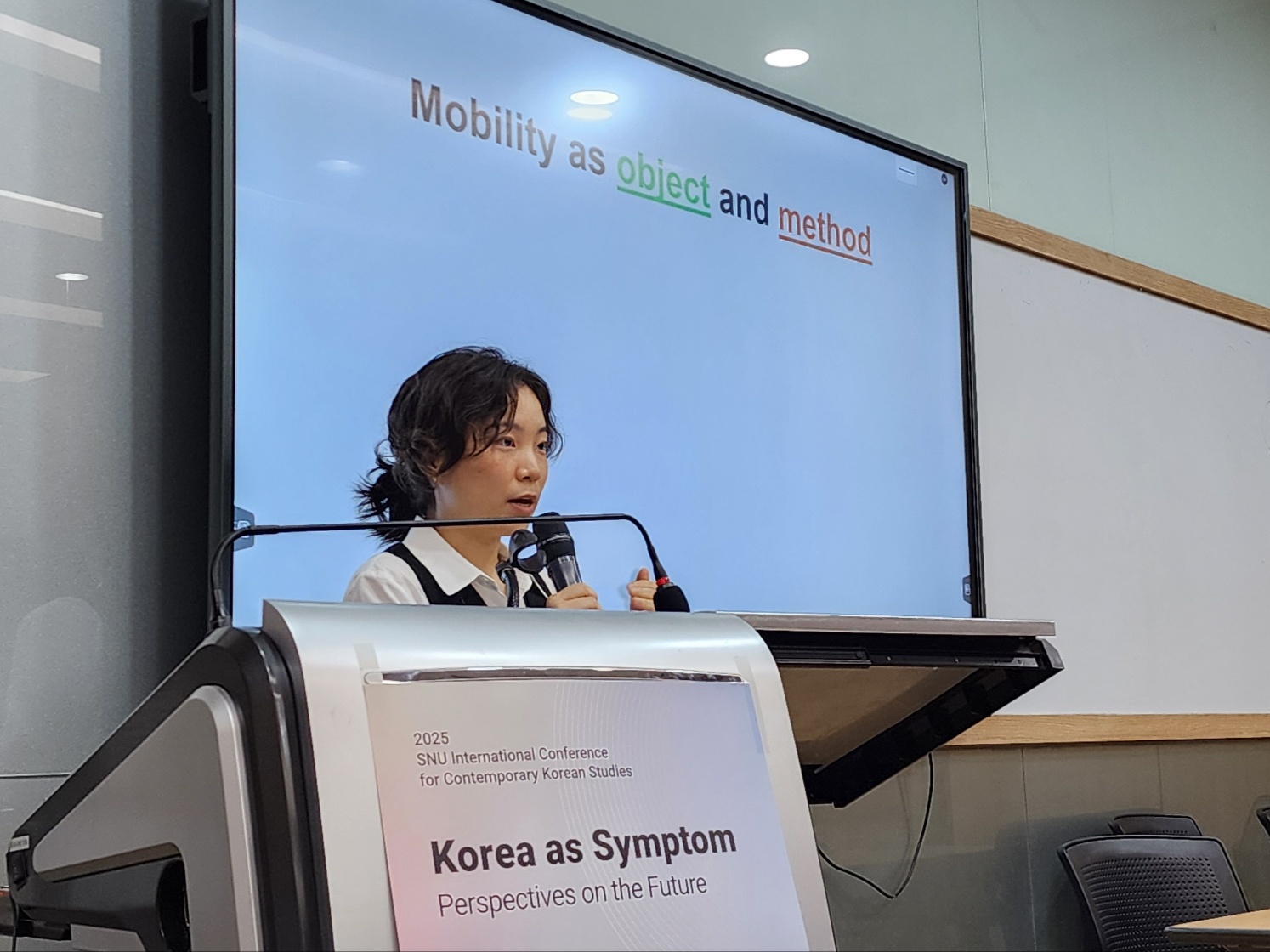
The fourth presentation, titled “Walking with the Moving Fieldsite: Doing Mobile Ethnography in Digital Nomad Research,” was delivered by Daeun Lee, a PhD candidate at National University of Singapore. Exploring the methodological possibilities of mobile ethnography, Lee examined the challenges of studying inherently fluid subjects such as digital nomads. She reflected on the ethnographer’s own body becoming a moving fieldnote, embodying the dynamics of both a mobile researcher and a mobile field, thereby offering an innovative perspective on the co-motion of subject and method.
The fourth presentation, titled “Walking with the Moving Fieldsite: Doing Mobile Ethnography in Digital Nomad Research,” was delivered by Daeun Lee, a PhD candidate at National University of Singapore. Exploring the methodological possibilities of mobile ethnography, Lee examined the challenges of studying inherently fluid subjects such as digital nomads. She reflected on the ethnographer’s own body becoming a moving fieldnote, embodying the dynamics of both a mobile researcher and a mobile field, thereby offering an innovative perspective on the co-motion of subject and method.