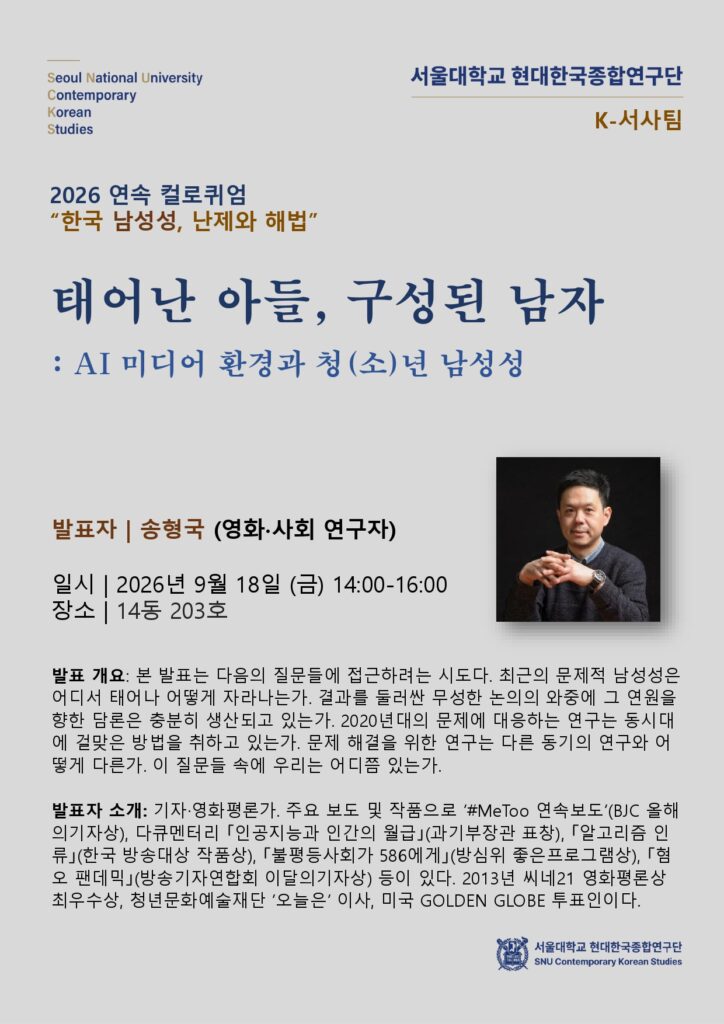
On September 18, 2026, a lecture organized by the Narrative Team of the SNU Contemporary Korean Studies was held in Room 203, Building 14, at Seoul National University. At the event, Film and social researcher Song Hyeong-Guk delivered a presentation titled “Born Sons, Becoming Men: Masculinity among Young Men and Adolescents in the AI-Media Environment”.
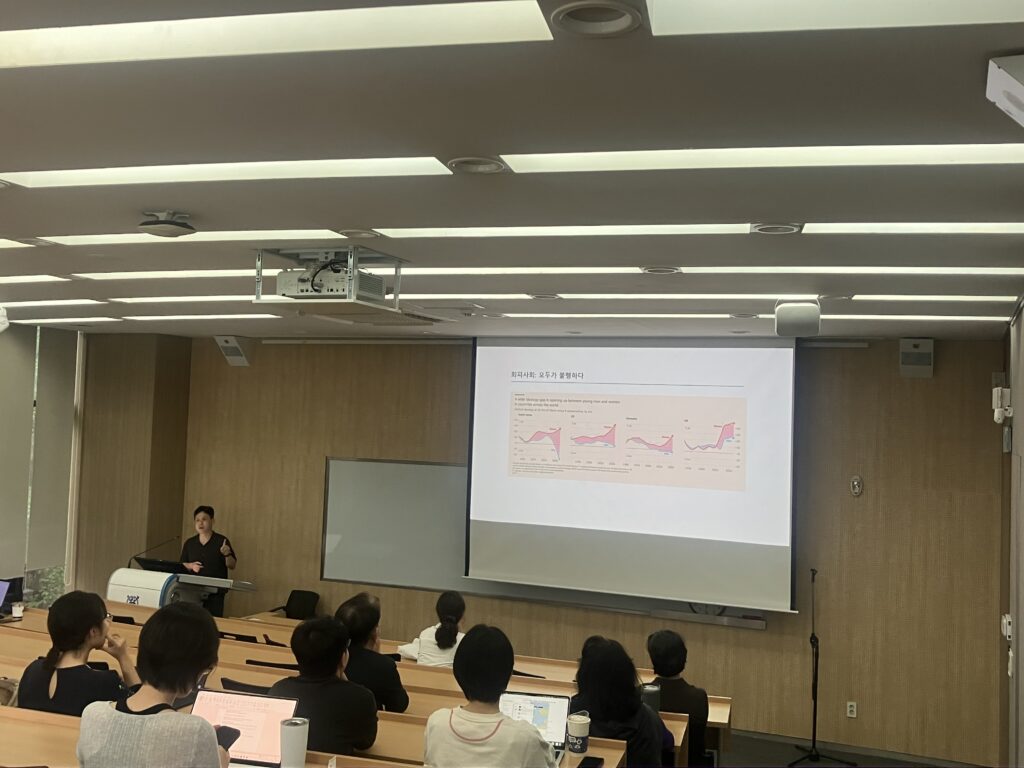
The presentation examined the processes through which problematic forms of masculinity have emerged in Korean society in the 2020s, as well as the methods and tasks required for studying them. The speaker proposed that contemporary issues surrounding masculinity should not be reduced to individual disposition or a lack of knowledge, but rather understood as structural issues shaped by the complex interaction of social and digital environments, as well as national and cultural conditions, from adolescence onward.
The presentation explored the characteristics of contemporary masculinity through keywords such as status-seeking, ostentation, risk-taking, conformity, competition for hierarchy, the desire for recognition, and status threat. While the “Me Too” movement of the 2010s and changing representations of women in Korean cinema brought into view the violence and power relations embedded in masculinity, the speaker explained that the experiences and cultures of teenage boys, mediated through digital platforms such as Netflix and YouTube, have emerged as important objects of analysis in the 2020s. Nationalist narratives and quasi-father-son fantasies between middle-aged and young men in Korean box-office hits released after the end of the pandemic were also examined as cultural signs of changing masculinity.
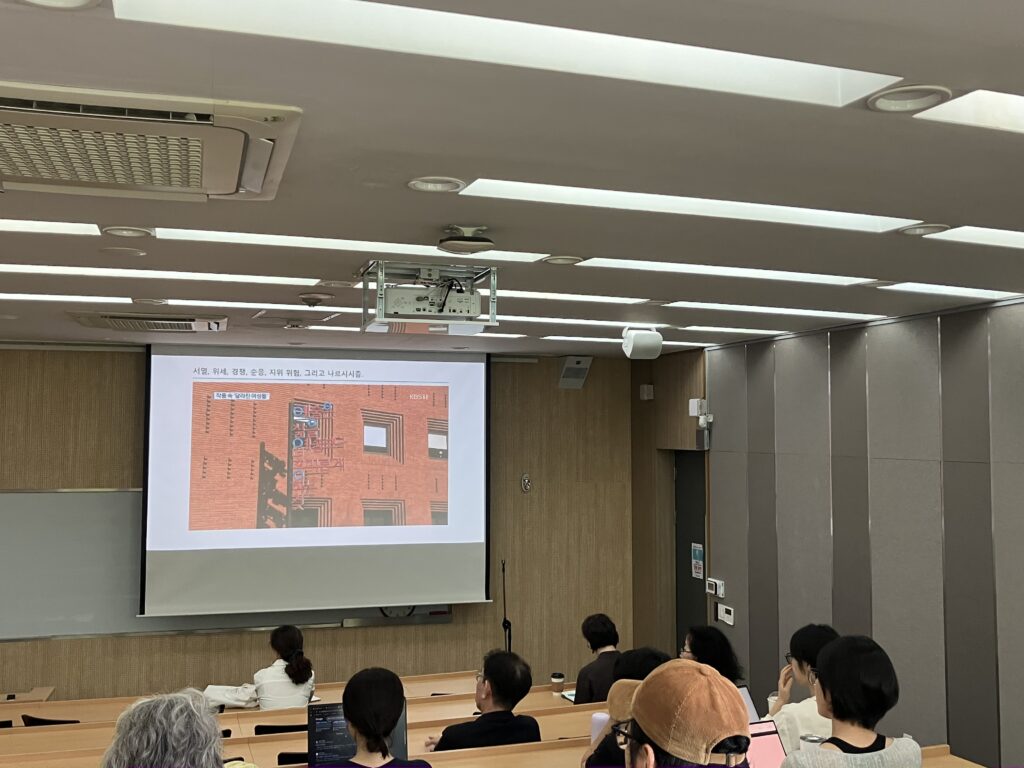
The speaker also drew attention to the widening political and ideological divide between young men and women. Online culture and social experiences formed during adolescence may shape later political perceptions and choices, while the fact that hateful expression circulating through gaming communities and digital content is sometimes received by teenage boys as a form of play or trend demonstrates that hatred can be reproduced within particular environments rather than being understood merely as individual deviance.
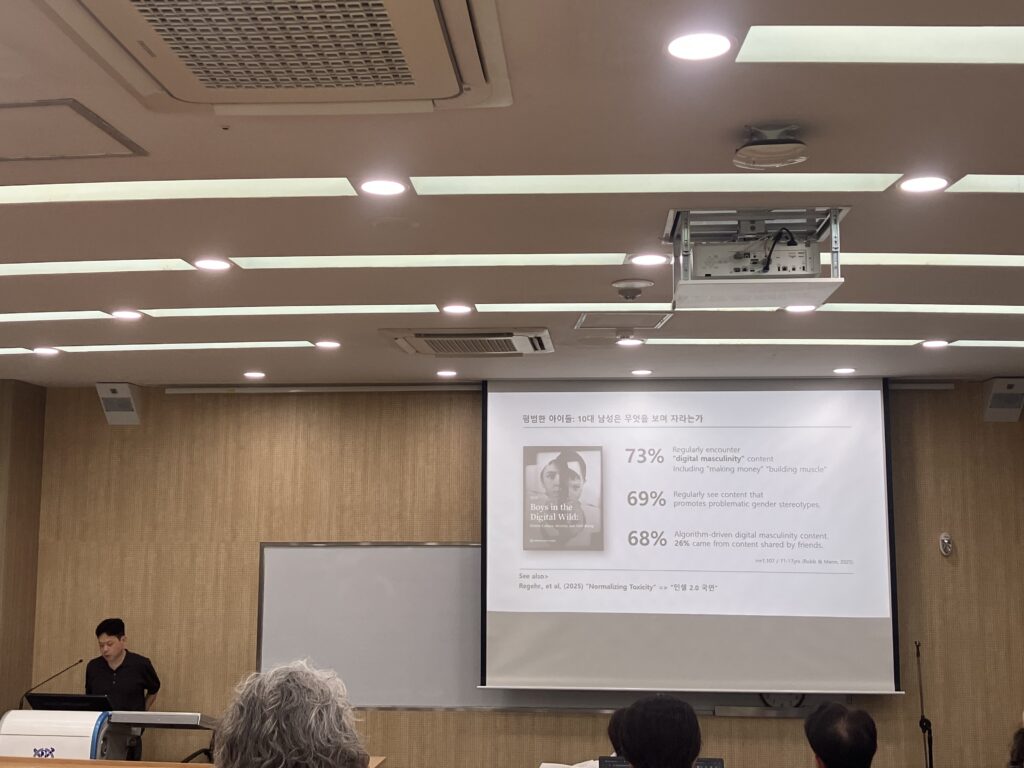
The speaker further noted that “digital masculinity” content—promoting wealth, muscularity, success, and self-improvement—often combines misogyny with meritocratic and hierarchical worldviews. Since such content is frequently encountered through repeated exposure by platform algorithms rather than through users’ voluntary searches, the speaker emphasized that issues involving adolescent boys should not be explained solely in terms of individual morality or educational shortcomings. The lecture also addressed the growing role of artificial intelligence as a source of counseling and information for adolescents and young adults. In light of the ways in which AI media environments are reshaping established processes of socialization and generational experience, the speaker proposed reconsidering the formative significance of adolescence and the transition from late adolescence to young adulthood.
The lecture concluded by emphasizing that questions of masculinity among young citizens are interconnected issues that reveal a society’s capacity for care, its understanding of equality, self-determination regarding what one genuinely desires, respect for experiences and memories different from one’s own, intersectionality, and the values of coexistence. The speaker stressed that research on problematic masculinity likewise requires a transformative perspective that considers the interrelations among individuals, social structures, technology, and culture.