SNU Contemporary Korean Studies held an international conference under the theme “Korea as Symptom” on August 22 and 23. The K-Future Team opened the conference with the panel “Walking as Object-Method in Korean Studies,” exploring how walking, as an everyday practice, can become both an object and a method of Korean studies. Proposed, organized, and chaired by Professor Valérie Gelézeau (EHESS), the session featured five presentations that examined walking as a practice of movement, perception, and critical inquiry.
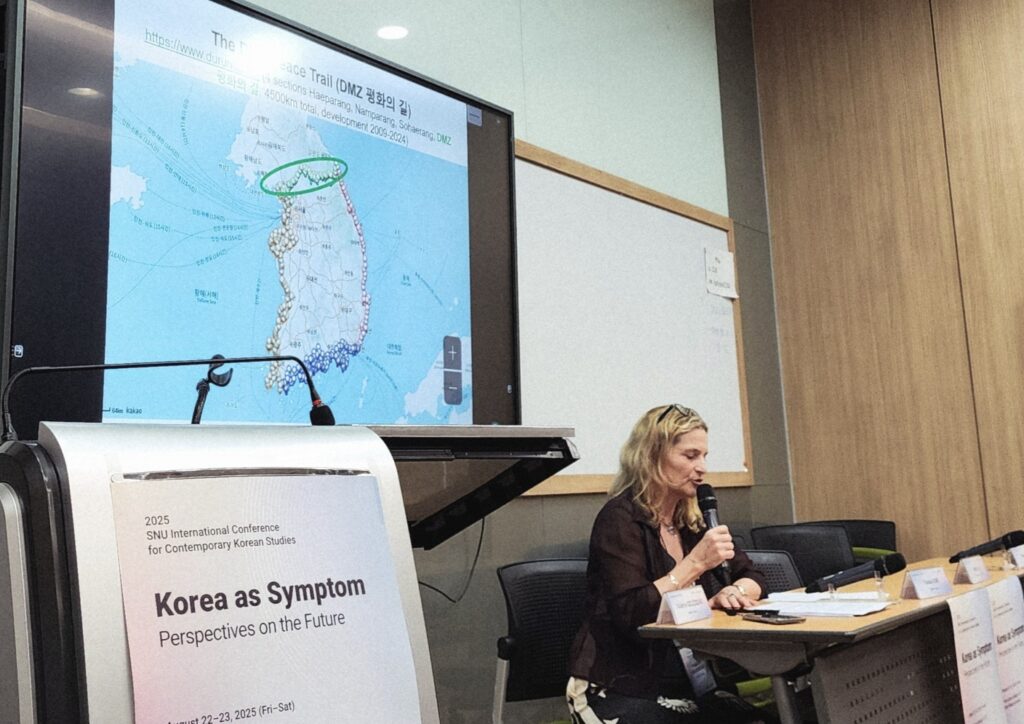
Valérie Gelézeau (EHESS) presented “Walking along the DMZ Peace Trail as Object-Method to Reconsider Post-Traumatic Space in the South Korean Border Zone.” Drawing on her experience of walking the DMZ Peace Trail, she examined the social and geographical dynamics of the inter-Korean border zone. She read this space—where separated families, North Korean migrants, and diaspora communities are discontinuously entangled—as a post-traumatic landscape, and explored how walking allows us to sense both rupture and continuity in the borderland.
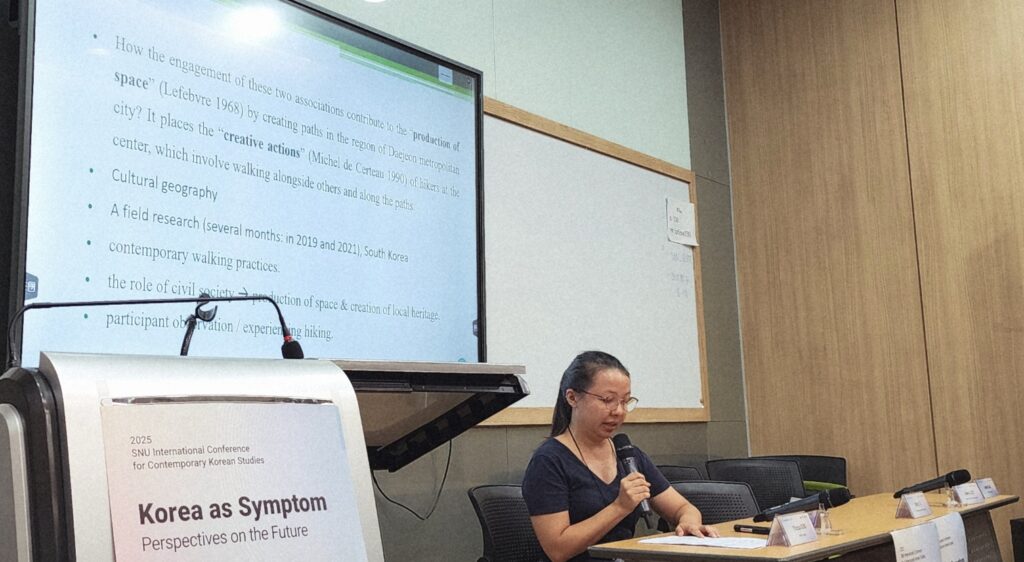
Yuna Son (EHESS) presented “Walking Empowerment: Civil Society and the Making of Paths,” focusing on the Daejeon Dulle Mountain Trail and the Gyeryongsan Dulle Trail. She approached walking as a haptic regime of knowledge, showing how paths are not merely routes of movement but ways in which local communities sense, organize, and inhabit space.
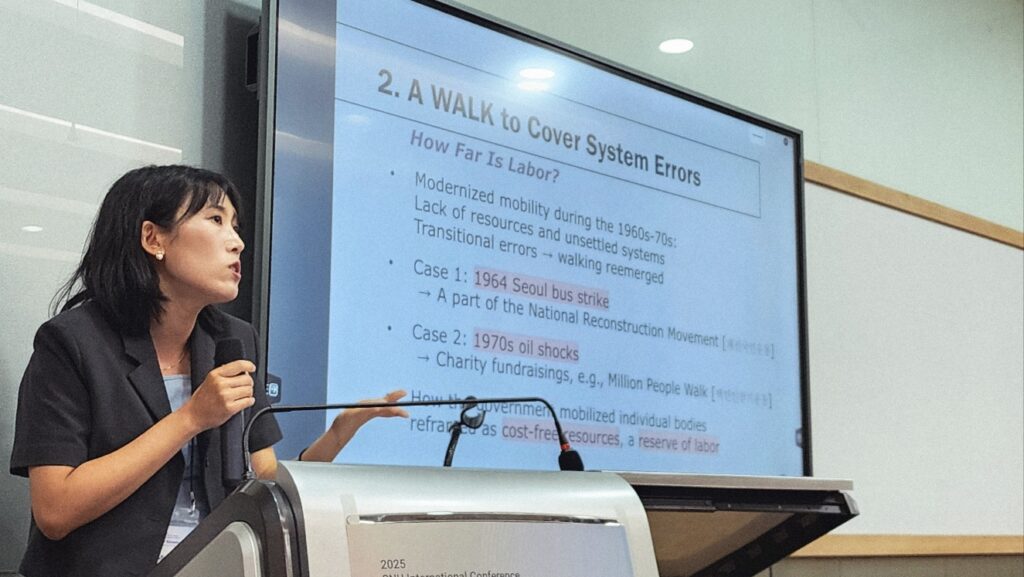
Minji Cho (Catholic University of Korea) presented “Summoning Pre-Technological Technologies: The Politics of Walking in South Korea, 1960s and 1970s.” Professor Cho traced the political ambivalence of walking in South Korea during the 1960s and 1970s. Walking functioned as a means of state-led mobilization and discipline, but also as a form of resistance and collective practice. The presentation showed how walking operated in modern Korean history as both a technology of governance and a technology of dissent.
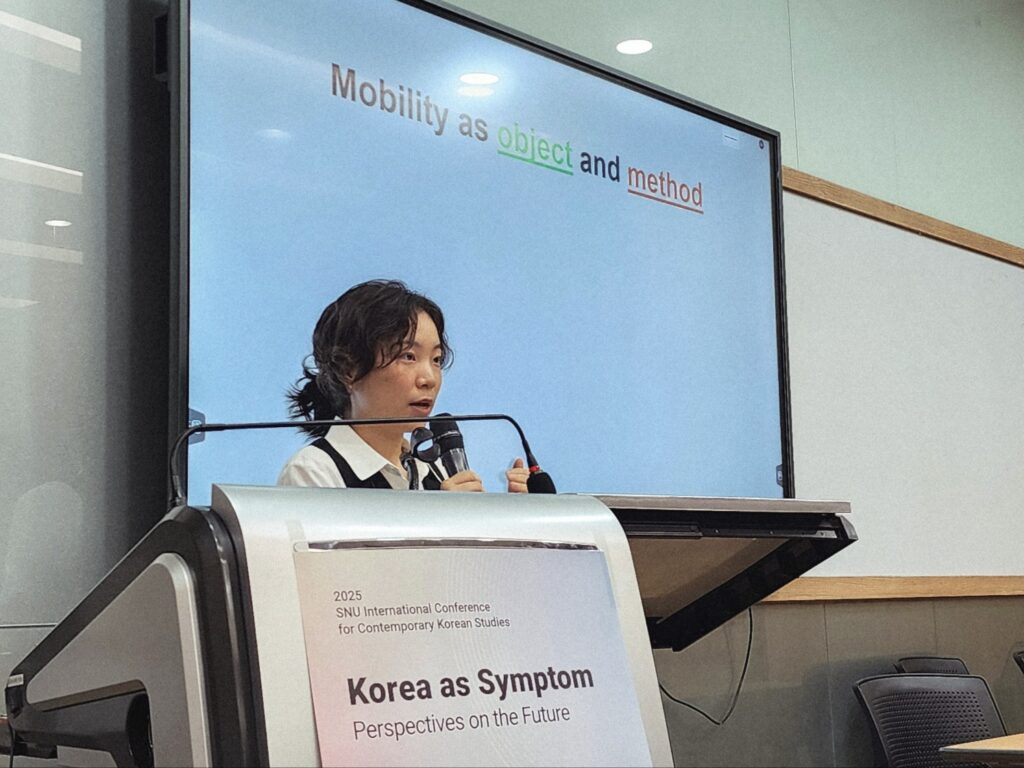
Daeun Lee (National University of Singapore) presented “Walking with the Moving Fieldsite: Doing Mobile Ethnography in Digital Nomad Research.” Through her research on digital nomads, she explored the possibilities of mobile ethnography. Following research subjects in constant movement, she reflected on how the researcher’s own body and routes of movement can become a form of fieldnote. Her presentation suggested that the field is not a fixed site, but a relational space that moves with the researcher.
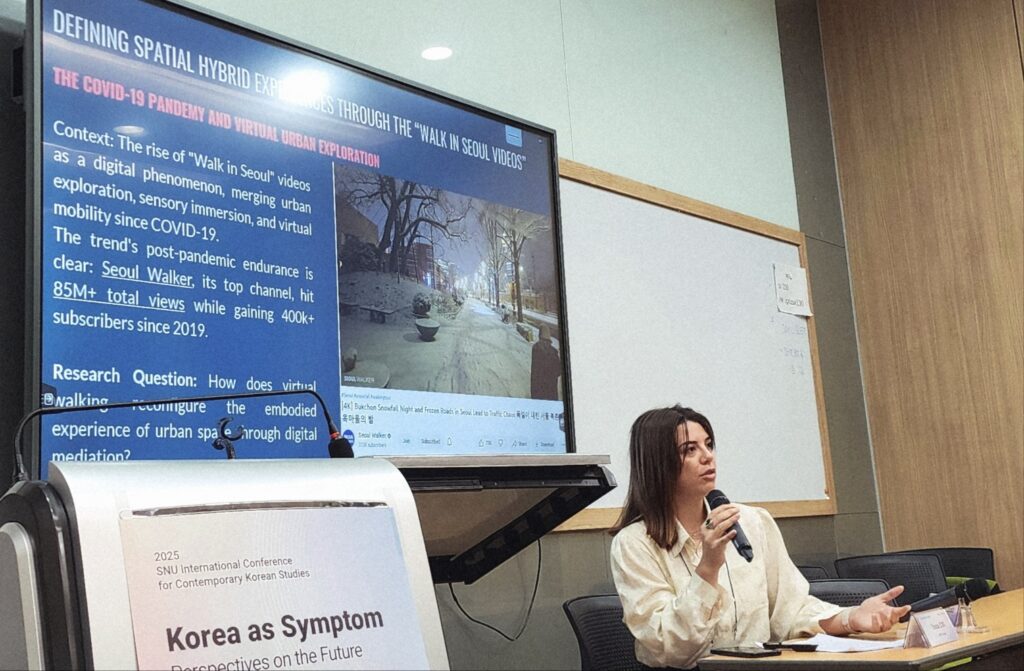
Margot Kunz (French Institute of Geopolitics) presented “Virtual Walking as an Experience of Contemporary Hybrid Urban Space.” She analyzed the new forms of urban experience generated by YouTube videos such as “Walk in Seoul,” which gained massive viewership after the COVID-19 pandemic. Her presentation examined how Seoul is sensed and consumed through digital platforms, and how virtual walking gives rise to a new urban subject: the cyber-flâneur.
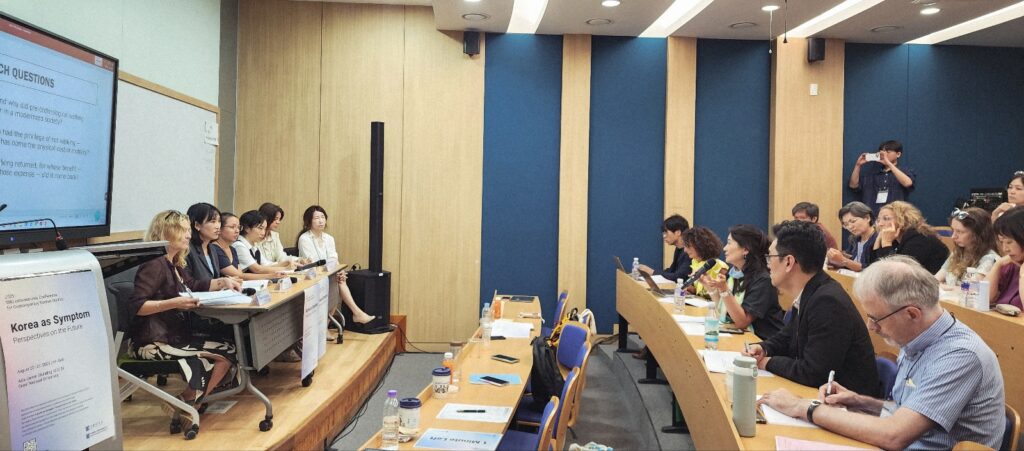
Together, the five presentations treated walking as a way of entering spaces, histories, and relations that are not easily captured from a fixed point of view. From the DMZ Peace Trail to civic paths, from the politics of mobilization to digital nomadism and virtual walks through Seoul, the session showed how an ordinary bodily practice can open unexpected questions for Korean studies. For the K-Future Team, this was precisely the promise of walking as an object-method: to make Korea visible otherwise.