Activities

Statehood

SNU Contemporary Korean Studies conducts interdisciplinary collaboration and international research exchange in the politics, economics, technology, and culture of contemporary Korea.

Research Teams

2026 SNU ICCK Session: The Formation of the Korean State in the Twentieth Century

2026-08-27

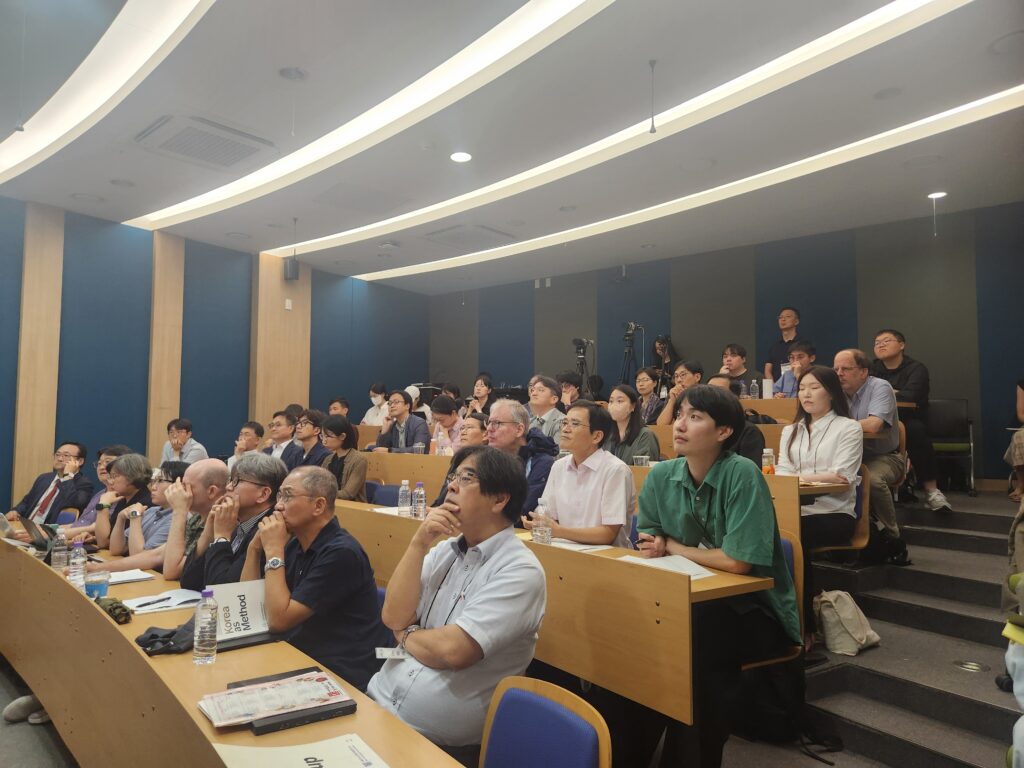
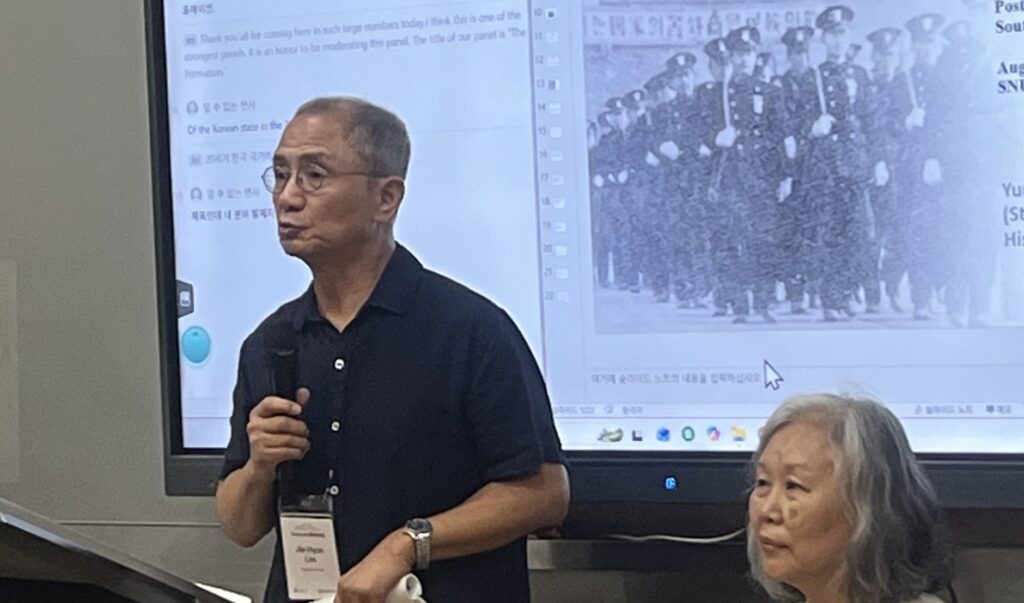
The Center for Contemporary Korean Studies of Seoul National University held a two-day international conference on August 21–22 under the theme “Korea as Method.” The Statehood and Civil Society Team convened its session, “The Formation of the Korean State in the Twentieth Century,” in Room 230, Building 101, Seoul National University. Chaired by Professor Lim Jie-Hyun (Sogang University), the session featured the following four presentations.
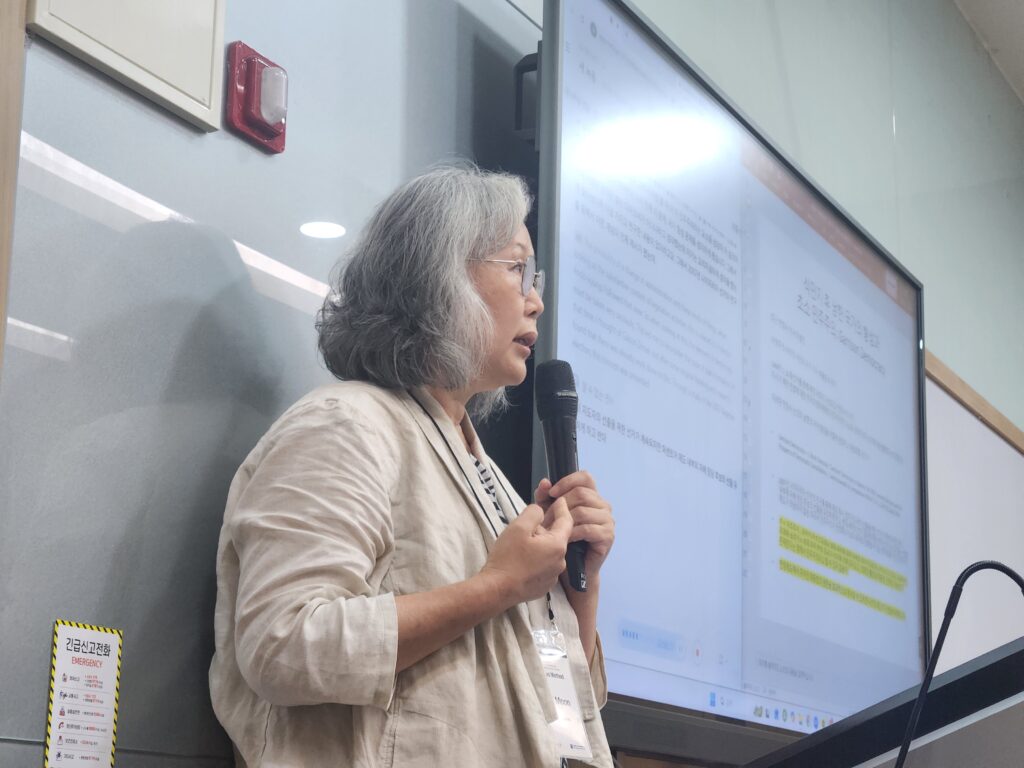
In the first presentation, Professor Moon Yumi (Stanford University) spoke on “Garrison Democracy? The First Constitutional Assembly and the Formation of the Post-Colonial State in South Korea,” asking how the character of the South Korean political system during the First Constitutional Assembly (1948–1950) might be theorized. Noting the long-standing dominance of Hamza Alavi’s “overdeveloped state” thesis, she reviewed a range of more recent alternatives, including Lee Taek-sun’s “weak state,” Ahn Do-kyung’s “liberal constitutional democracy,” and Yang Sung-ik’s “ideological fascism grounded in Syngman Rhee’s Ilminjuui.” Drawing on postcolonial state theory and debates over democracy under conditions of crisis-particularly recent discussions of Karl Loewenstein’s “militant democracy”-she proposed conceptualizing South Korea in this period as a “garrison democracy.” The term derives from J. Shola Omotola’s 2007 analysis of Nigerian elections, where it designates a regime in which elections and parliamentary politics coexist with systematic repression of the opposition. While cautioning that the concept cannot simply be transplanted, given the distinctive pressures of building a new postcolonial state, Moon argued that it captures the duality of a period in which the Assembly legislated actively and checked presidential power to a degree, even as the state violently suppressed political dissidents and protesting civilians during the Jeju 4·3 Incident and the Yeosu-Suncheon Rebellion. The resulting regime, sustained through elections yet structured by a militant logic that legitimized legal barriers and coercion against forces designated as threats to the constitutional order, occupied an unstable position on the boundary between democracy and dictatorship.

Professor Oh Si-jin (Kangwon National University) followed with “The Birth of Korea: Legal Issues from the Provisional Government to the Establishment of Statehood of the Republic of Korea,” examining the legal questions arising between the establishment of the Provisional Government in 1919 and the founding of the Republic of Korea in 1948 from the standpoint of international law. He argued that the question of how far Korean sovereignty was recognized prior to the founding of the government is a complex matter that cannot be resolved through traditional, formalist international legal reasoning alone, and that existing scholarship, having concentrated on discrete issues, calls for comprehensive reassessment. His study aims to clarify the issues themselves rather than to reach conclusions dictated by particular political or ideological commitments-though this, he emphasized, is not to suggest that such legal questions carry no political implications. Viewed in broad terms, he maintained, the Korean voice was frequently excluded or overlooked in the founding process, yet never entirely excluded. It is precisely for this reason, he stressed, that assessments of this period remain contentious today and bear directly on how Korean society understands its own identity.
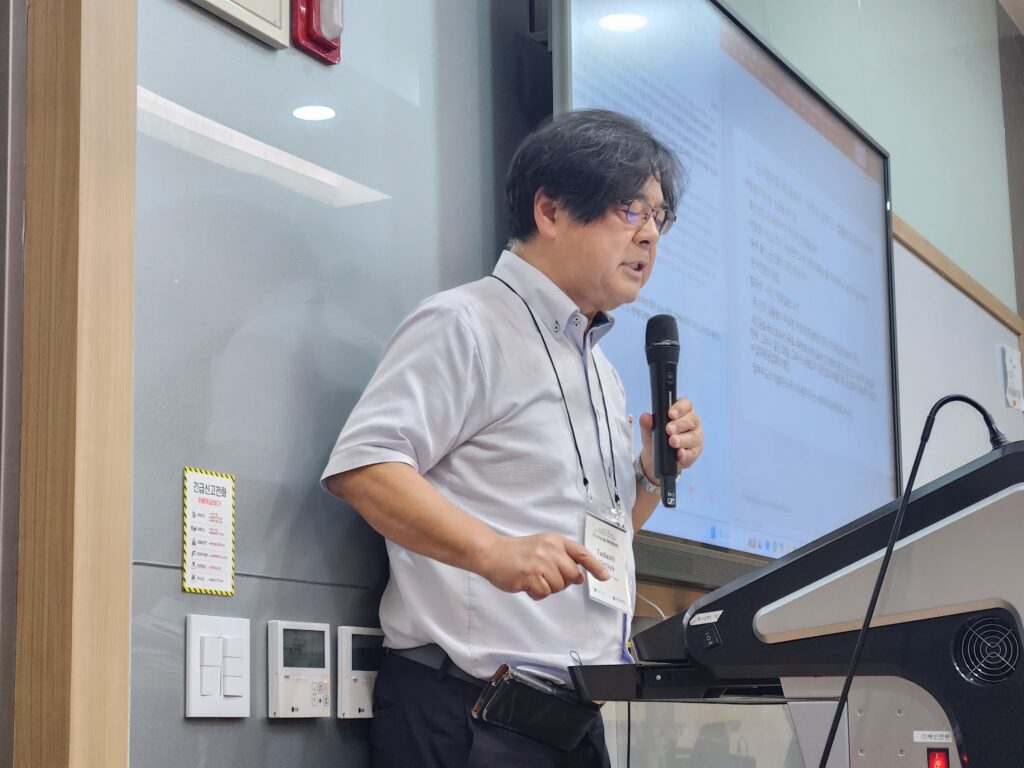
In the third presentation, Professor Kimiya Tadashi (University of Tokyo) addressed “The Korean Division Regime and Anti-communist State of South Korea,” analyzing the relationship between the Cold War division regime and South Korea’s anti-communist state in both theoretical and historical terms. He focused on how the anti-communist system persisted and was transformed not only under the authoritarian regimes preceding 1987 but also under the democratic order that followed. Situating his analysis comparatively-weighing the divergent effects of Cold War division regimes in East and West Germany, China and Taiwan, North and South Vietnam, and the two Koreas-he took the forced dissolution of the Unified Progressive Party in 2014 and President Yoon Suk-yeol’s failed unconstitutional self-coup of December 3, 2024 as cases through which to assess the division regime’s effects on the resilience and mutation of South Korean anti-communism.
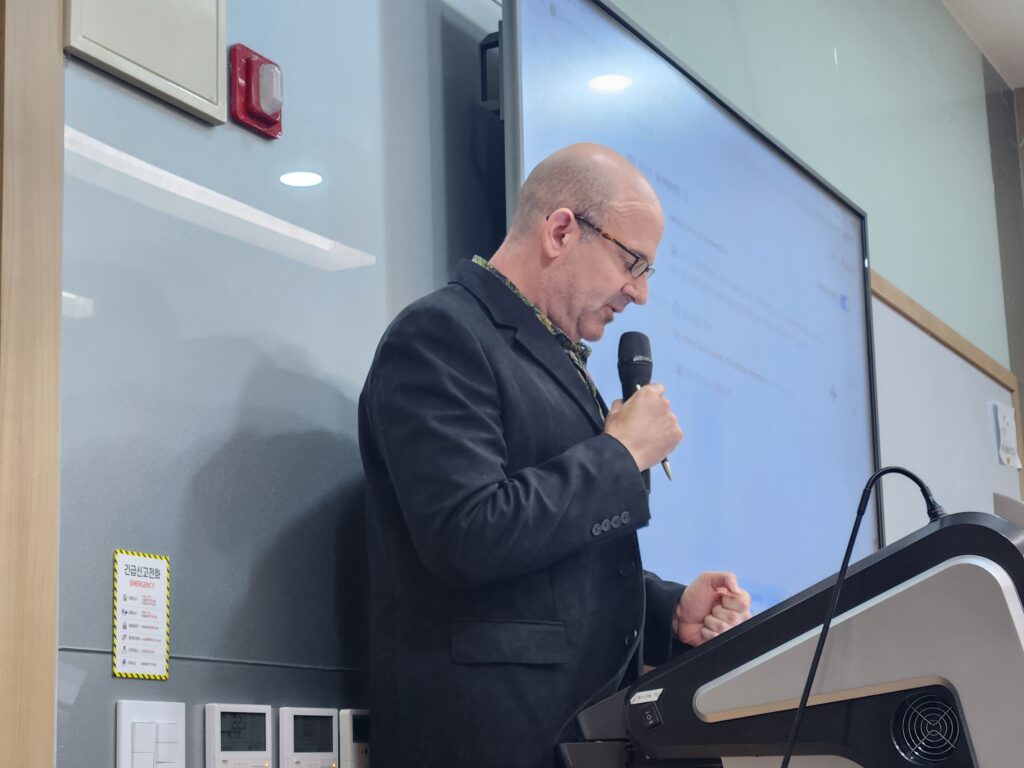
In the final presentation, Professor Todd A. Henry (University of California, San Diego) spoke on “Hetero-Authoritarianism as Everyday Disaster: Anatomical Conformity and Its ‘Queer’ Challenges in Postwar South Korea,” tracing the embodied responses of gender-nonconforming women through the concept of “everyday disaster.” His notion of “hetero-authoritarianism” joins social-scientific work on political-economic illiberalism with humanistic critiques of hierarchized citizenship, and was offered as a revisionist alternative to scholarship that has diminished or erased actors who did not-or could not-conform to gender norms, reproductive heterosexuality, and anatomical dimorphism. He argued that these unnamed structures and invisible scripts guided postwar South Korea’s militarized developmental path, with the consequence that the bodily “outsiders” of this postcolonial order endured disproportionate economic deprivation, social stigma, and public marginalization.
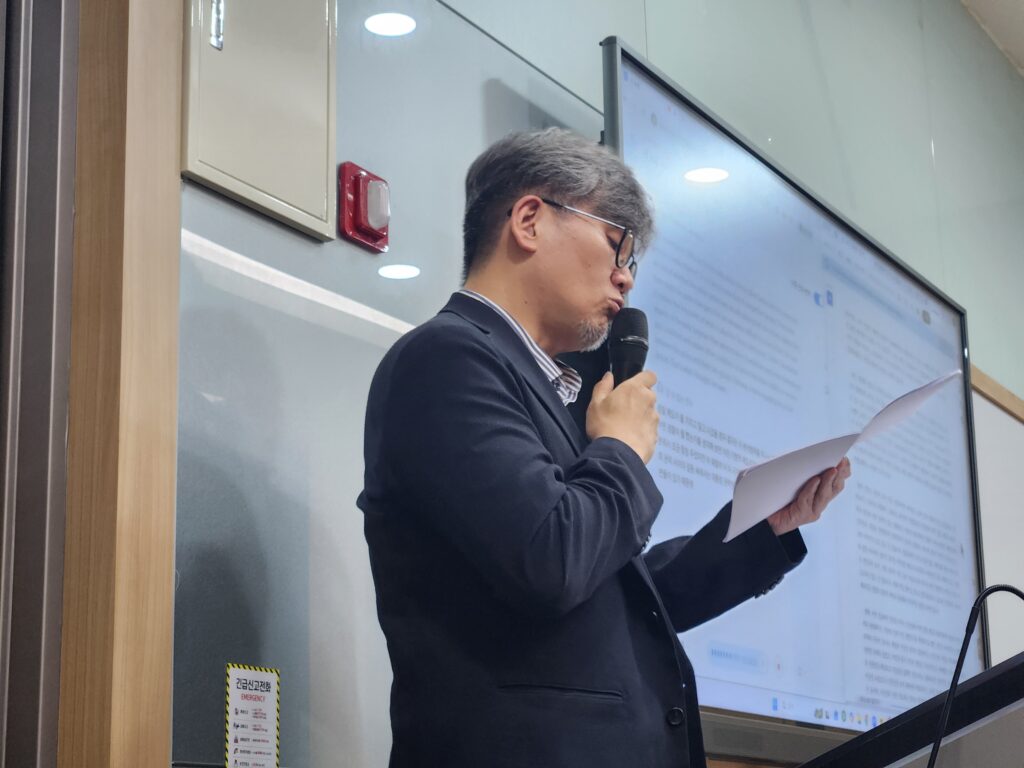
Two discussants offered comments. Professor Jung Joonyoung praised “garrison” as a productive keyword that resists reducing the early Rhee regime to mere “dictatorship,” while noting that Omotola’s concept carries implications distinct from Harold Lasswell’s “garrison state,” and that an analysis of the U.S. Military Government’s reorganization of the police does not by itself clarify how the reorganized police became the institutional ground on which the Assembly’s democratic character and the president’s authoritarian power pulled against one another. Turning to Professor Henry’s paper, he characterized it as an attempt to invert the familiar habit of thinking statehood from the top down, and asked whether the “authoritarianism” in hetero-authoritarianism designates a periodization or names a mode of governance, and whether the internal shifts in the control regime after the 1950s admit of periodization. He further asked whether this landscape should be treated as an exceptional case within statehood studies, or taken as a starting point for redefining statehood itself.
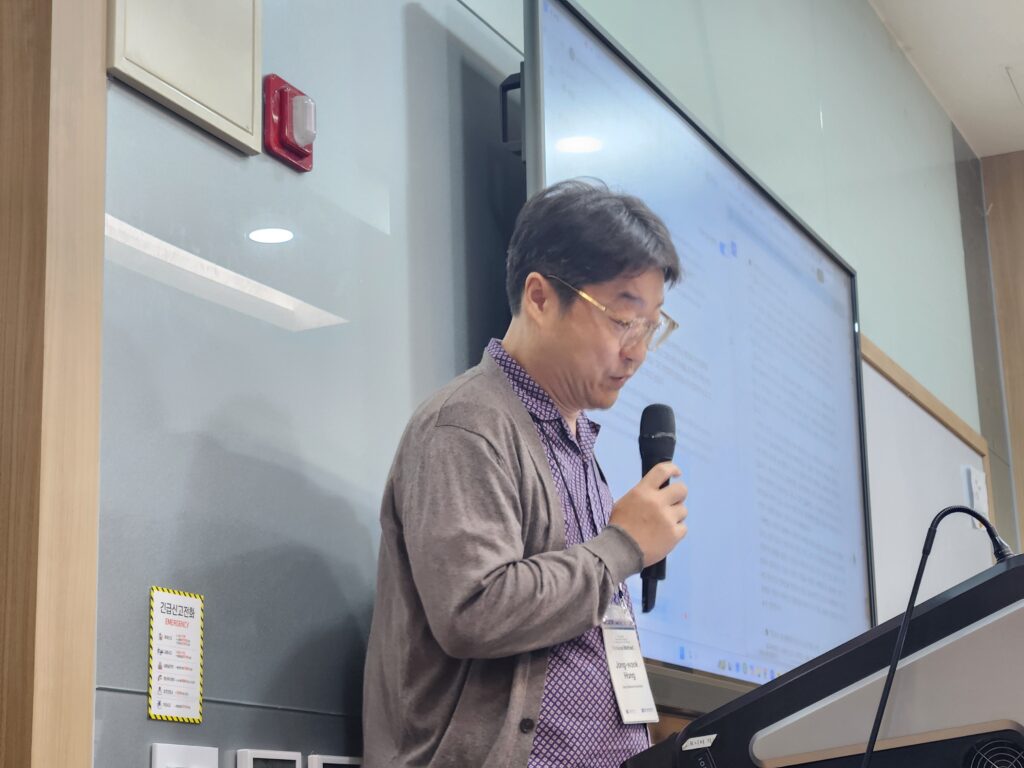
Professor Hong Jong-Wook observed that Professor Oh’s paper exposes the ambiguity of international legal standards governing recognition and speaks to ongoing debates over Korean historical identity, and asked whether the San Francisco Peace Treaty-from which Korea was excluded and which left the validity of Japanese rule over Korea unrepudiated-might be regarded as the final, negative outcome of efforts to secure recognition of the Provisional Government. Responding to Professor Kimiya, he noted that unification in both Vietnam and Germany followed from the fragility of South Vietnam and East Germany respectively, and proposed replacing one axis of the typology with the question of whether ideological and historical legitimacy was symmetrically distributed. He also raised the question of whether the Yoon faction’s insurrection, though waged under an anti-communist banner, departed from the grammar of the traditional anti-communist state insofar as it relied on post-truth claims and conspiracy theories.

2026 SNU ICCK Session: The Formation of the Korean State in the Twentieth Century

2026-08-27

The Center for Contemporary Korean Studies of Seoul National University held a two-day international conference on August 21–22 under the theme “Korea as Method.” The Statehood and Civil Society Team convened its session, “The Formation of the Korean State in the Twentieth Century,” in Room 230, Building 101, Seoul National University. Chaired by Professor Lim Jie-Hyun (Sogang University), the session featured the following four presentations.

In the first presentation, Professor Moon Yumi (Stanford University) spoke on “Garrison Democracy? The First Constitutional Assembly and the Formation of the Post-Colonial State in South Korea,” asking how the character of the South Korean political system during the First Constitutional Assembly (1948–1950) might be theorized. Noting the long-standing dominance of Hamza Alavi’s “overdeveloped state” thesis, she reviewed a range of more recent alternatives, including Lee Taek-sun’s “weak state,” Ahn Do-kyung’s “liberal constitutional democracy,” and Yang Sung-ik’s “ideological fascism grounded in Syngman Rhee’s Ilminjuui.” Drawing on postcolonial state theory and debates over democracy under conditions of crisis-particularly recent discussions of Karl Loewenstein’s “militant democracy”-she proposed conceptualizing South Korea in this period as a “garrison democracy.” The term derives from J. Shola Omotola’s 2007 analysis of Nigerian elections, where it designates a regime in which elections and parliamentary politics coexist with systematic repression of the opposition. While cautioning that the concept cannot simply be transplanted, given the distinctive pressures of building a new postcolonial state, Moon argued that it captures the duality of a period in which the Assembly legislated actively and checked presidential power to a degree, even as the state violently suppressed political dissidents and protesting civilians during the Jeju 4·3 Incident and the Yeosu-Suncheon Rebellion. The resulting regime, sustained through elections yet structured by a militant logic that legitimized legal barriers and coercion against forces designated as threats to the constitutional order, occupied an unstable position on the boundary between democracy and dictatorship.

Professor Oh Si-jin (Kangwon National University) followed with “The Birth of Korea: Legal Issues from the Provisional Government to the Establishment of Statehood of the Republic of Korea,” examining the legal questions arising between the establishment of the Provisional Government in 1919 and the founding of the Republic of Korea in 1948 from the standpoint of international law. He argued that the question of how far Korean sovereignty was recognized prior to the founding of the government is a complex matter that cannot be resolved through traditional, formalist international legal reasoning alone, and that existing scholarship, having concentrated on discrete issues, calls for comprehensive reassessment. His study aims to clarify the issues themselves rather than to reach conclusions dictated by particular political or ideological commitments-though this, he emphasized, is not to suggest that such legal questions carry no political implications. Viewed in broad terms, he maintained, the Korean voice was frequently excluded or overlooked in the founding process, yet never entirely excluded. It is precisely for this reason, he stressed, that assessments of this period remain contentious today and bear directly on how Korean society understands its own identity.

In the third presentation, Professor Kimiya Tadashi (University of Tokyo) addressed “The Korean Division Regime and Anti-communist State of South Korea,” analyzing the relationship between the Cold War division regime and South Korea’s anti-communist state in both theoretical and historical terms. He focused on how the anti-communist system persisted and was transformed not only under the authoritarian regimes preceding 1987 but also under the democratic order that followed. Situating his analysis comparatively-weighing the divergent effects of Cold War division regimes in East and West Germany, China and Taiwan, North and South Vietnam, and the two Koreas-he took the forced dissolution of the Unified Progressive Party in 2014 and President Yoon Suk-yeol’s failed unconstitutional self-coup of December 3, 2024 as cases through which to assess the division regime’s effects on the resilience and mutation of South Korean anti-communism.

In the final presentation, Professor Todd A. Henry (University of California, San Diego) spoke on “Hetero-Authoritarianism as Everyday Disaster: Anatomical Conformity and Its ‘Queer’ Challenges in Postwar South Korea,” tracing the embodied responses of gender-nonconforming women through the concept of “everyday disaster.” His notion of “hetero-authoritarianism” joins social-scientific work on political-economic illiberalism with humanistic critiques of hierarchized citizenship, and was offered as a revisionist alternative to scholarship that has diminished or erased actors who did not-or could not-conform to gender norms, reproductive heterosexuality, and anatomical dimorphism. He argued that these unnamed structures and invisible scripts guided postwar South Korea’s militarized developmental path, with the consequence that the bodily “outsiders” of this postcolonial order endured disproportionate economic deprivation, social stigma, and public marginalization.

Two discussants offered comments. Professor Jung Joonyoung praised “garrison” as a productive keyword that resists reducing the early Rhee regime to mere “dictatorship,” while noting that Omotola’s concept carries implications distinct from Harold Lasswell’s “garrison state,” and that an analysis of the U.S. Military Government’s reorganization of the police does not by itself clarify how the reorganized police became the institutional ground on which the Assembly’s democratic character and the president’s authoritarian power pulled against one another. Turning to Professor Henry’s paper, he characterized it as an attempt to invert the familiar habit of thinking statehood from the top down, and asked whether the “authoritarianism” in hetero-authoritarianism designates a periodization or names a mode of governance, and whether the internal shifts in the control regime after the 1950s admit of periodization. He further asked whether this landscape should be treated as an exceptional case within statehood studies, or taken as a starting point for redefining statehood itself.

Professor Hong Jong-Wook observed that Professor Oh’s paper exposes the ambiguity of international legal standards governing recognition and speaks to ongoing debates over Korean historical identity, and asked whether the San Francisco Peace Treaty-from which Korea was excluded and which left the validity of Japanese rule over Korea unrepudiated-might be regarded as the final, negative outcome of efforts to secure recognition of the Provisional Government. Responding to Professor Kimiya, he noted that unification in both Vietnam and Germany followed from the fragility of South Vietnam and East Germany respectively, and proposed replacing one axis of the typology with the question of whether ideological and historical legitimacy was symmetrically distributed. He also raised the question of whether the Yoon faction’s insurrection, though waged under an anti-communist banner, departed from the grammar of the traditional anti-communist state insofar as it relied on post-truth claims and conspiracy theories.