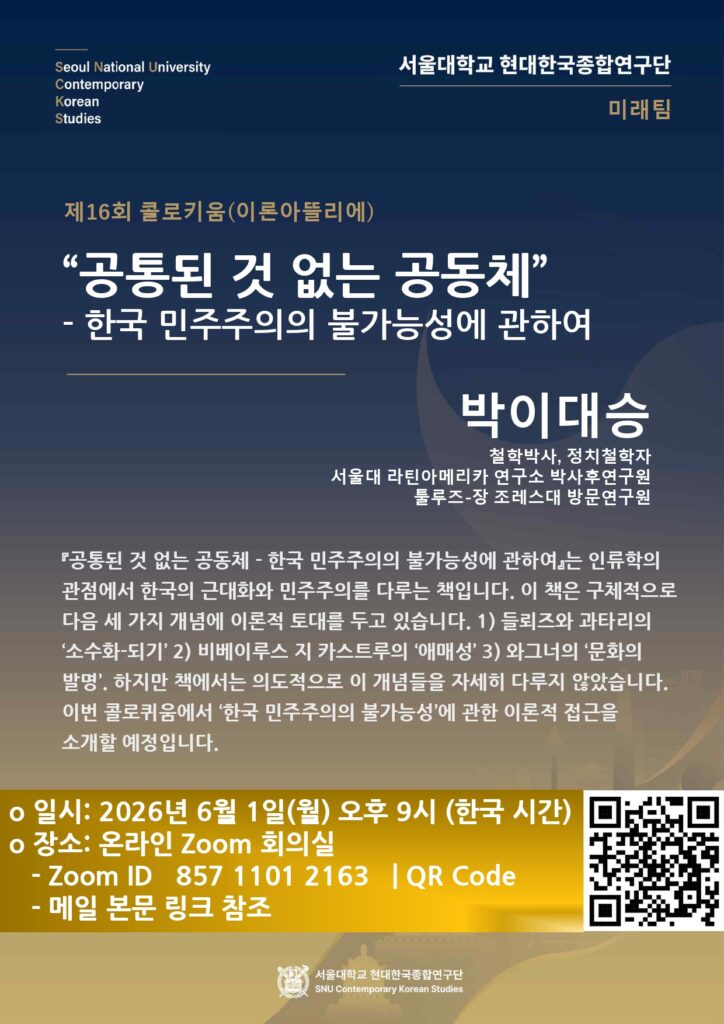
<Overview> A Community Without the Common: On the Impossibility of Korean Democracy is a book that examines Korean modernization and democracy from an anthropological perspective. More specifically, the book is theoretically grounded in three concepts: 1) Deleuze and Guattari’s “becoming-minoritarian,” 2) Viveiros de Castro’s “equivocation,” and 3) Wagner’s “invention of culture.” In the book, however, these concepts are intentionally not discussed in detail. This colloquium will introduce the book’s theoretical approach to the “impossibility of Korean democracy.”
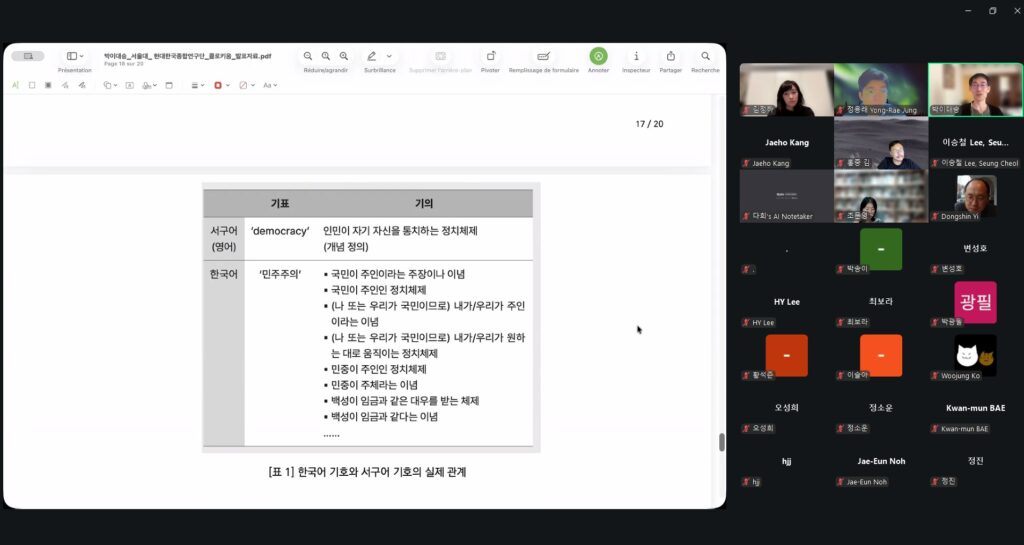
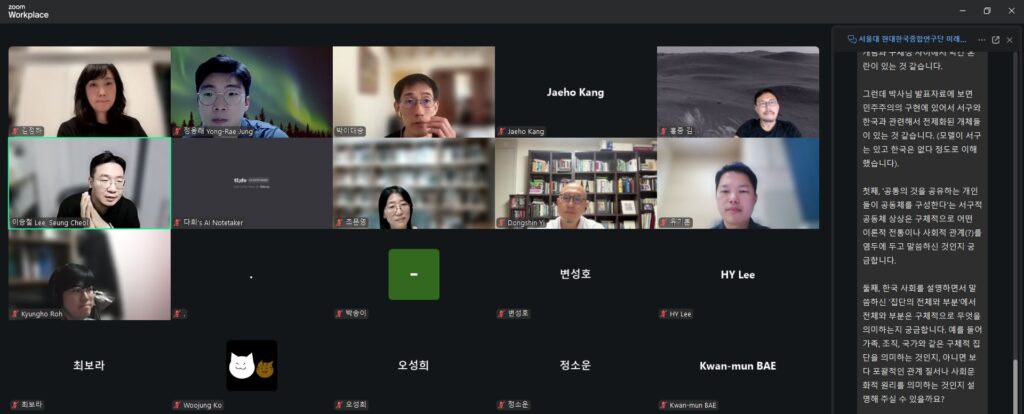
On June 1, 2026, the K-Future Team held its 16th Theory Atelier online, centered on “Community without the Common: On the Impossibility of Korean Democracy,” a lecture by political philosopher Daeseung Park. The event brought together around forty-five participants, including undergraduate and graduate students as well as faculty members.
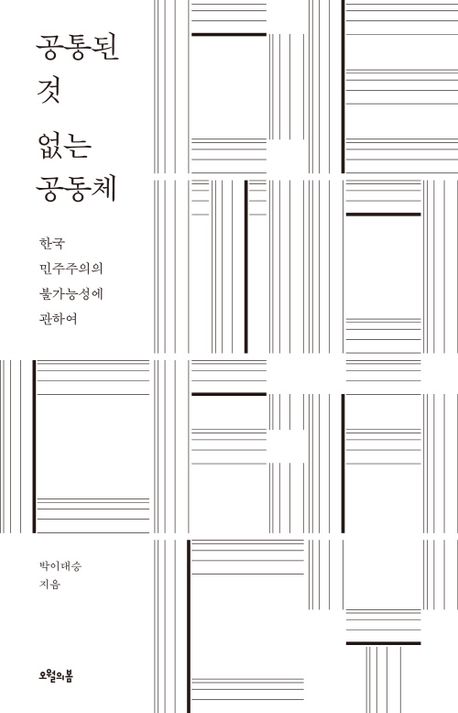
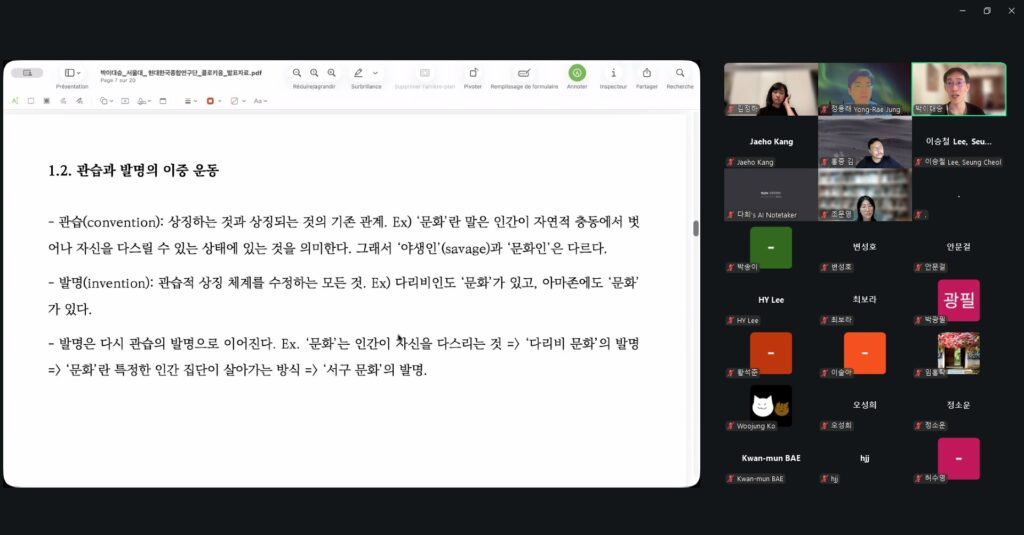
Based on his recent book A Community without the Common (공통된 것 없는 공동체), Park addressed the translation, reception, and transformation of the Western model of democracy in relation to the Korean term “minjujuui (민주주의).” Park diagnosed Korean democracy as a “community without the common”: while it has acquired institutional forms―such as the constitution, elections, and parliament―the languages of citizenship, equality, rights, duties, and public debate do not fully operate as shared contents of political community. Drawing on Roy Wagner, Eduardo Viveiros de Castro, and Deleuze and Guattari, the lecture situated Korean democracy in relation to the Western model while presenting it as a political form generated and transformed under the conditions of Korean modernity.