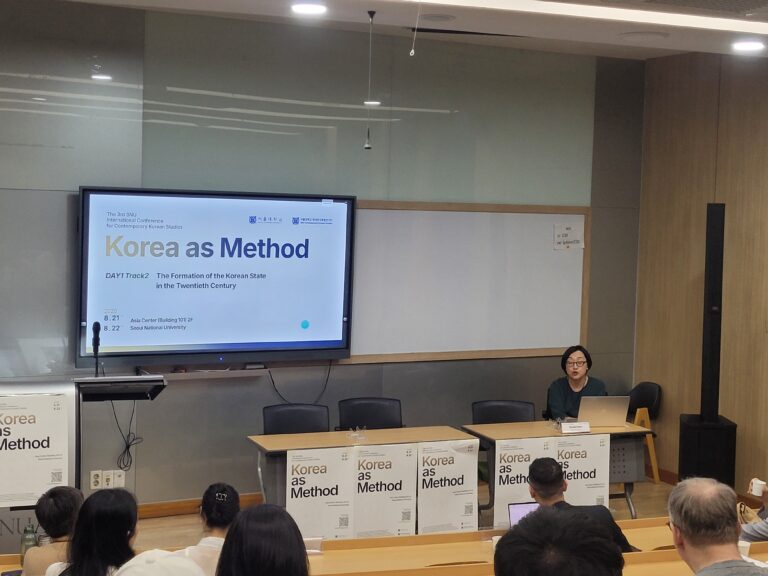
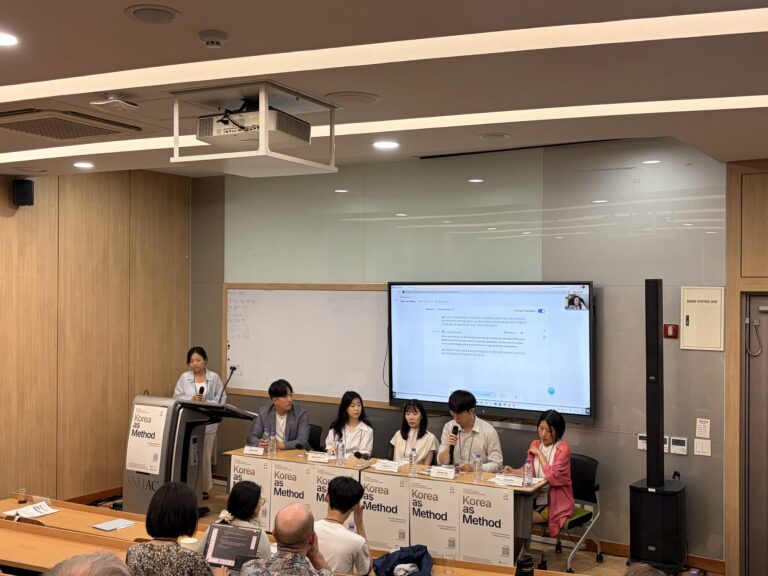
2026 SNU ICCK Session – Lives at the Margins of Contemporary South Korea
On the second day of the 3rd International Conference, held by the Seoul National University Contemporary Korea Research Group on August 21 and 22 under the theme “Korea as Method,” the session “Lives at the Margins of Contemporary South Korea”2026-09-09
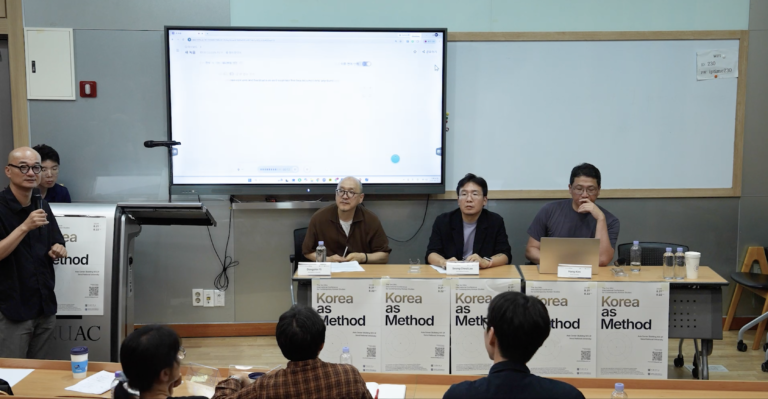
2026 SNU ICCK Session – A Thanatology of Contemporary Korean Society
On the second day of the 3rd International Conference, held by the Seoul National University Contemporary Korea Research Group on August 21 and 22 under the theme “Korea as Method,” the session “A Thanatology of Contemporary Korean Society” took place2026-09-09
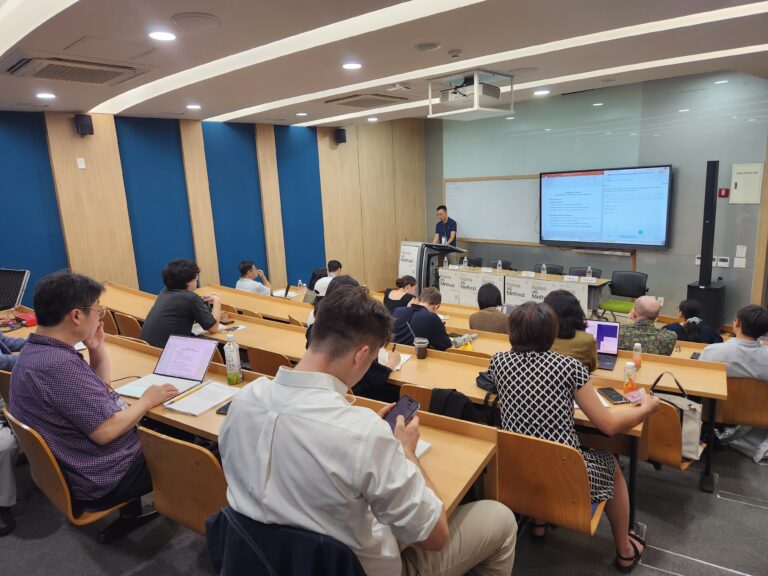
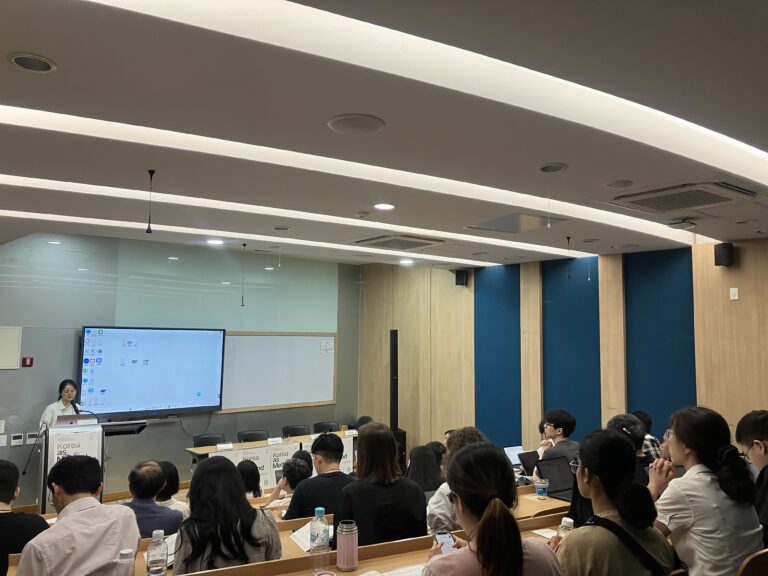
2026 SNU ICCK Session – Theorizing from South Korea, Beneath and Beyond Epistemological Binaries
On the first day of the 3rd International Conference, held by the Seoul National University Contemporary Korea Research Group on August 21 and 22 under the theme “Korea as Method,” the session “Theorizing from South Korea, Beneath and Beyond Epistemological2026-09-09
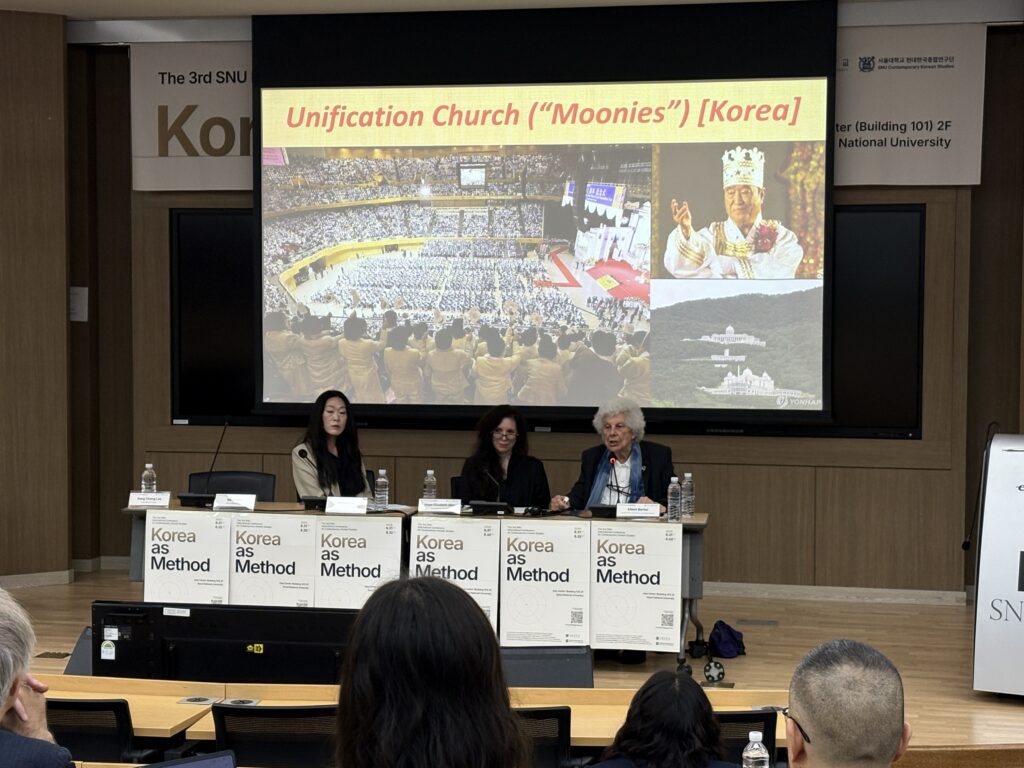
2026 SNU ICCK Session – Inventing the Real: Religion, Truth, and Boundary-Making
The SNU Center for Contemporary Korean Studies held its 3rd International Conference on August 21 and 22 under the theme “Korea as Method.” On the first day of the conference, the Values and Identity Team convened its first session, “Inventing2026-09-09
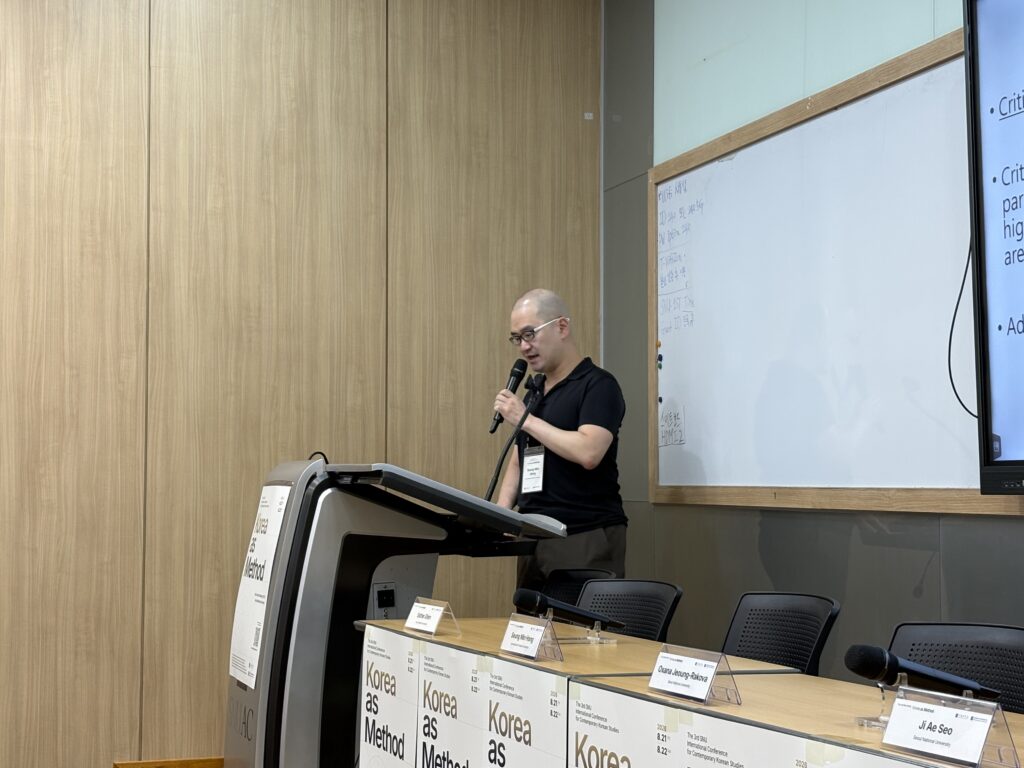
2026 SNU ICCK Session – Finding Voice at the Margins: Religion, Citizenship, and the Struggle for Legitimacy in Korea
On the second day of the 3rd International Conference, held by the SNU Center for Contemporary Korean Studies on August 21 and 22 under the theme “Korea as Method,” the Values and Identity Team convened the open-call session “Finding Voice2026-09-09
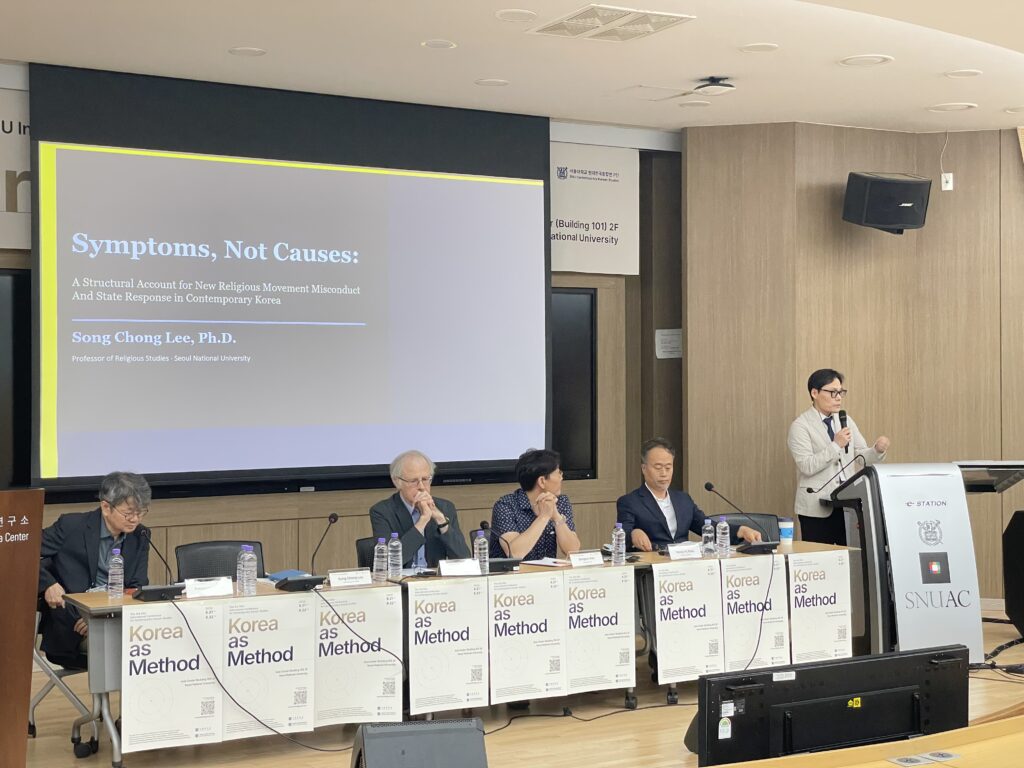
2026 SNU ICCK Session – Purifying the Sacred: Religion, State Power, and the Politics of Classification
On the second day of the 3rd International Conference, held by the SNU Center for Contemporary Korean Studies on August 21 and 22 under the theme “Korea as Method,” the Values and Identity Team convened its final session, “Purifying the2026-09-09
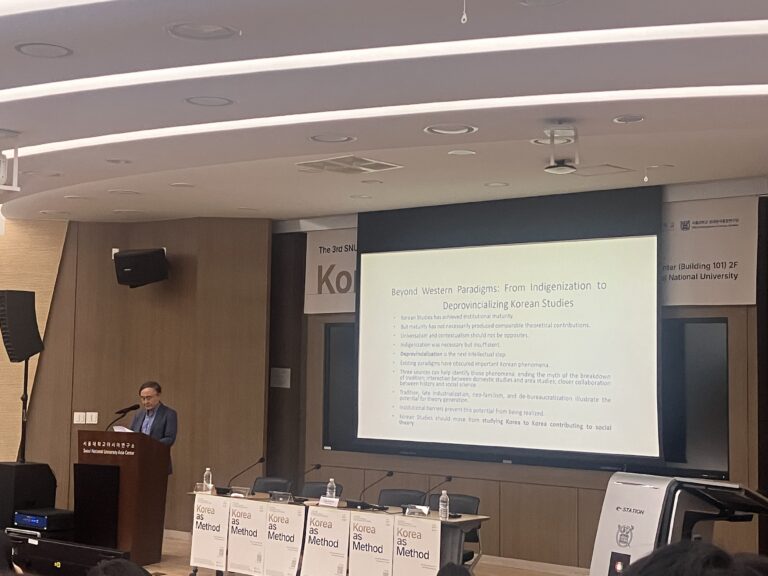
2026 SNU ICCK Keynote Speech – Yong-Chool Ha(University of Washington)
At 11:20 a.m. on the first day of the conference, Professor Yong-Chool Ha of the University of Washington delivered the keynote address, “Beyond Western Paradigms: The Korean Style of Social Sciences and the Role of Tradition,” at Youngwon Hall. Ha2026-09-09
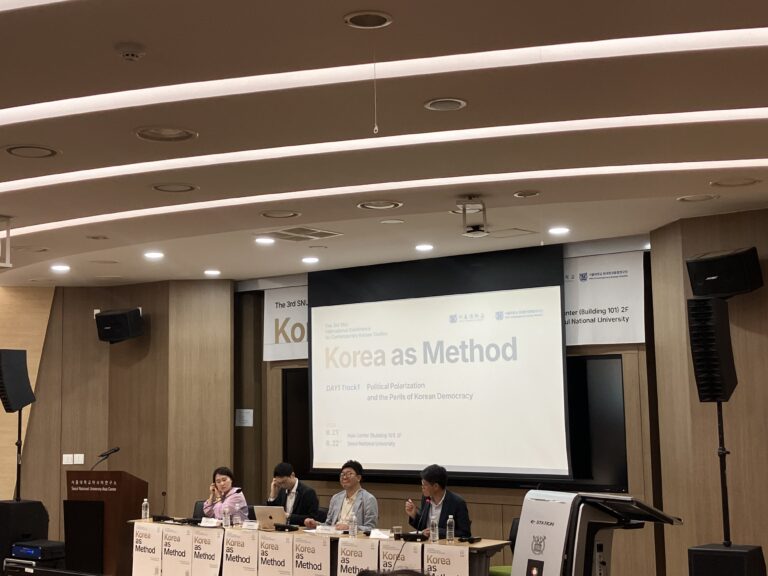
2026 SNU ICCK Session – Political Polarization and the Perils of Korean Democracy
At 13:30 in Youngwon Hall, the session Political Polarization and the Perils of Korean Democracy examined Korean democracy from three connected perspectives: citizens’ well-being, party organization, and constitutional adjudication. Gidong Kim(Hankuk University of Foreign Studies)’s presentation, “Affective Polarization and Mental Health,” investigated2026-09-09