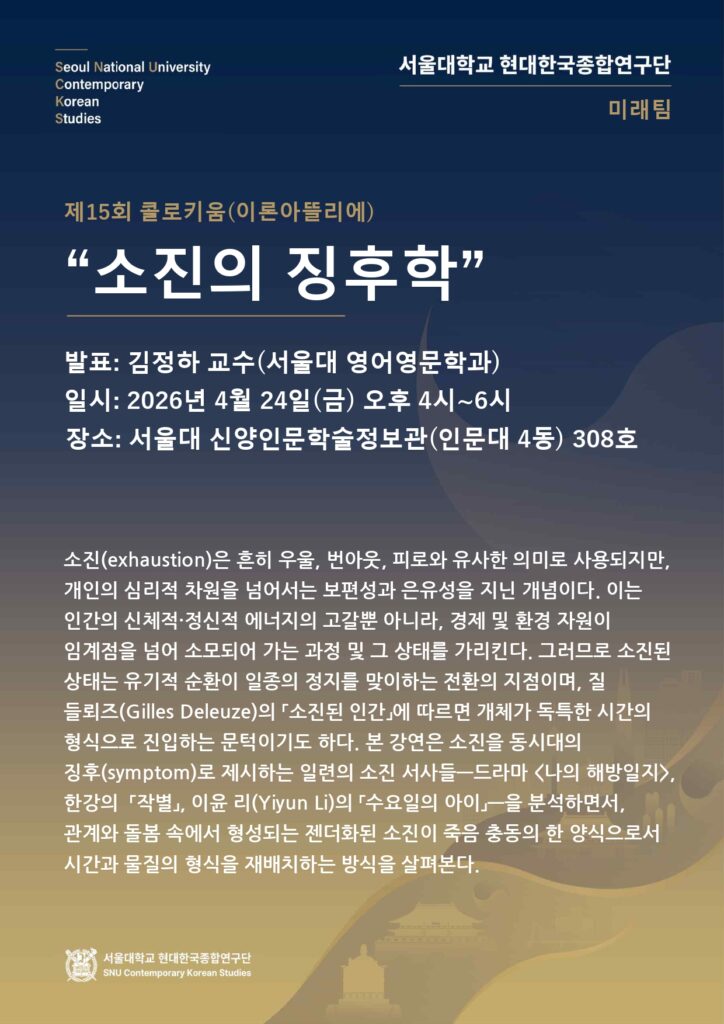
<Overview> Exhaustion is often used in ways that overlap with depression, burnout, and fatigue, yet it is a concept whose universality and metaphorical force exceed the psychological dimension of the individual. It refers not only to the depletion of human physical and mental energy, but also to the process and condition in which economic and environmental resources are consumed beyond a critical threshold. An exhausted state, therefore, marks a point of transition at which organic cycles come to a kind of standstill; it is also, as Gilles Deleuze suggests in “The Exhausted,” a threshold at which the individual enters a singular form of time. This lecture reads My Liberation Notes, Han Kang’s “Farewell,” and Yiyun Li’s “Wednesday’s Child” as narratives of exhaustion that register a symptom of the contemporary moment. It explores how gendered exhaustion, shaped by relations and practices of care, reconfigures time and matter as a mode of the death drive.
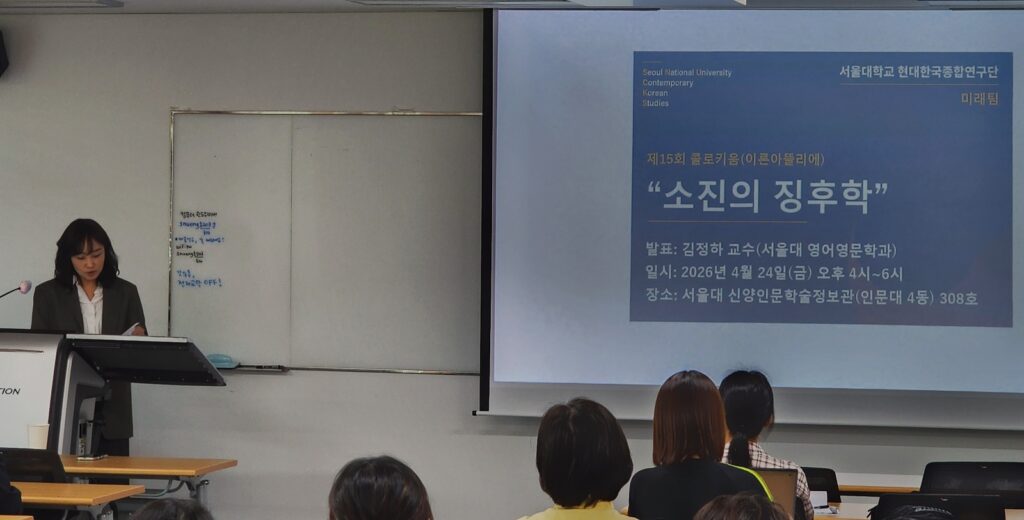
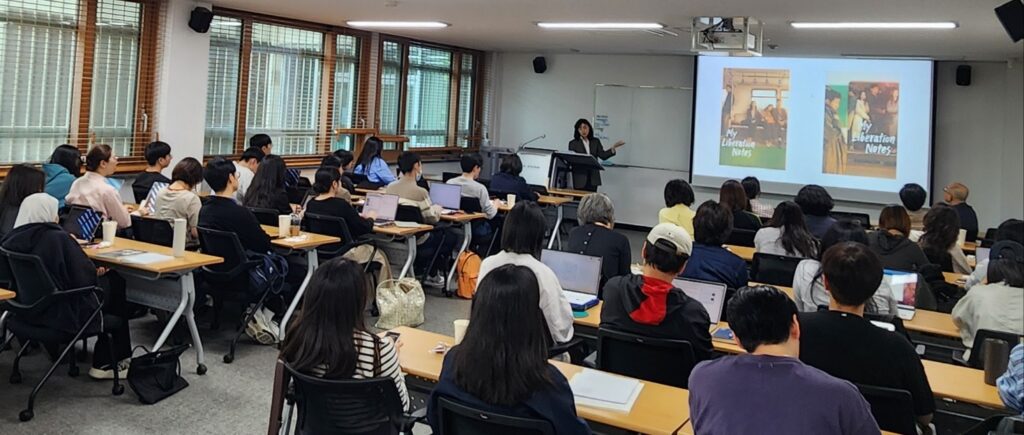
On April 24, 2026, the K-Future Team held its 15th Theory Atelier, centered on “A Symptomatology of Exhaustion,” a lecture by Professor Jeongha Kim of the Department of English Language and Literature at Seoul National University. Under this year’s theme of “Thanato-politics in Korea,” the lecture approached exhaustion as a condition in which the boundary between life and death becomes unsettled, tracing signs of death on the surface of depleted life.
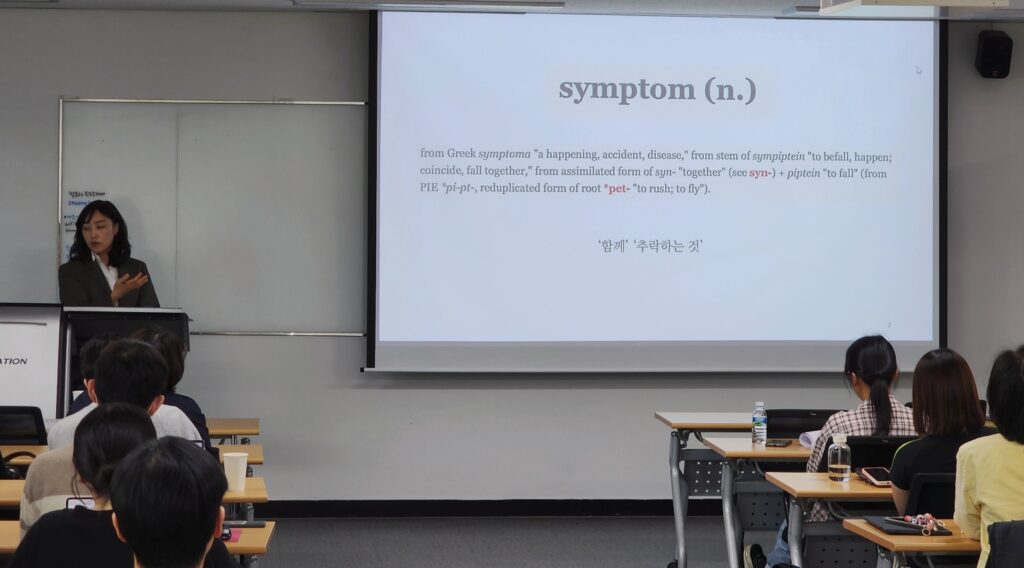
Professor Kim read exhaustion not as depression, burnout, or fatigue alone, but as a contemporary symptom shaped by resources, time, care, and affect. Drawing on Freud’s theory of dreams and symptoms, affectivity, and Deleuze’s “the exhausted,” the lecture examined *My Liberation Notes*, Yiyun Li’s “Wednesday’s Child,” and Han Kang’s “Farewell.” The follow-up discussion covered gendered exhaustion, mourning, care, and post-critique.