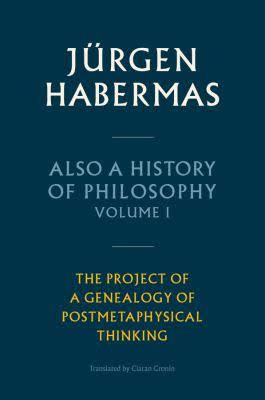
<Overview> Although Confucianism is discussed in Habermas’s Also a History of Philosophy (2019) as one of the Axial traditions, its status as a world-view of “immanent transcendence” has not been sufficiently explicated. In order to do so, one needs not only to have more knowledge of different sub-schools and different generations of Confucianism, but also to have a deeply seated participant perspective.
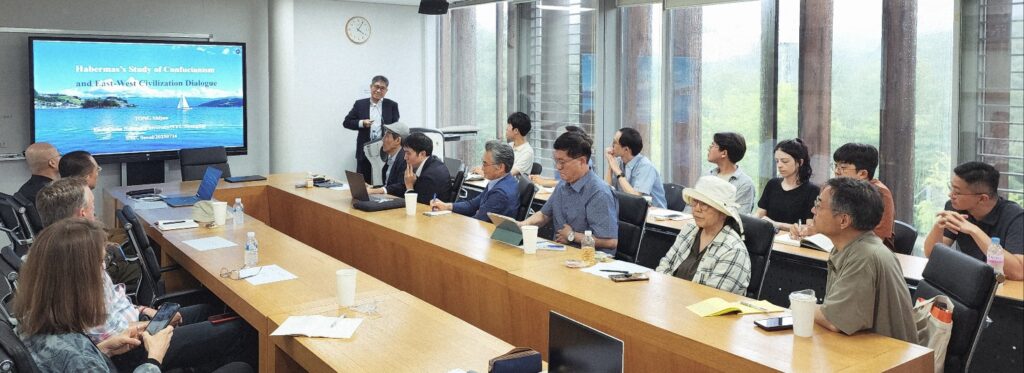
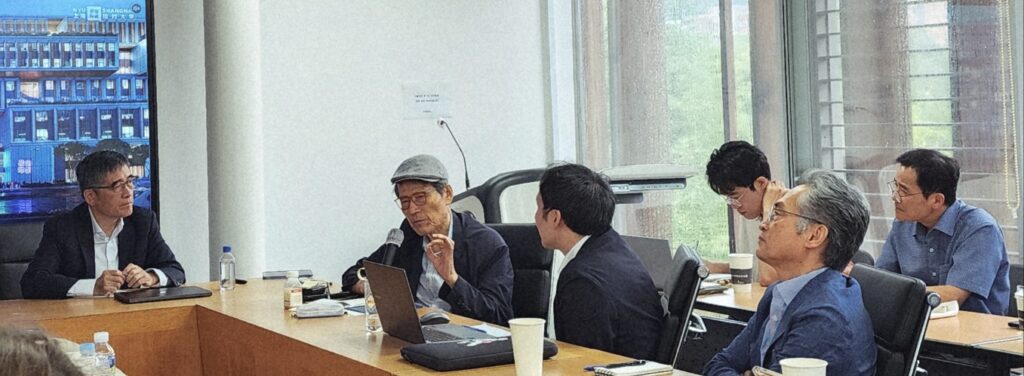
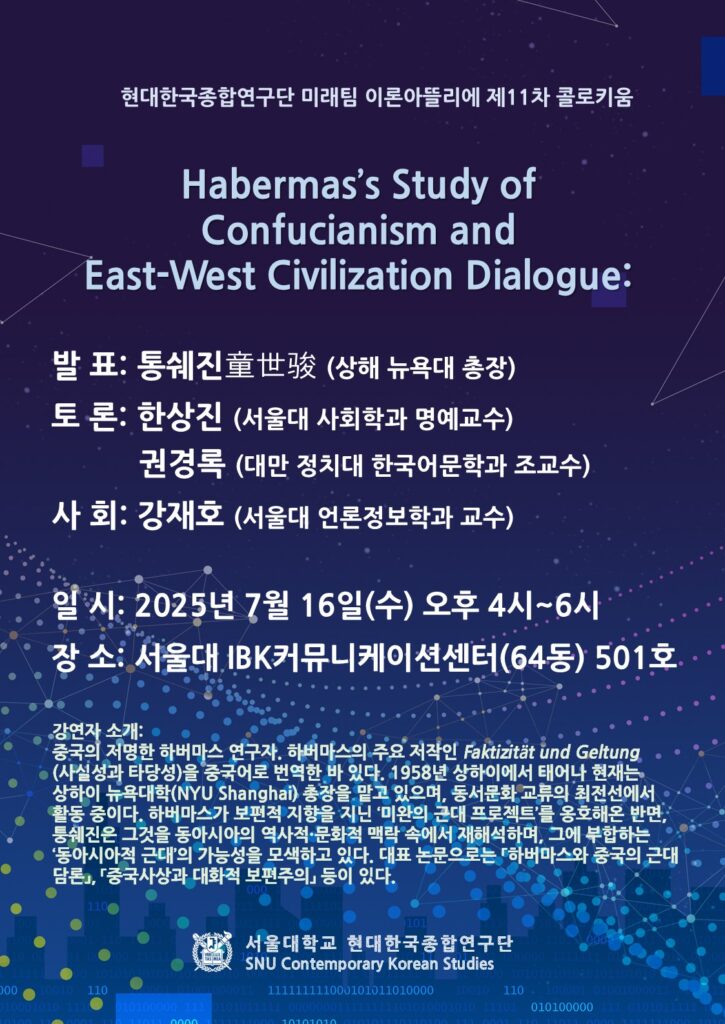
On July 16, 2025, the K-Future Team held a Theory Atelier centered on “Habermas’s 2019 Study of Confucianism and and Dialogue between Eastern and Western Civilizations,” a lecture by Tong Shijun, Chancellor of NYU Shanghai, arranged at the invitation of Han Sang-Jin, Professor Emeritus of Sociology at Seoul National University. Delivered in English, the lecture took Habermas’s interpretation of Confucianism in *Also a History of Philosophy* as its point of departure. Tong situated Confucianism within the “Axial traditions” and placed particular emphasis on the Confucian virtue of loving learning, or the “willingness to learn.”
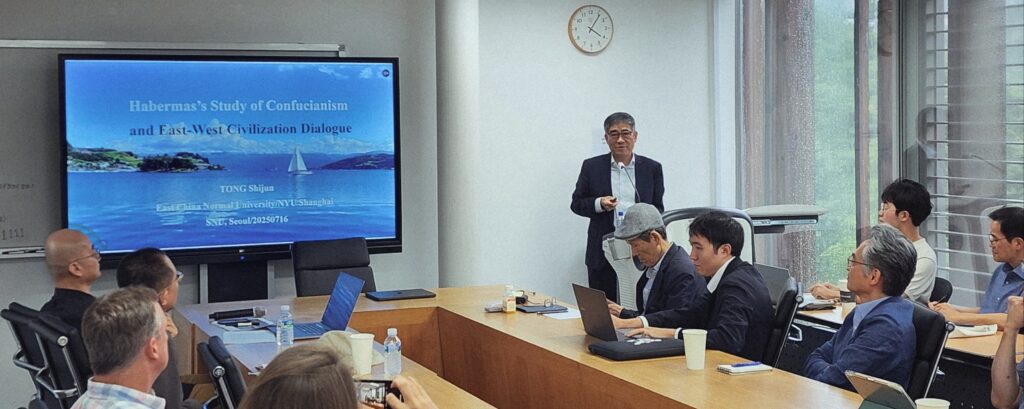
The follow-up discussion was led by Han Sang-Jin, Professor Emeritus, with comments by Kwon Kyung-Rok, Assistant Professor at National Chengchi University in Taiwan. It developed the encounter between Habermas and Confucianism in relation to the lived experience of Korean democracy. In a reflection after the event, Professor Kim Hong-jung focused on Tong’s thesis that “learning” precedes “benevolence” as a Confucian meta-value. Taking up Han’s remarks on minjung/jungmin(민중/중민), Kim suggested the possibility of understanding democracy as a process of mutual learning that holds together “learning the people” and “the people learning.”