On the second day of the 3rd International Conference, held by the Seoul National University Contemporary Korea Research Group on August 21 and 22 under the theme “Korea as Method,” the session “Lives at the Margins of Contemporary South Korea” took place in Room 230 of the SNU Asia Center. Chaired by Sojeong Park (Hanyang University), the session featured presentations by Sunwoo Kim (Goldsmiths, University of London), Seon Shim (University of British Columbia), Jueun “June” Lee (Harvard University), and Hojin Song (California State University Monterey Bay). Through cases of solitary living, disability and sensory environments, unclaimed death, and the digital visibility of older women, the speakers explored how marginal lives in contemporary South Korea are constituted through space, institutions, sensation, relationality, and time.
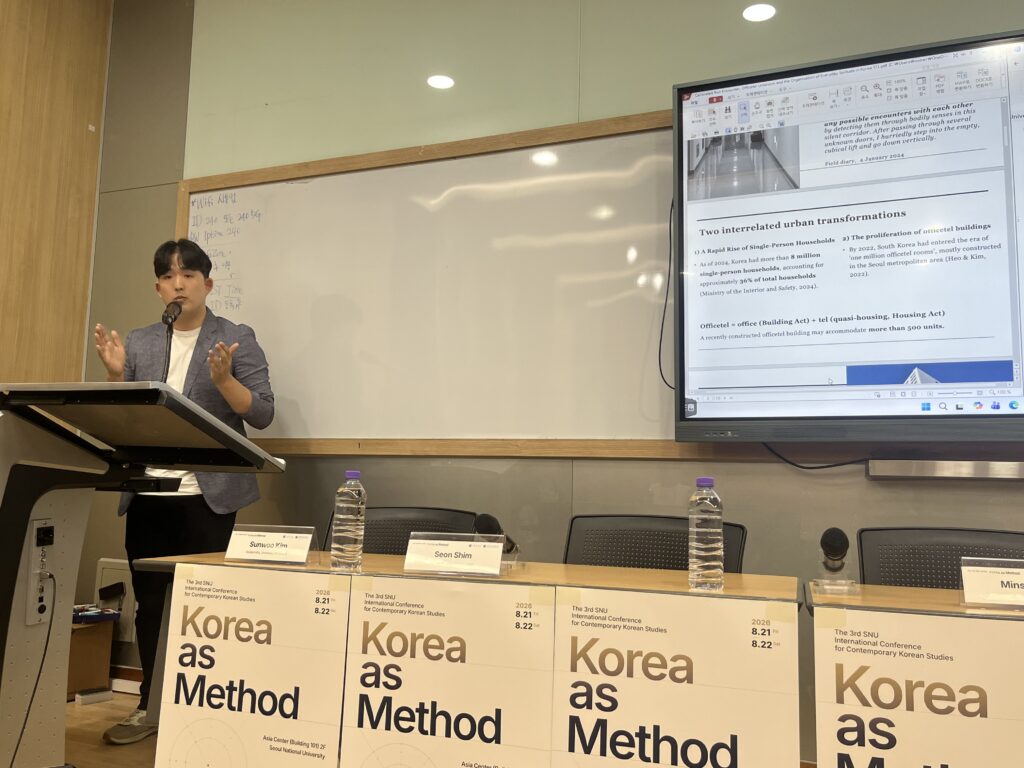
Sunwoo Kim (Goldsmiths, University of London), in “Calibrated Non-Encounter: Officetel Urbanism and the Organisation of Everyday Solitude in Korea,” moved beyond explanations of young single-person households as products of individual choice or precarity to examine how urban infrastructure itself organizes everyday solitude. Drawing on sensory ethnographic research in a high-density officetel in the Seoul metropolitan area, Kim showed how corridors and elevators, delivery systems and digital platforms, building regulations, and residents’ bodily adjustments combine to produce “calibrated non-encounter” under conditions of intense spatial proximity. Anonymity and solitude, in this account, are not simply absences of social relations but forms of urban life actively produced through socio-material arrangements.
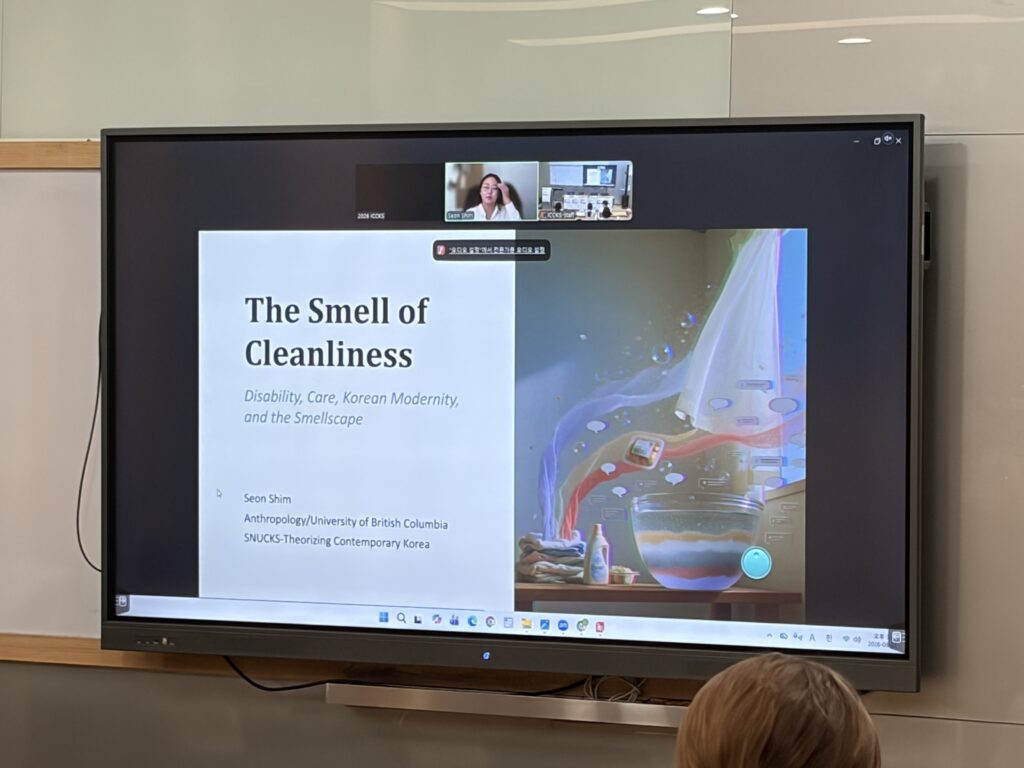
Seon Shim (University of British Columbia), in “Perfumed Ecologies, Disability, and Atmospheres in Korea,” examined how care and control are enacted through sensory environments in the everyday life of autistic artist Jin Li and her family. In their Seoul apartment, “freshness” is carefully produced through fabric softeners, air fresheners, and laundry practices that respond to stigma surrounding disabled families while also reflecting Christian ideals of proper care. Shim conceptualized these arrangements as “perfumed ecologies” and drew on Korean sensory idioms such as siwonhada and gaewoonhada to analyze how cleanliness, care, and normality are atmospherically constructed. The presentation thus treated Korean sensory experience as a theoretical resource for rethinking disability governance and atmospheric power.
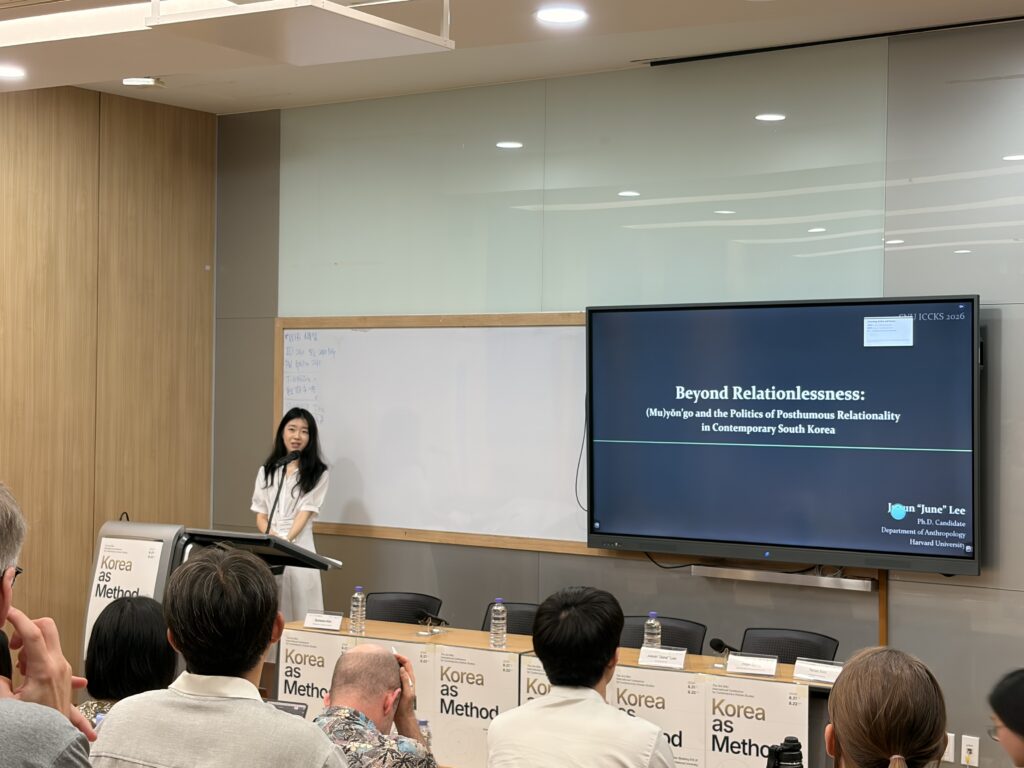
Jueun “June” Lee (Harvard University), in “Beyond Relationlessness: Muyŏn’go and the Politics of Posthumous Relationality in Contemporary South Korea,” explored how relations after death are socially and institutionally produced through cases of lonely death and muyŏn’go, or unclaimed death. Based on ethnographic research within Seoul’s muyŏn’go deathcare network, Lee argued that “relationlessness” should not be understood simply as the absence of relationships during life. Rather, the category depends on which relationships institutions recognize as legitimate forms of yŏn’go. Economic precarity, institutional biases, historical circumstances, and competing notions of relatedness therefore shape who is ultimately classified as muyŏn’go. Posthumous relationlessness, Lee concluded, is not an inherent condition but a category produced through practices of relational recognition and exclusion.
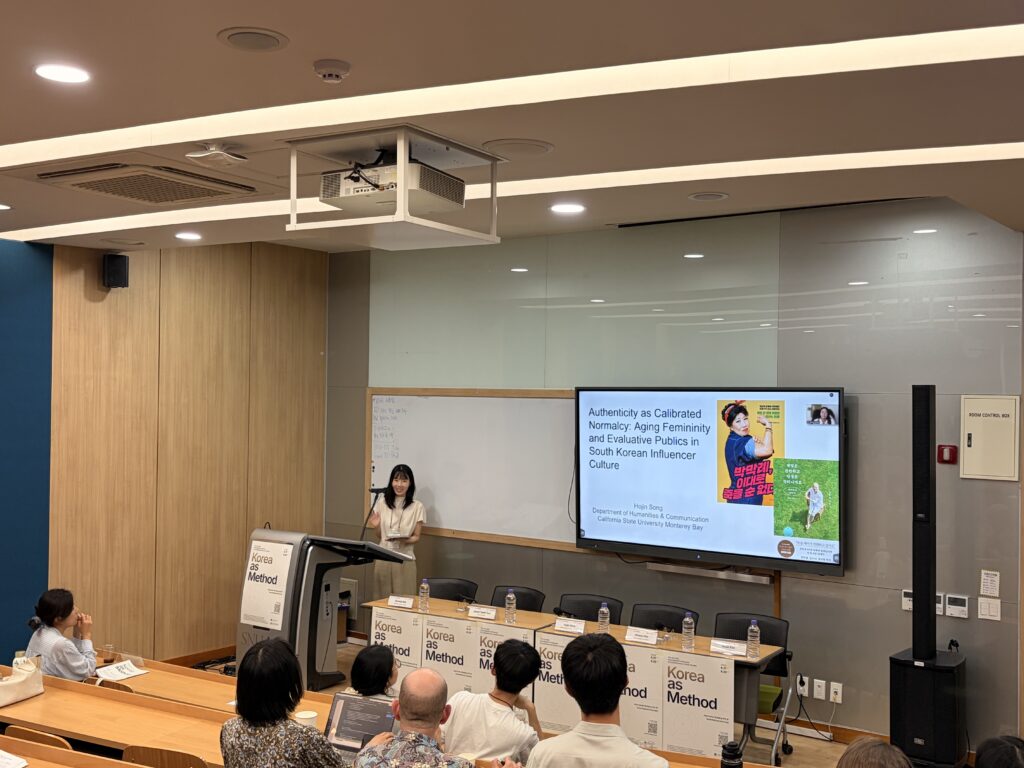
Finally, Hojin Song (California State University Monterey Bay), in “Aging as Authenticity: Temporal Expertise and Digital Femininity in South Korea’s Senior Influencers,” examined how aging can become a source of digital authenticity and authority through the YouTube channel Milanonna, hosted by Jang Myung-sook. In a media environment dominated by youth, speed, and self-optimization, Jang’s elegance, slow speech, and emphasis on “well-aging” reposition the older female body from marginality to authority. Song conceptualized this process through “temporal capital” and “age-authenticity,” arguing that accumulated lived experience can be converted into credibility. South Korea’s compressed modernity and rapid demographic aging, in this sense, provide conceptual resources for rethinking digital femininity and influencer authenticity beyond youth-centered models.
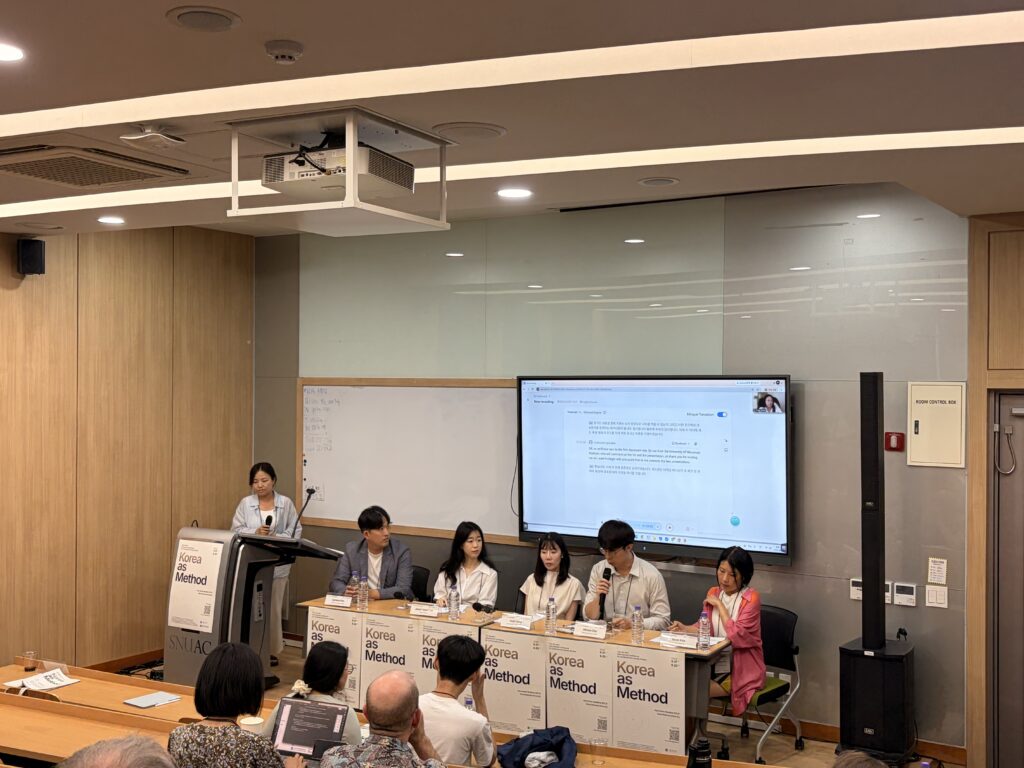
Following the four presentations, Minseo Cho (University of Wisconsin–Madison) and Yeran Kim (Kwangwoon University) offered comments on the panel.
Taken together, the four presentations examined different forms of life at the margins while refusing to treat marginality as a fixed attribute of particular individuals or groups. Solitude is organized through urban infrastructure, norms of disability and care through sensory atmospheres, and muyŏn’go through institutional boundaries of relational recognition, while aging can become a new source of authority and authenticity in digital culture. The session thus reframed the margins not simply as spaces of exclusion from an established center, but as sites where the boundaries between relation and non-relation, normality and difference, and visibility and invisibility are actively produced and renegotiated.