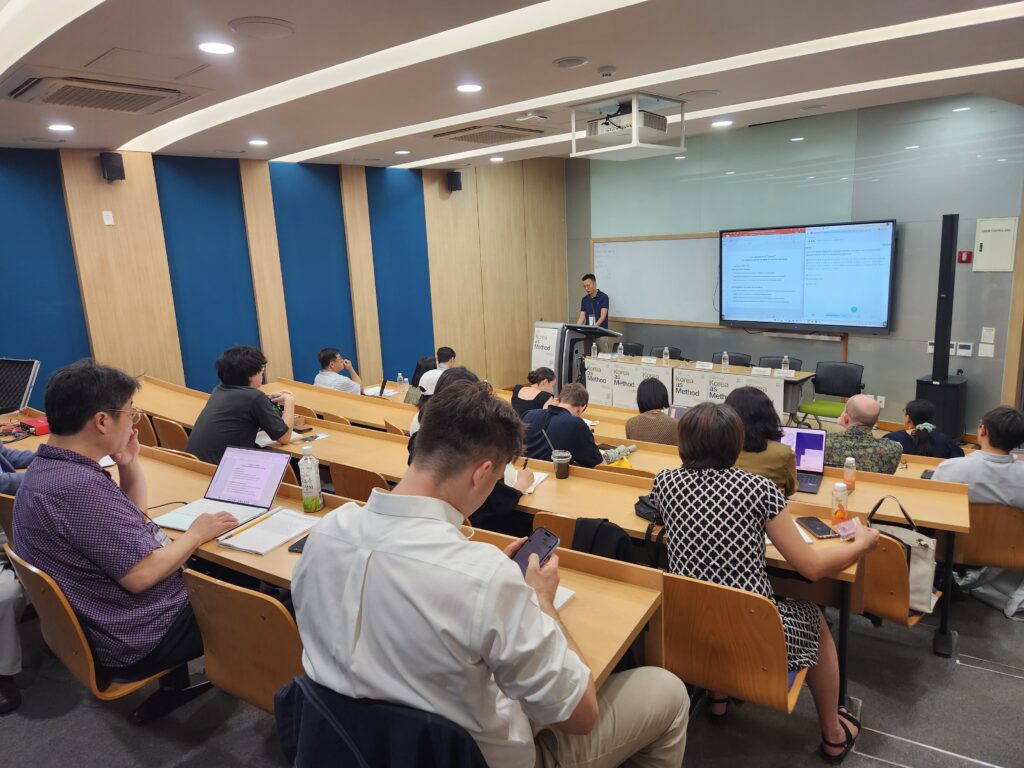
On the first day of the 3rd International Conference, held by the Seoul National University Contemporary Korea Research Group on August 21 and 22 under the theme “Korea as Method,” the session “Historical Modernity” took place in Room 240 of the SNU Asia Center. Chaired by Jongwook Lee (Seoul National University), the session featured presentations by Seungyop Shin (Handong University) and Ken Park (University of Virginia). Although the two papers addressed very different subjects—historical writing in colonial Korea and the infrastructure of food-waste disposal in Seoul—both critically reconsidered understandings of modernity as a linear process of development governed by predetermined universal standards.
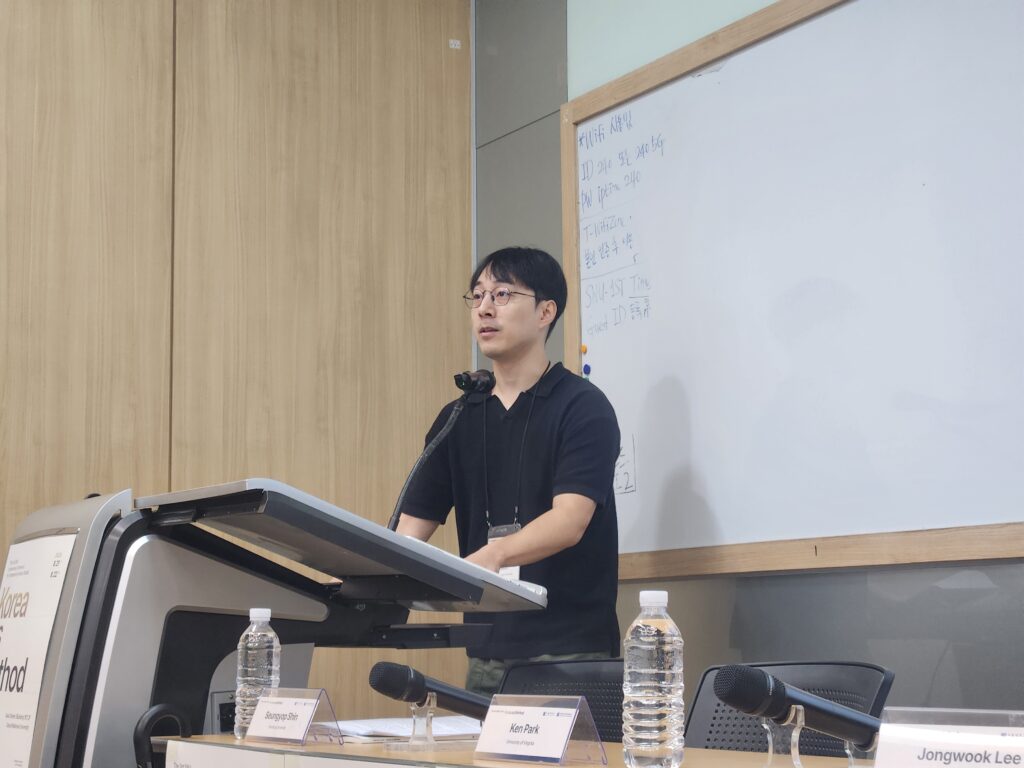
Seungyop Shin (Handong University), in “‘Overcome by Modernity’ in Colonial Korea: The Politics of History Writing and Chosŏnhak in the 1920s–30s,” examined the intellectual configuration and limitations of historical writing in colonial Korea. Since liberation, the dyad of “universalism” and “particularism” has remained a central framework in Korean historical scholarship and education. Although the relative emphasis placed on each has shifted with changing political circumstances, historians have repeatedly sought both to locate Korean history within universal historical development and to establish its distinctive national character.
Shin traced the origins of this framework to Chosŏnhak (Korean Studies), which emerged in the late 1920s as an intellectual project that sought to reinterpret Korean history in a global context through the rediscovery of national identity and tradition. Nationalist historians emphasized Korea’s ancient heritage and ethnic distinctiveness, whereas Marxist historians criticized nationalist essentialism through the framework of dialectical materialism. Despite their methodological and ideological differences, however, both camps shared an ambition to transcend the historical narratives that sustained an imperialist and capitalist world order dominated by the West and Japan.
Shin argued that these efforts nevertheless remained constrained by a Hegelian schema of universality and particularity. Paradoxically, attempts to overcome colonial historiography and establish an autonomous historical subject could reproduce elements of Eurocentric and colonial epistemology. Historical writing in colonial Korea therefore had a dual character: it fostered national consciousness while simultaneously reproducing the logic of modern structures of domination. By highlighting this tension, the presentation offered a renewed interpretation of both the intellectual formation and the limits of Chosŏnhak.
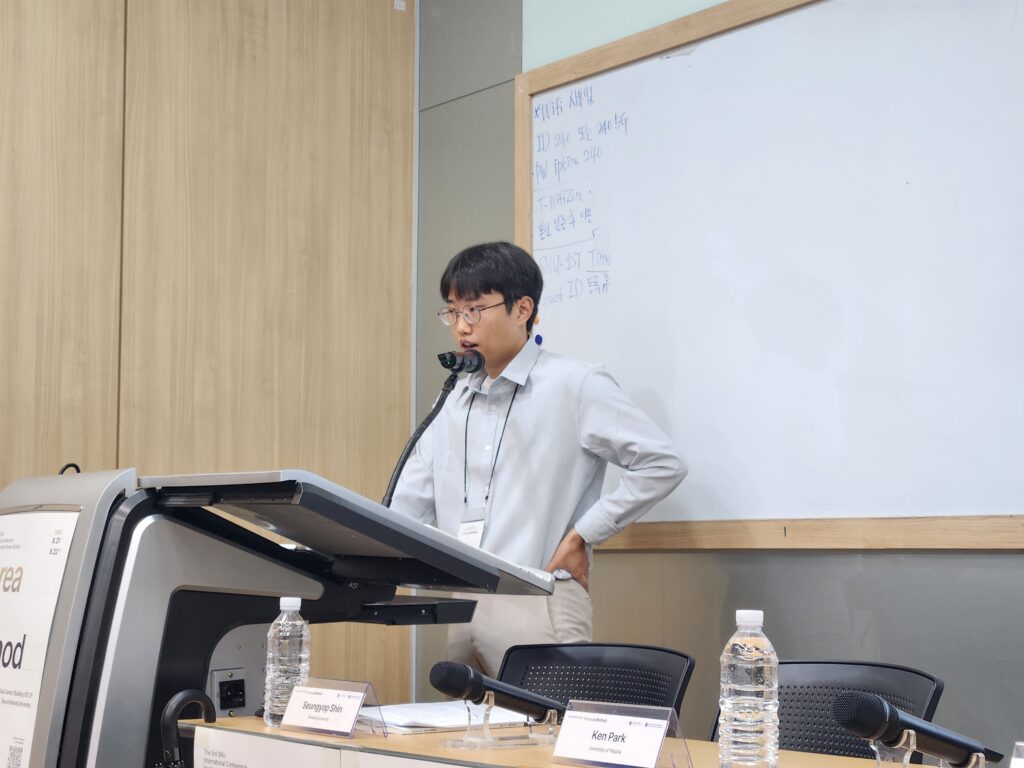
Ken Park (University of Virginia), in “Seoul as Method: Swine, Food Waste Infrastructure, and Hybrid Urban Metabolism,” revisited the conventional assumption that Korean urban infrastructure emerged through a linear, state-led process of modernization. Tracing the history of pig-based food-waste disposal in Seoul, Park argued that the city’s unusually concentrated demographic and material conditions made the pressures and contradictions of urbanization unfold earlier, more rapidly, and more visibly than elsewhere. Seoul could therefore be understood not simply as a Korean case but as an anticipatory laboratory for thinking about the challenges of the overconcentrated metropolis.
From the 1910s through the early 2000s, privately organized collectors transported kitchen refuse from Seoul to piggeries on the urban periphery. Pigs thereby functioned as nonhuman actors in the city’s sanitation system, consuming organic waste and sustaining a circulation between the metropolis and its hinterland. In the 1980s, however, rising transportation costs disrupted this system and pushed food waste toward landfills. The resulting problems of leachate and resistance from neighboring communities soon exposed the limits of disposal through dumping.
Officials subsequently returned to the use of food waste as pig feed. By then, however, changes in livestock practices—particularly early weaning—had altered pigs’ digestive capacities, making preprocessing facilities necessary. The state therefore did not simply replace the older private network with a modern public system; instead, it became incorporated into the existing network. Park argued that Seoul’s trajectory invites us to rethink infrastructure as a “hybrid urban metabolism” constituted through relations between state and private actors, city and hinterland, and human and animal bodies.
Following the presentations, Jong-wook Hong (Seoul National University) and Sungmin Yoon (Seoul National University) offered comments on the panel.
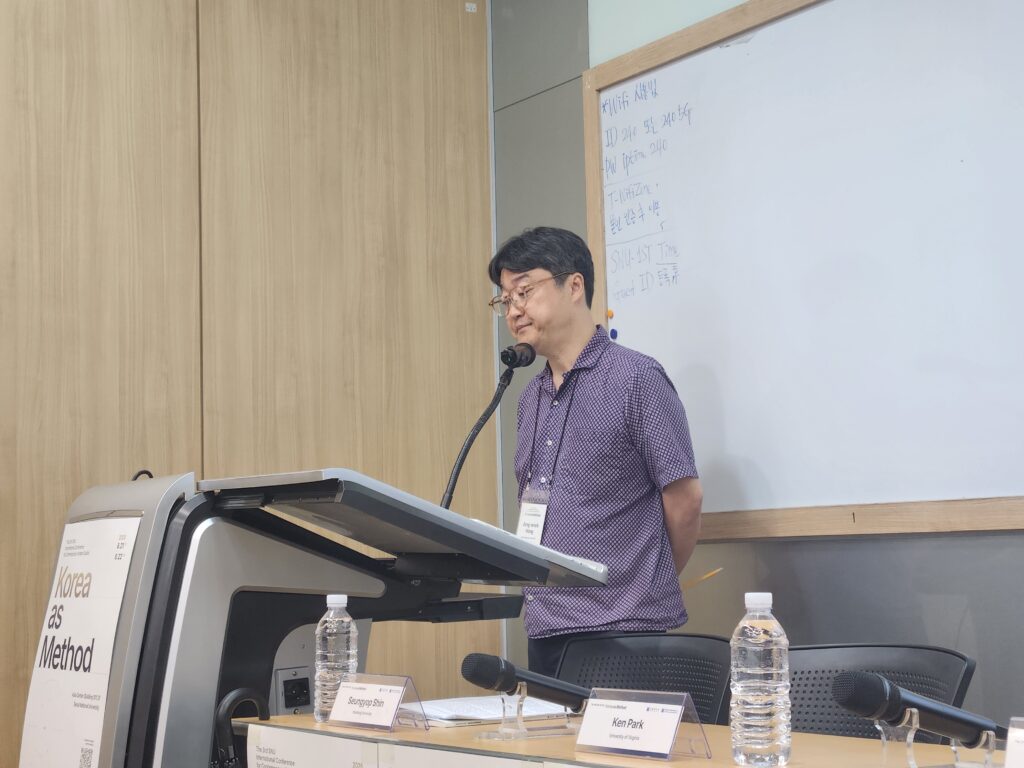
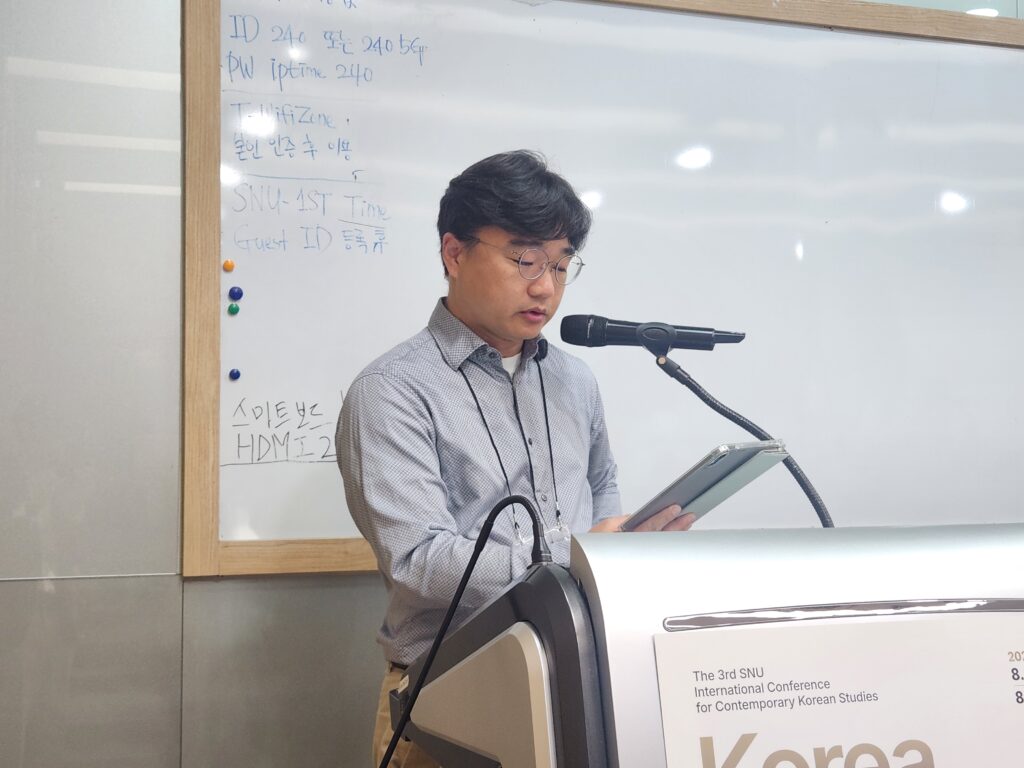
Taken together, the two presentations challenged narratives that treat Korean modernity as a predetermined and linear process of development. In colonial historical writing, even intellectual projects designed to resist Western and Japanese dominance remained entangled in modern epistemological categories of universality and particularity. In Seoul’s urban infrastructure, meanwhile, the modern state did not simply replace informal or preexisting systems but became embedded within networks connecting private actors, urban and peri-urban spaces, and human and nonhuman bodies. The session thus reconceptualized modernity not as a straightforward transition from tradition to modernity, informality to formality, or periphery to center, but as a historically contingent process produced through the interaction and recombination of heterogeneous elements. In this sense, the Korean experience emerged not merely as a case to which theories of modernization can be applied, but as a method for rethinking modernity itself.