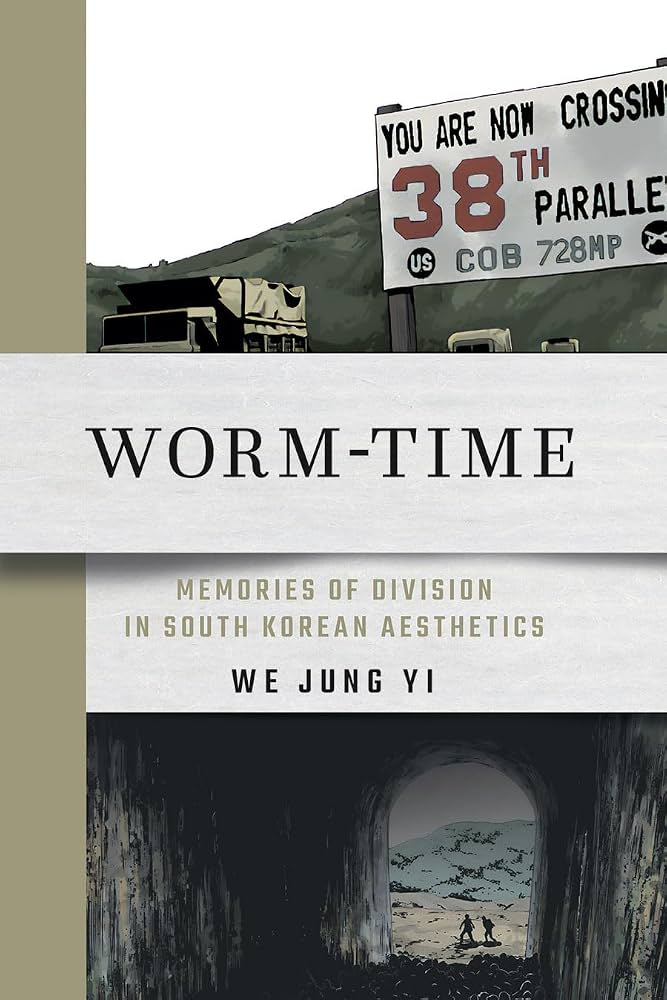
<Overview> In Part III, “Reassembled Fringes,” of Worm-Time: Memories of Division in South Korean Aesthetics (Cornell University Press, 2024), We Jung Yi approaches webtoon storytelling—which emerged in the early 2010s as a major content trend among digital-native generations—as a form of “transmemory” shaped within the neoliberal division regime. Extending the methodology of Worm-Time, this lecture examines monster and zombie webtoons that gained global attention through their Netflix adaptations during the 2020 pandemic. By cross-reading the apocalyptic narratives foregrounded by MZ-generation webtoon creators, the lecture develops a posthumanist critique of Netflix feminism and reflects on the “aesthetics of relational survivance (抗存)” grounded in Korea’s historical and social contexts.
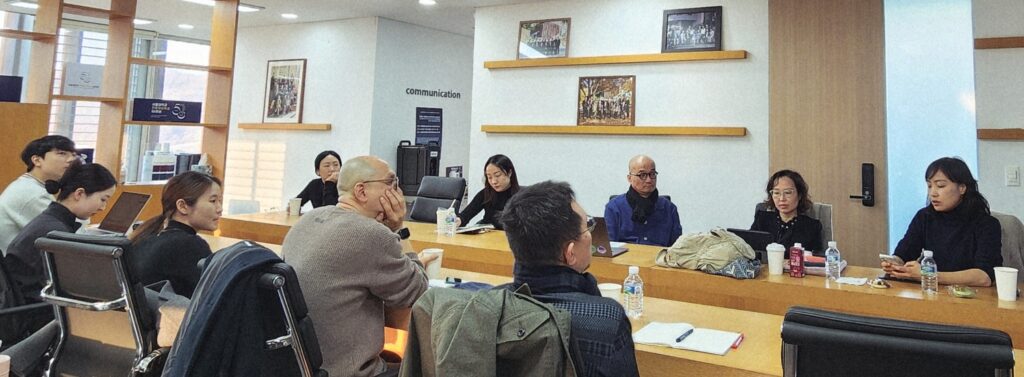
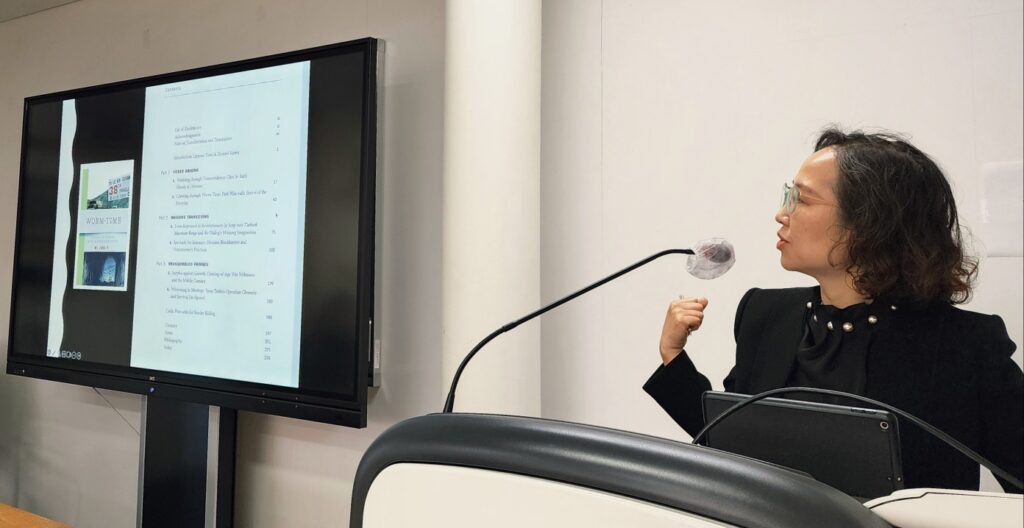
On November 20, 2025, the K-Future Team held its 13th Theory Atelier, centered on a lecture by We Jung Yi, Professor of Asian Studies at Vanderbilt University, titled “Surviving as Non/Human in an Apocalyptic World: Neoliberal Co-mix Storytelling and the Aesthetics of Relational Survivance.” Extending the concerns of her book Worm-Time: Memories of Division in South Korean Aesthetics, the lecture examined how Korean webtoons and Netflix dramas bring together memories of division, neoliberal conditions of survival, and imaginaries of non/human life.
Professor Yi read the zombie and monster narratives of <All of Us Are Dead> and <Sweet Home> as forms of apocalyptic sensibility that circulated globally after the pandemic, as well as forms of transmemory for a digital generation. Attending to the vertical scroll of webtoons, participatory reading cultures, and transmedia expansion, the lecture discussed how Korean popular narratives open up the possibility of relational survivance by rethinking the relations between human and nonhuman, individual and community, survival and coexistence, even under conditions in which life is reduced to an imperative to survive.